
 For all latest news, follow the Daily Sun's Google News channel.


Ensuring Fear-Free Voting: Role of Military in Safeguarding Democracy
Dr Md Mizanur Rahman
Published: 09 Dec 2025, 08:13 PM
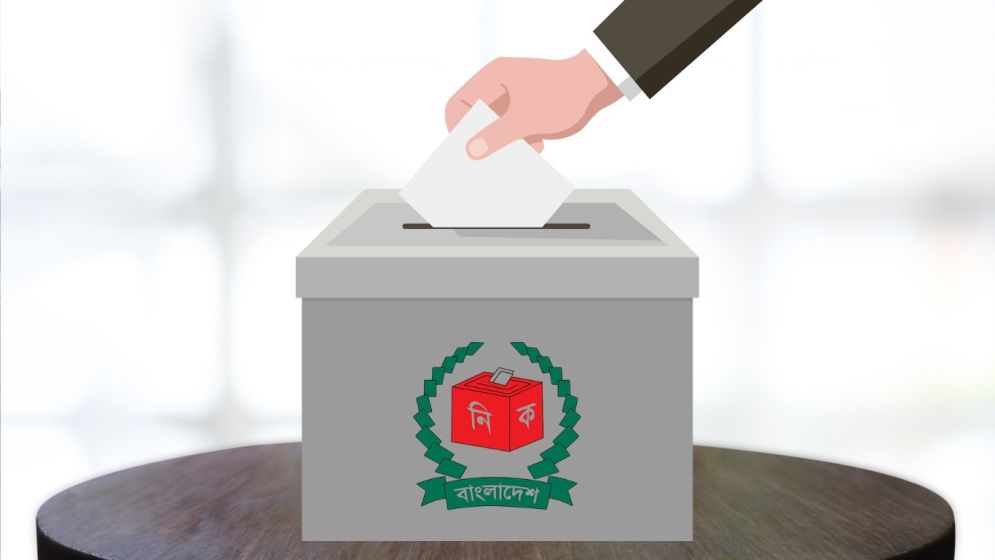
In the political history of Bangladesh, a national parliamentary election is not merely a constitutional ritual—it is the central mechanism that shapes the democratic future of the nation. The upcoming February 2026 election stands at a critical crossroads, the outcome of which will determine the trajectory of Bangladesh’s democratic reconstruction and long-term political stability.
Over the past decade and a half, political deadlock, authoritarian tendencies of the former ruling government and the weakening of opposition forces have collectively eroded the effectiveness of the administration, law enforcement agencies and intelligence institutions. In this reality, restoring public confidence in a free, fair and participatory election has made the role of the Bangladesh Army indispensable.
The army is widely seen as the moral and psychological anchor of the nation. Born out of the spirit of the Liberation War, this institution has consistently demonstrated exceptional responsibility in moments of natural disaster, administrative weakness or political crisis. Since independence, the army has served as a pillar of sovereignty and stability in every national emergency, earning deep public trust as a symbol of security and national unity.
Ahead of the 2026 election, the army’s role extends far beyond providing security. It holds the capacity to rebuild the democratic confidence of the population. Although the interim government enjoys public support, it lacks the partisan-driven administrative infrastructure or extensive experience traditionally associated with election management. Law enforcement agencies, still burdened by the legacy of politicisation, questionable accountability and diminished public trust under the previous regime, cannot be expected to shoulder this responsibility alone. Even after the fall of the former authoritarian government, its loyal grassroots networks remain active across the country and are likely to attempt disruption or violence due to their exclusion from the political process. In this context, only the army—with its discipline, neutrality and professionalism—can reliably supervise and stabilise the electoral environment.
While past criticisms occasionally emerged regarding the conduct of certain individual officers, such criticisms were not directed at the institutional character of the army. Rather, they reflected personal ambitions, susceptibility to political pressure or the political reality of serving under governments that sought to exploit state institutions. The army as a whole has never been driven by a collective desire for political power. Its organisational principles, discipline, patriotism and professionalism have consistently aligned with national welfare. It is therefore unjust and inaccurate to attribute isolated incidents to the institution as a whole.
The army has long played leading roles in ensuring national security, counterterrorism, stopping arms and narcotics trafficking along the borders, assisting in the implementation of the Chittagong Hill Tracts Peace Accord, and conducting rescue and rehabilitation operations during natural disasters. Internationally, Bangladesh’s contribution to UN peacekeeping missions has strengthened its global reputation; the professionalism and humanitarian conduct of Bangladeshi troops have elevated the country’s standing worldwide. These experiences have also enriched the army’s internal capability to support domestic security and administrative operations. However, during the previous authoritarian rule—often described as an era of “authoritarianism disguised as democracy”—the army’s role was constrained as the administration, law enforcement and intelligence agencies were heavily politicised.
A free, fair and participatory election is vital not only for political stability but also for economic progress and the restoration of Bangladesh’s international image. If the army succeeds in ensuring a peaceful, transparent and violence-free election, the benefits will be far-reaching. Bangladesh’s position in UN peacekeeping operations will strengthen further; international cooperation and foreign investment will rise; public trust in state institutions will return; political polarisation may ease; and most significantly, democracy will experience a genuine revival.
The army’s presence must therefore be seen not as a source of fear but as a symbol of reassurance. To achieve this, its conduct must remain professional, humane and public-oriented, with particular sensitivity toward women, minorities and vulnerable populations. Combating misinformation through a dedicated information-response unit, ensuring real-time coordination among security agencies, and utilising modern intelligence frameworks will be essential.
Ultimately, the success of the 2026 election will depend on how effectively and impartially the army maintains law and order. Its actions must be firmly rooted in the constitution, guided by professionalism and driven by democratic values. Should the army uphold neutrality and perform its duties with steadfast integrity, the gains will be profound. First, the fundamental principle of “fear-free voting,” essential for sustaining long-term democracy, will be restored. A credible election ensures that state power genuinely reflects the will of the people—the very essence of democratic governance.
Second, Bangladesh will regain the confidence of the international community. The European Union, the United States, the United Nations and development partners have long emphasised the need for a credible election. Under competent and humane military-led security, a successful election would strengthen foreign investment prospects, trade privileges and opportunities within global peacekeeping missions. Political stability is a primary concern for international economic partners, and the army is uniquely positioned to guarantee that stability.
Third, the domestic economy and political climate will benefit enormously. Years of political turmoil and administrative failures have damaged the business environment. A peaceful election will restore investor confidence, stabilise financial markets and allow policymakers to pursue long-term economic planning. Professional security management during the election period will reduce everyday violence and contribute to a political culture where disagreement does not lead to conflict.
Fourth, a successful election will preserve and enhance the army’s institutional prestige. Past controversies—arising from political pressures—forced parts of the institution into unwanted criticism. Now the army has the opportunity to rebuild public trust and reaffirm its role as the nation’s most dependable institution. By safeguarding democratic values and enabling a credible election, the army will not only earn renewed public respect but also reinforce its historical identity as the guardian of national stability.
In conclusion, Bangladesh’s 2026 national election presents the army with an extraordinary opportunity—to elevate its moral standing, professional excellence and constitutional commitment to new heights. Democracy in Bangladesh has been repeatedly challenged, yet it has endured because of the people’s resilience and the steadfast presence of institutions like the army. Today, once again, the hopes of the population, the stability of the state and the future of democracy depend on the army’s responsible role. If it acts with impartiality, professionalism and patriotism, the election will become more than a political event—it will symbolise a national renewal. Bangladesh will demonstrate that in moments of crisis, the greatest strength of the nation lies in the mutual trust between its people and its army—a trust that safeguards democracy and guides the country toward a stable, prosperous and dignified future.
The writer is an economist, researcher, and columnist. He can be reached at [email protected]