


 For all latest news, follow the Daily Sun's Google News channel.


A country is a bit like a vast river delta, full of branching channels, swift undercurrents, and sudden shifts where the flow meets resistance. Bangladesh, shaped quite literally by water, mirrors this metaphor in its public life: millions of people pushing forward with force and intention but often blocked or diverted by institutional sandbanks that were never designed to guide such collective momentum. Tea stalls, river ferries, garment factory lunchrooms, and university corridors all echo with the same weary refrain: things don’t work the way they should. Not because people lack talent or energy, but because their efforts sink into systems that wobble, contradict themselves, or simply refuse to hold the weight of citizens’ hopes. Behind this fatigue lies a structural mismatch between public aspiration and institutional capacity. Numbers reveal the tension: a population of roughly 171.2 million grows at 1.1% a year, while youth unemployment, projected in international analyses to reach up to 24.8% under adverse conditions, keeps ambition suspended in air. Around 30% of people remain poor under the PPP $3.65 threshold. The result is not just economic strain but a psychological one: a sense that ordinary people are running faster than the systems meant to support them. Leadership, in this context, becomes not just a matter of politics but a matter of national logic: what kind of leadership can turn a country’s immense human energy into durable, equitable change?
One useful answer lies in a pairing often misunderstood as academic jargon: transformational and transactional leadership. In practice, these two modes reflect a deeply human tension between vision and structure, imagination and rules. Transformational leadership speaks to dignity, purpose, and collective identity. It captures something Bangladesh has never lacked: emotional resilience, cultural coherence, and a restless generation of young people who long for integrity in public life. This mode of leadership recognises that development is not merely about GDP markers but about moral horizons, about telling communities, flood survivors, garment workers, and students that they matter and that their agency is central to the national story. Yet Bangladesh’s history is crowded with beautiful visions that dissolved into thin air because they were not held in place by systems. Transformational leadership can move hearts; what it cannot do, on its own, is build institutions sturdy enough to carry those hearts forward.
That sturdiness comes from transactional leadership, a term that sounds cold but is simply about predictability. It is the leadership of clear rules, consistent enforcement, transparent procedures, and reliable consequences. In a country where climate risks and institutional inconsistencies often collide, this structure is not optional. Bangladesh’s status as one of the world’s most climate-vulnerable nations, where riverine and char communities face fragile housing, unstable livelihoods, and recurring floods, demands leadership that can build embankments, standardise adaptation protocols, enforce zoning laws, and ensure early-warning systems function. Data from public health and vulnerability studies describe these communities as living with “limited adaptive capacity”, a technical term that translates, in daily life, into precarity. Transactional leadership turns compassion into systems, promising not just awareness but action. Combined with transformational energy, it gives climate resilience both a moral narrative and a practical architecture.
The same pairing can transform the youth landscape, perhaps the most consequential frontier for Bangladesh’s future. Demographically young countries have powerful potential, but only when opportunity matches aspiration. When nearly a quarter of young people face unemployment or underemployment, the resulting disaffection can hollow out national confidence. Transformational leadership tells young citizens they are not burdens but builders, co-authors of the next era of governance, technology, arts, and civic engagement. Transactional leadership ensures this recognition is not ceremonial: it creates transparent job recruitment, merit-based scholarships, quality technical training, and infrastructure for youth entrepreneurship. It also includes stronger social protection systems for families whose economic vulnerability remains tied to climate shocks, price instability, and informal work patterns. Together, the two modes turn youth from an abstract “demographic dividend” into a generative force capable of reshaping institutions.
Yet perhaps the most overlooked contribution of this hybrid model lies in its ability to rebuild trust, something Bangladesh desperately needs. Trust in institutions has eroded not purely because of failures, but because of unpredictability. People do not expect perfection; they expect clarity, continuity and fairness. Transformational leadership supplies the ethical compass: an insistence that governance must serve dignity, justice and the long-term flourishing of the nation. Transactional leadership supplies the mechanism: fair rules, functioning offices, responsive local authorities, and a commitment to consistency across political cycles. When the moral compass and the mechanism finally align, citizens experience something rare in public life: stability. And stability, in turn, unlocks creativity, investment, and the confidence required for sustained development. Ultimately, the transformational–transactional model offers a way out of Bangladesh’s most persistent cycle, the swing between emotionally inspiring politics and technically weak governance. With roughly 5 per cent of the population still below the international extreme-poverty line and millions more hovering on its edge, this balance is not a luxury but a necessity. When these two forces work together, the national mood shifts, there is less resignation and more resolve, and the weary refrain of “nothing works” begins to make room for a quieter, sturdier hope: that the system, at long last, is beginning to hold.
_____________________________________
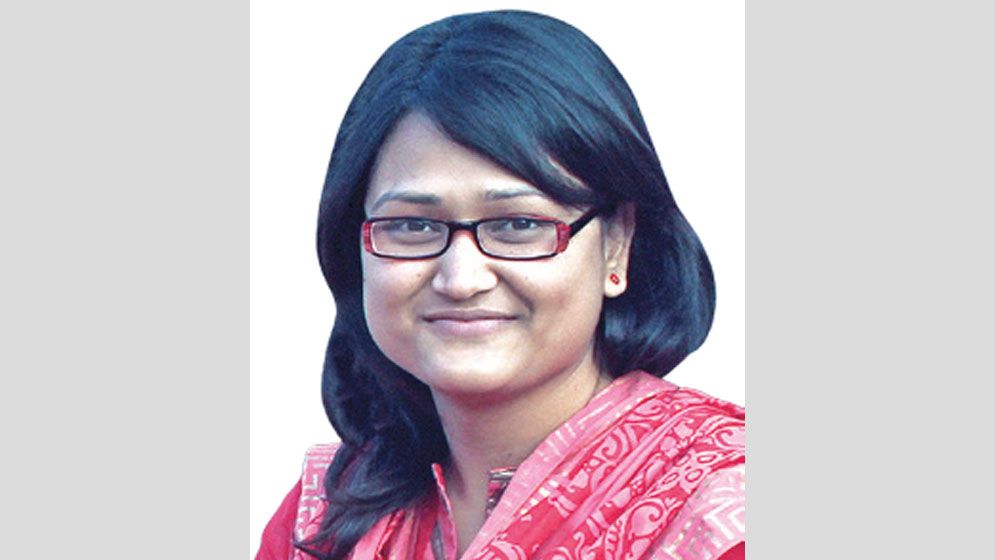
The writer is an Assistant Professor in the Department of Philosophy at IUBAT and is currently on study leave, residing in Oslo, Norway