



 For all latest news, follow the Daily Sun's Google News channel.


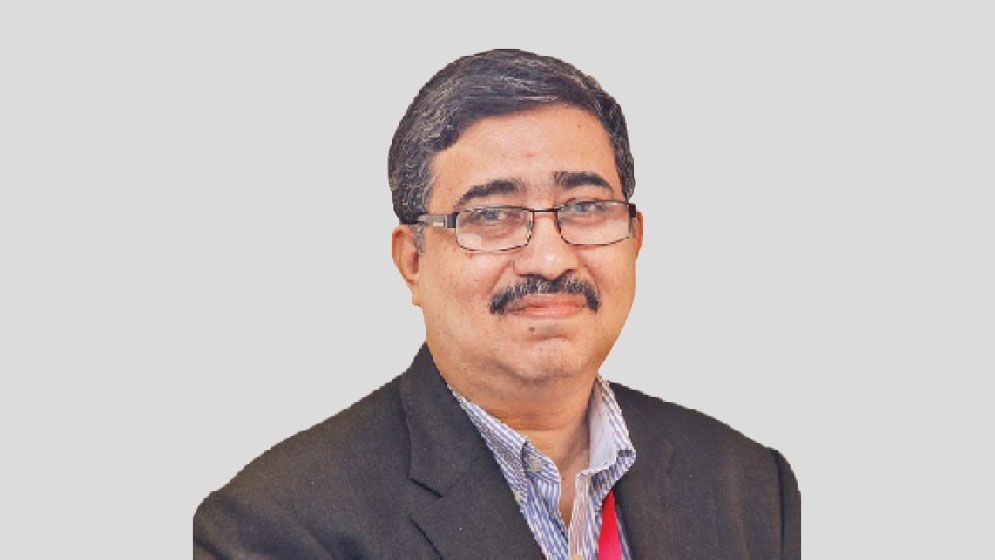
Institutions are often remembered for the policies they make, but occasionally they are defined by the people who shape their thinking. Allah Malik Kazemi was one such individual. To those who knew him, he represented intellectual brilliance, professional courage and an unwavering commitment to Bangladesh’s economic progress.
In my 40+ years of professional career, I have met senior central bankers in India, Sri Lanka, Malaysia, Indonesia, the Philippines, the UAE, Nepal, Hong Kong, Singapore and Pakistan. Few matched Kazemi’s intellectual depth. He was a voracious reader, often found reading The Economist or scrutinising internal reports line by line. Trained initially in physics and later educated in financial economics abroad, he brought scientific discipline and economic reasoning to the complex challenges of central banking. He could be fiercely argumentative, yet there was a childlike simplicity beneath that formidable intellect.
Kazemi joined Bangladesh Bank in the mid-seventies and served in several important capacities, including deputy governor from 2002 to 2007. After his retirement, he continued to advise the institution, serving as its change management adviser until his death in June 2020. His work covered monetary policy, foreign exchange management, liquidity operations and financial sector development. He connected technical decisions with the wider needs of a developing economy.
He understood that regulation should protect the economy without becoming an obstacle to productive investment. When a proposal was economically sound, he was willing to examine whether foreign exchange rules could be applied more flexibly. His analytical guidance helped address regulatory complexities surrounding landmark initiatives involving Lafarge Surma Cement, Aktel, Grameenphone, Singapore Telecom’s investment in Citycell and BRAC’s microcredit receivables securitisation. They showed how responsive regulation could attract capital, technology and expertise.
Kazemi also anticipated issues that would become increasingly important as businesses integrated with global markets. He also argued that Bangladesh should build its own transaction-processing capabilities and technological backbone. His instinct was developmental: facilitate investment, strengthen domestic capacity and create employment.
Such pragmatism never meant compromising principle. When an argument was weak, or a proposal ran counter to the public interest, he could be immovable. I remember him setting aside routine bureaucratic notes, drafting a fresh one himself and walking it to the Governor for approval. Even my senior international colleagues respected his command of the subject. His authority rested not on rank, but on preparation, evidence and clarity of thought.

Allah Malik Kazemi
I owe much of my professional development to three central bankers: Allah Malik Kazemi, Nazrul Huda and Ziaul Hasan Siddiqui. Kazemi, in particular, was both demanding and generous. I received stern reprimands from him over a disagreement involving Sonali Bank’s inward remittance business. Yet behind his bluntness was genuine concern. He challenged my arguments and then helped me strengthen them with facts and analysis. He also advised me against seeking excessive media exposure, reflecting his preference for substance over recognition.
His interests extended beyond banking to technology, shipbuilding, venture capital and young entrepreneurs. He questioned why investment was flowing into established industries rather than emerging technology businesses, and opposed cumbersome licensing requirements that discouraged enterprise. He wanted Bangladesh to create an environment in which innovation could flourish and productive businesses could grow.
Kazemi’s death was a profound loss, not only for Bangladesh Bank but for the country’s economic policymaking community. His life reminds us that a central banker must be more than a custodian of rules. The role demands intellectual independence, technical mastery, integrity and the courage to make difficult decisions in the national interest.
Bangladesh still needs the institution-building vision he represented: a central bank that is rigorous yet pragmatic, independent yet responsive to economic change, and committed to monetary stability as well as productive investment. If foreign exchange transactions become simpler, innovation finds a more enabling environment, and Bangladesh earns greater credibility as an investment destination, his ideas will remain part of that progress.
We will remember Allah Malik Kazemi not only for what he achieved, but for the standard he set for what a true central banker should be.
_____________________________________
The writer is a banker and economic analyst