


 For all latest news, follow the Daily Sun's Google News channel.


ICT sets landmark precedent, experts urge victim compensation law
Ehsanul Haque Jasim and Sayeed Al Mesbah, Dhaka
Published: 19 Nov 2025, 02:16 AM
File Photo
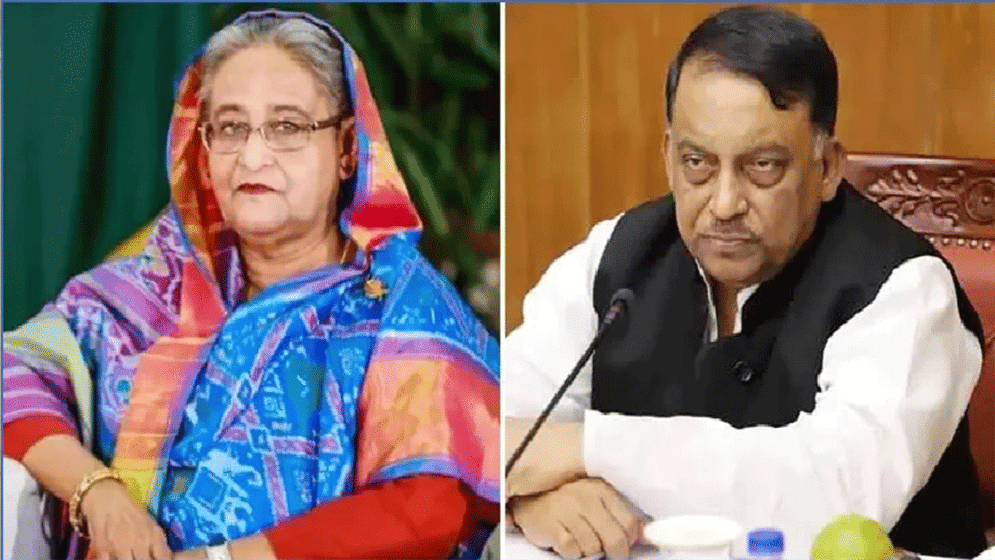
After the International Crimes Tribunal (ICT) on Monday delivered its landmark verdict against ousted prime minister Sheikh Hasina and former home minister Asaduzzaman Khan Kamal, authorities are preparing to confiscate all their assets to compensate victims of the 2024 July uprising.
Legal experts say the ruling not only establishes an unprecedented
legal benchmark in Bangladesh but also underscores the urgent need for
legislation to ensure monetary compensation for victims of serious crimes in
other cases.
While Bangladeshi courts have previously ordered the confiscation or
attachment of property in high-profile corruption cases, the 17 November ruling
marks the first time in the country’s history that convicts’ property has been
seized specifically for victim compensation.
The tribunal found Hasina and Kamal responsible for the deaths of
hundreds of civilians during last year’s unrest and mandated that all their
assets be handed over to the state. These funds are explicitly earmarked for
the families of martyrs and those injured during the violence.
Advocate Md Kamruzzaman, a High Court lawyer, welcomed the decision,
noting that although similar precedents exist in international jurisdictions,
Bangladesh has previously lacked a mechanism to compensate victims through the
assets of convicted individuals.
“If the assets of Hasina and her accomplices are confiscated by the
state soon to compensate the July victims, it will be a hugely positive
development,” he told the Daily Sun.
Legal basis and international context
The practice of using convicts’ assets to compensate victims has
international parallels. The Rome Statute, which governs the International
Criminal Court (ICC), allows the court to order reparations from the assets of
individuals convicted of war crimes and other serious offences.
After the Second World War, German authorities similarly seized
properties belonging to high-ranking Nazi officials to compensate victims.
In Bangladesh, the International Crimes (Tribunals) Act, 1973,
provides for such orders, though the country has lacked comprehensive
legislation to apply the principle broadly.
The Bangladesh Law Commission, under the late Justice Mustafa Kamal,
previously recommended a dedicated “Crime Victims Compensation Act” covering
grave crimes such as murder, grievous injury, kidnapping, rape, and acid
attacks. Despite the submission of a final report, the draft law was never enacted.
Advocate Md Muzibur Rahman, a High Court lawyer specialising in
criminal law, said the measure could have a preventative effect.
“If victims of serious crimes receive compensation from the assets
of the convicts, it will contribute to crime prevention,” he said. “Specific
legislation should cover not only crimes against humanity but also other
serious offences, allowing perpetrators’ assets to be confiscated and
distributed to victims.”
The ICT applied Section 17 of the International Crimes (Tribunals)
Act, 1973, to issue the confiscation order.
The 2025 amendment to the law, under Section 20A, explicitly
empowers the tribunal to award compensation to victims and ensures
enforceability: if compensation cannot be recovered from the convicts’ existing
assets, it may be recovered from any future assets they acquire.
Scope of confiscation and implementation
The tribunal’s order is comprehensive, encompassing all assets owned
by Hasina and Kamal within Bangladesh, not merely those suspected of being
illegally acquired.
The Dhaka District Magistrate has been instructed to implement the
verdict immediately, and sources indicate authorities are preparing for swift
action.
Public interest remains high as officials assess the total value of
the wealth to be seized to compensate the victims of the 2024 atrocities.
Hasina’s declared and alleged assets
Hasina’s assets have long been under scrutiny amid ongoing legal
proceedings. She and her family are facing trial in three cases concerning
alleged irregularities in the allocation of plots in the RAJUK Purbachal New
Town Project, reportedly nearing conclusion in a Dhaka court.
Ahead of the controversial 2024 general elections, Hasina declared
assets worth Tk4.36 crore, including three motor vehicles (one a gift), gold
worth Tk13.25 lakh, furniture valued at Tk7.4 lakh, and agricultural land
totalling 15.3 bigha across Tungipara, Gopalganj, Gazipur, and Rangpur, valued
at Tk6.78 lakh. She declared 2023 income of Tk1.7 crore, mainly from
agriculture, while her tax return indicated Tk1.91 crore. Fixed deposits and
savings certificates worth Tk75 lakh were also reported.
Property records show a garden house in Telirchala, Gazipur,
originally registered in Sheikh Mujibur Rahman’s name and later inherited by
Hasina and her sister Sheikh Rehana. Her affidavit also listed a Purbachal plot
worth Tk34.76 lakh. During her tenure, 10 katha plots were reportedly allotted
to her and her family, which the Anti-Corruption Commission (ACC) claims were
acquired through misuse of power. She also owns 6.10 decimals of land in
Tungipara, including a three-storey building valued at Tk5 lakh.
Following her removal, the Bangladesh Financial Intelligence Unit
(BFIU) identified Tk635.14 crore across 124 suspended bank accounts linked to
Hasina, her family, and associates. Authorities froze Tk394.61 crore across 31
accounts belonging to Hasina and her immediate family. Investigations revealed
discrepancies in a 2008 affidavit, where she claimed ownership of 6.5 acres
valued at Tk1.75 lakh, while records showed more than 28 acres.
Hasina’s overseas holdings reportedly include accounts in the US,
UK, Malaysia, Singapore, Hong Kong, and the Cayman Islands, as well as a
Russian ‘stash fund’ in Malaysia. Total identified overseas assets include
Tk635.14 crore in 124 accounts, a RAJUK plot valued at Tk1.8 crore, 10 decimals
of land worth Tk8.85 crore, and eight flats. The Dhanmondi-32 house belongs to
the Bangabandhu Memorial Trust, and the ‘Sudha Sadan’ residence is owned by her
children, Sajeeb Wazed and Saima Wazed.
Kamal’s financial holdings
Former home minister Asaduzzaman Khan Kamal also faces serious
financial allegations. The ACC has reportedly identified Tk60.55 crore in
illegal assets amassed by him and his family between 1 July 1997 and 13 August
2024.
Kamal’s affidavit declared cash assets of over Tk84 lakh, bank
holdings of Tk82 lakh, bonds and shares worth Tk24 lakh, and savings
instruments totalling Tk2.01 crore. His declared material assets included two
vehicles valued at Tk1.61 crore and electronics and furniture worth Tk2 lakh.
Business capital was listed at Tk2.2 crore, along with 10 bhoris of gold
(unspecified value), 171 decimals of agricultural land worth Tk1.06 crore, 18.5
decimals of non-agricultural land valued at Tk58.5 lakh, a village house at
Tk80 lakh, and another property at Tk13 lakh, bringing total declared assets to
about Tk10.25 crore.
The ACC alleges that Kamal also owns assets beyond his declared
income, formally charging him with the illegal acquisition of Tk16.42 crore.