



 For all latest news, follow the Daily Sun's Google News channel.


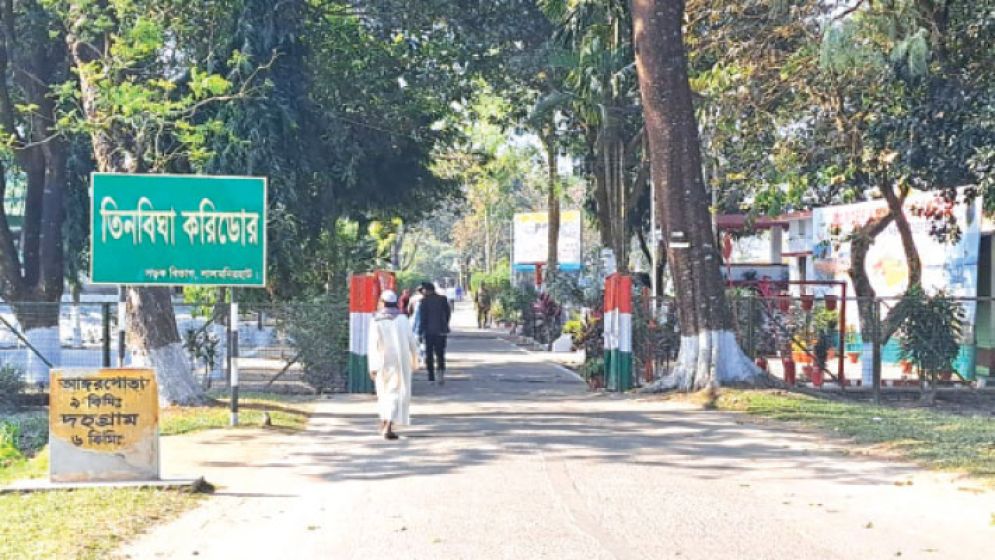
Residents of Dahagram-Angarpota have alleged that the Indian Border Security Force (BSF) has recently tightened security and intensified surveillance in the Tin Bigha Corridor, causing severe difficulties for their movement and daily activities.
The corridor is the only land route connecting the Dahagram-Angarpota enclave with mainland Bangladesh. Locals said BSF surveillance has intensified since the West Bengal elections, with CCTV cameras, traffic posts and observation towers installed along the corridor. They also alleged that residents are frequently subjected to searches and harassment while passing through the area.
According to the 2011 agreement between Bangladesh and India, the Tin Bigha Corridor was opened for 24-hour movement on 19 October 2011, replacing the previous 12-hour access system. However, residents claim that they still do not enjoy unrestricted movement through the corridor.
Under the Mujib-Indira Agreement of 1974, a 178-metre-long and 85-metre-wide corridor was to provide permanent access between Dahagram-Angarpota and mainland Bangladesh. Locals, however, said the usable passage has narrowed to around 9-10 feet due to the installation of light posts and flower pots on both sides.
They said rickshaws, vans and other small vehicles can pass through the narrow route, but large vehicles often have to wait at Panbari or Dahagram until the passage is cleared. Residents also alleged that Bangladeshis face fines and harassment if their vehicles accidentally damage any structures or installations along the corridor.
Rezanur Rahman, general secretary of the Dahagram-Angarpota Andolon Sangram Parishad, said alleged that residents of Dahagram-Angarpota remain deprived of basic services, including healthcare and proper roads. Although a 10-bed hospital exists in the area, it does not provide adequate medical services, he said.
Farmers are also facing difficulties in transporting cattle for sale. Tuhin Mia, a local resident, said the BSF allows only around 60 cattle to cross the corridor for sale each week, forcing farmers to wait.
Residents Akmal Hossain, Montazur Rahman and Babul Mia alleged that the corridor is kept closed for extended periods whenever important Indian officials or other VIPs travel through it.
Meanwhile, residents said the BSF has become stricter since 5 August 2024.
Mainul Haque, whose house is located near the border, said BSF members monitor residents from observation towers and restrict agricultural work near the barbed-wire fence. He said farmers have to stop working before evening because of the restrictions.
Residents also alleged that cattle and goats are not allowed to graze freely near the fence, while agricultural activities are frequently disrupted.
Under the 1974 Mujib-Indira Agreement, Bangladesh was to lease the three-bigha corridor permanently in exchange for handing over South Berubari to India. Bangladesh subsequently handed over the designated area to India through legislation. However, locals claim that Bangladesh has yet to exercise full control over the corridor.
They also alleged that the installation of two check posts at the eastern and western ends of the corridor violates the agreement, which, according to them, prohibits the construction of structures inside the corridor.