


 For all latest news, follow the Daily Sun's Google News channel.


Centuries-old red Tamarind tree on verge of extinction in Kushtia
BSS, Kushtia
Published: 10 Nov 2026, 12:00 AM
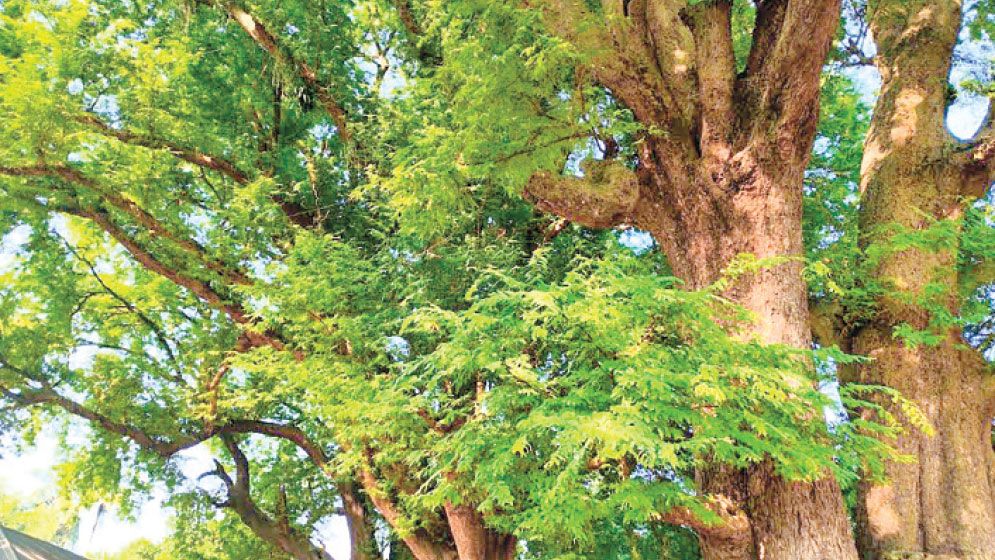
A nearly 300-year-old rare tamarind tree in Kushtia, drawing visitors from across the country for its unique red fruit and colonial-era legacy, is now facing the threat of extinction amid a lack of conservation, scientific research and propagation initiatives.
The tree stands alongside two ordinary tamarind trees in Hijlabat village under Osmanpur union of Khoksa upazila, on the bank of the River Gorai. Although its fruits look almost identical to ordinary tamarinds from the outside, their raw flesh reveals an extraordinary feature: a vivid vermilion—red colour that resembles blood.
Interestingly, the flesh gradually loses its distinctive colour as the fruit ripens, eventually taking on the familiar appearance of ordinary tamarind.
The unusual tree has become a local attraction, with curious visitors, tourists, researchers and content creators travelling from different parts of the country to witness its remarkable fruits. Local residents said the three trees were planted by British indigo planters around 300 years ago, when indigo cultivation flourished in the region. The nearby indigo settlement, once home to the planters, was gradually swallowed by the Gorai due to erosion.
Only remnants of the old indigo factory, locally known as a nilkuthi, and the three ancient tamarind trees remain as reminders of that colonial past. Hektam Ali Sheikh, an 88-year-old resident of the village, said he had heard the history of the tree from his father, who had learned it from his own grandfather. "My father told me that the tree looked exactly the same during his grandfather's time as it does today. It was planted by the British during the colonial period. Later, a Hindu businessman named Hirambar Babu purchased the tree from the British," he said. He claimed that the tree was the only one of its kind in Bangladesh and called for government initiatives to preserve it as a valuable natural and historical heritage.
According to local journalist Mahmudul Hasan, the trees are believed to be around three centuries old. Of the three standing in a row, only one produces the distinctive red-fleshed tamarinds, while the other two bear ordinary varieties. He said the largest tree had lost part of its structure after a major branch was broken during a storm. Despite their age and vulnerability, the trees continue to attract visitors from different parts of the country, gradually turning the site into a small tourist destination.
"The remarkable thing is that the red colour cannot be detected from the outside. The fruit looks like an ordinary tamarind, but once opened in its raw condition, its flesh appears bright red. To our knowledge, this variety is not found anywhere else in Bangladesh," he said.
Blogger and YouTube content creator Khan Md Ataur Rahman said he had travelled to Hijlabat specifically to see the unusual tree after hearing about it. He observed that people from different areas visit the site regularly and said proper maintenance, visitor facilities and publicity could help develop it into an attractive tourist destination.
Experts believe that preserving the existing trees and collecting suitable planting materials could help protect this rare genetic resource. Both government and private initiatives are needed to undertake scientific studies, develop propagation methods and encourage wider cultivation if the variety proves suitable for commercial production.
Local residents also want the government to protect the trees, improve the surrounding area and develop basic facilities for visitors so that the site can be preserved as a historical and natural attraction.
At present, however, the trees remain vulnerable to old age, storms, physical damage and the absence of systematic care. The largest tree has already suffered damage from a storm, underscoring the need for urgent conservation measures. For the people of Hijlabat, the red tamarind tree is much more than an unusual fruit-bearing plant. It represents a link to their ancestors, the history of the indigo era and a rare natural treasure that has survived for generations.