



 For all latest news, follow the Daily Sun's Google News channel.


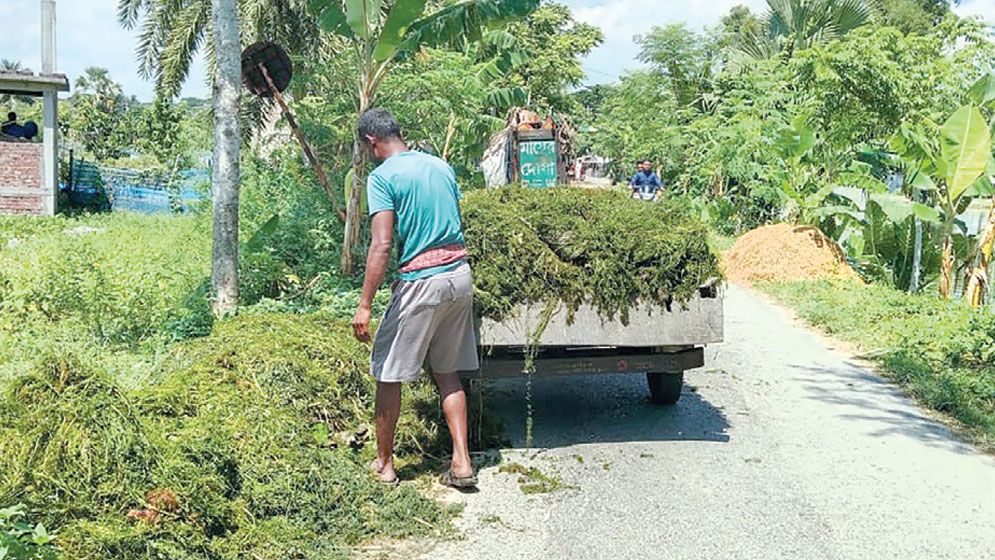
Fish farmers in Manirampur upazila of Jashore are using naturally occurring algae as feed in their fish enclosures, reducing their dependence on commercial feed and creating an additional source of income for local workers.
Farmers collect three types of algae locally known as pata shaola, chune shaola and chikun shaola from fallow wetlands and water bodies and use them as fish feed. They say the practice helps fish grow faster, remain healthy and resist diseases, while significantly reducing the cost of commercial feed. According to the upazila fisheries office, Manirampur currently has 11,643 fish-farming ponds. Fish farmers say the use of algae helps fish grow naturally, causes less harm to the environment and creates a favourable habitat for native fish species.
A visit to different wetland areas of the upazila found fish-farm owners and workers collecting pata shaola and chikun shaola from the morning. Local fish farmers Samir, Prashanta and Jhantu were seen collecting algae from the Hajirhat-Nebugati wetland. Prashanta said algae were useful for keeping fish in good condition and protecting them from diseases.
Bidyut, a fish farmer from Bahadurpur in Haridas Kathi Union, said the use of algae collected from wetlands and rivers had created daily employment opportunities for disadvantaged local workers.
He said workers collect chune shaola from the Mukteshwari River and Nebugati wetland and sell it for Tk900 to Tk1,000 per Almasadhu vehicle.
Samir, another fish farmer, said algae helped keep fish free from diseases and improved their taste. He added that local workers were also earning money by collecting algae every day.
Senior Upazila Fisheries Officer Md Selim Reza said there was no obligation to use algae in fish enclosures, but some farmers used aquatic vegetation as feed for grass carp, sarputi and silver carp.
He cautioned that excessive use could damage the pond or enclosure environment and harm fish, stressing that algae should be used carefully. He said algae were environmentally friendly when used appropriately and could contribute to fish production as well as the livelihoods of local people.