



 For all latest news, follow the Daily Sun's Google News channel.


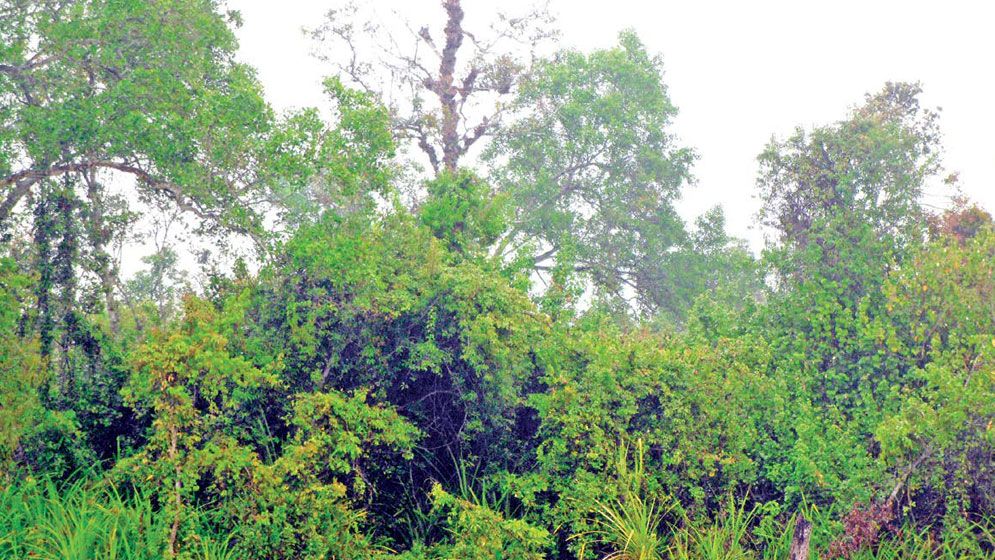
Nearly 129.5 million Sundari trees in the Sundarbans are affected by top-dying disease, with 20.24 million severely damaged, according to a recent study conducted by Centre for Environmental and Geographic Information Services (CEGIS) and the Arannayk Foundation.
The study estimated that the forest has around 330 million Sundari trees, meaning nearly 39% of the species is affected by the disease where rising salinity, declining freshwater flows and climate change were among the key environmental pressures threatening the trees.
The study also found that the Sundarbans’ carbon absorption capacity has declined by 15%, raising concerns over the forest’s ecological balance, biodiversity and role in mitigating climate change.
The findings were revealed in the study titled Ecological Monitoring of Sundarbans, conducted in 2024–25 by the Centre for Environmental and Geographic Information Services (CEGIS) and the Arannayk Foundation. The results were presented at a workshop at the Forest Department headquarters in Dhaka on 14 September this year.
Sundari, one of the dominant tree species in the world’s largest mangrove forest, plays a vital role in maintaining its vegetation structure and biodiversity. However, the species has been suffering from dieback, commonly known as top-dying disease, for years.
The disease initially damages the upper leaves and young shoots before spreading to branches and twigs. In severe cases, the main trunk may also be affected, eventually threatening the tree’s survival.
Although the overall prevalence of the disease has declined somewhat compared with previous assessments, the number of severely affected trees has increased, the study found. Experts attributed the disease to a combination of environmental factors, including rising soil salinity, reduced freshwater flows, changes in sediment deposition and tidal patterns, and climate change. The study found higher infection rates in areas with high and moderate salinity.
Prof Anwarul Kadir, executive director of the Sundarbans Academy in Khulna, said disrupted river flows had reduced the supply of freshwater from upstream to the western Sundarbans. He said rivers including the Kapotaksha, Mathabhanga and Bhairab had lost navigability, obstructing the natural flow of freshwater into the forest.
Previously, freshwater mixed with saline water to create brackish water carrying essential nutrients from upstream, supporting the healthy growth of Sundari trees, he said. The reduced freshwater flow has increased the influence of saline water, while tidal waters carry excessive saline sediment that accumulates around tree bases.
According to Prof Kadir, nutrient-poor sediment can deprive trees of essential nourishment. Deposits can also cover pneumatophores, or breathing roots, disrupting oxygen intake and nutrient absorption. These conditions weaken the trees, hamper photosynthesis and make them more vulnerable to pathogens, fungi and bacterial infections. The upper parts of affected trees gradually dry out and die.
Prof Kadir said increasing salinity and declining freshwater flows were making it increasingly difficult for Sundari trees to survive. Meanwhile, salt-tolerant species such as Gewa, Bain and Keora were spreading, potentially changing the forest’s composition. The study also identified signs of increased natural regeneration of other tree species in some areas, which could gradually replace Sundari trees.
Researchers said further analysis was needed to assess how deteriorating tree health, changes in growth and regeneration, and broader ecosystem changes were affecting carbon storage. Long-term changes in Sundari populations could also affect wildlife habitats, food chains and the distribution of other plant species.
Experts stressed the need for regular monitoring of diseased trees, identification of high-risk areas and continued research into soil salinity, freshwater flows, river navigability, sediment deposition and natural regeneration.
They also called for maintaining natural water flows, incorporating scientific findings into forest management and strengthening coordination among research institutions.
They said regular assessments and the development of new saplings would help authorities evaluate risks and formulate effective conservation measures to protect Sundari trees and preserve the Sundarbans’ ecological balance.