



 For all latest news, follow the Daily Sun's Google News channel.


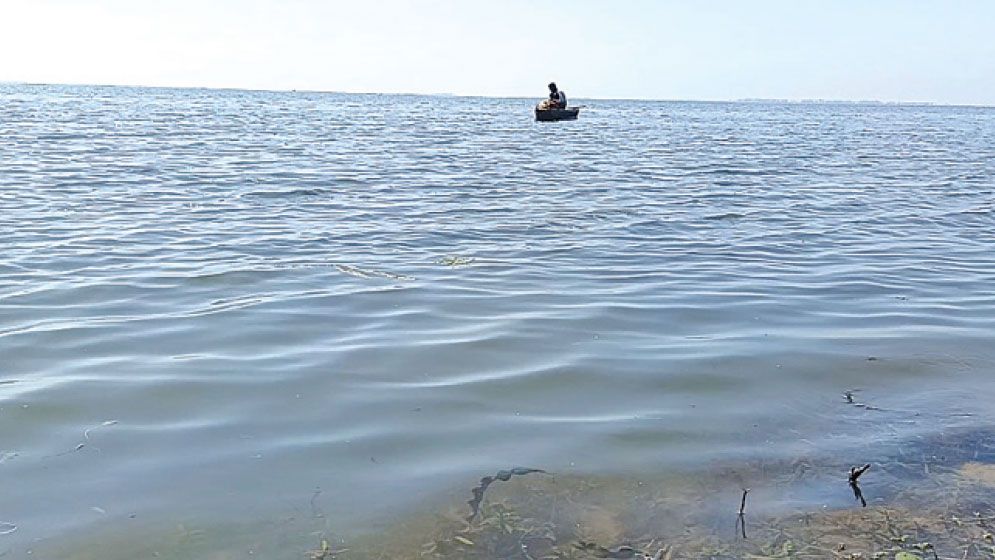
Sunamganj, home to vast haors, rivers and wetlands, is facing a growing shortage of native fish, threatening the livelihoods of more than 120,000 registered and unregistered fishermen.
Once renowned for its abundant freshwater fish, the district has seen a sharp decline in native fish populations in recent years. Fishermen said they can no longer catch enough fish even during the peak monsoon season, forcing many to abandon their traditional occupation and seek work elsewhere. The crisis has affected 101,329 registered fishermen and more than 20,000 unregistered fishermen across the district. Many have migrated to cities or taken up other jobs, including work in garment factories in Dhaka.
Despite the decline in local fish supplies, fish produced on farms are widely available in local markets. The limited supply of native fish has also pushed up prices, while some of the catch is transported on ice to Dhaka and other parts of the country.
Fishermen and environmental activists attribute the decline to a combination of factors, including climate change, irregular rainfall, shrinking water bodies, siltation, unplanned embankments, harmful fishing nets, excessive fishing, chemical-based agriculture and pollution from coal mines in hilly  areas. According to fisheries officials, Sunamganj has 95 haors, 26 large and small rivers, and more than 1,000 beels and other water bodies. The district has 63,666 hectares of water bodies, including 35,990 hectares of haors. Open-water bodies account for 89.38% of the district's fish production, while ponds contribute 10.62%. However, native fish species are gradually disappearing from these habitats.
According to the Sunamganj Fisheries Department, 64 native species are now under threat, including nine classified as critically endangered, 30 as endangered and 25 as vulnerable. Among the threatened species are shrimp, rani, kachki, darkina, mahashol, sarpunti, bagar, ritha, chital, bacha, pabda, kalbaush and shalbaim.
Tozammil Haque, a leader of the Haor Bachao Movement, said changes in natural conditions and climate patterns had disrupted the timely flow of water into haors. Catching fish by draining wetlands, using harmful nets and destroying fish populations during the dry season had further worsened the situation, he added.
Saidul Islam, a fisherman at Shani Haor, said he had been fishing for 17 years.
“Earlier, I could sell fish worth Tk1,000 to Tk1,500 a day. In recent years, I often earn only Tk400 to Tk500 from my catch,” he said. Faruk Mia, a fisherman at Matian Haor, said leased areas restricted fishermen's access to fishing grounds, leaving many unable to earn a living from their traditional occupation. “Even if you go fishing, you have to stay outside the areas controlled by leaseholders. You cannot catch enough fish this way. We have to find other work to survive,” he said.
Ashraf Uddin, a resident and fisherman of Tanguar Haor, said chital fish had disappeared from Alangdowar in Tanguar Haor, while Rouar Haor, once known for its abundance of rouar fish, had also lost much of its native fish population.
“Native fish are becoming scarce across the haors. Most of the fish now available are produced in fish farms,” he said.
Sunamganj District Fisheries Officer Shariful Haque Akand said the department was taking steps to protect fish resources despite a shortage of manpower in its upazila offices. Illegal fishing nets and equipment are seized and burned during enforcement drives, he said, adding that the department was working to curb harmful fishing practices.
Akand said bringing 30,000 fishermen under the Vulnerable Group Feeding Assistance (VGFA) programme could help reduce fishing pressure and allow native fish to breed and replenish their populations.
He also stressed the need to raise public awareness and ensure compliance with government conservation measures to increase fish production.