



 For all latest news, follow the Daily Sun's Google News channel.


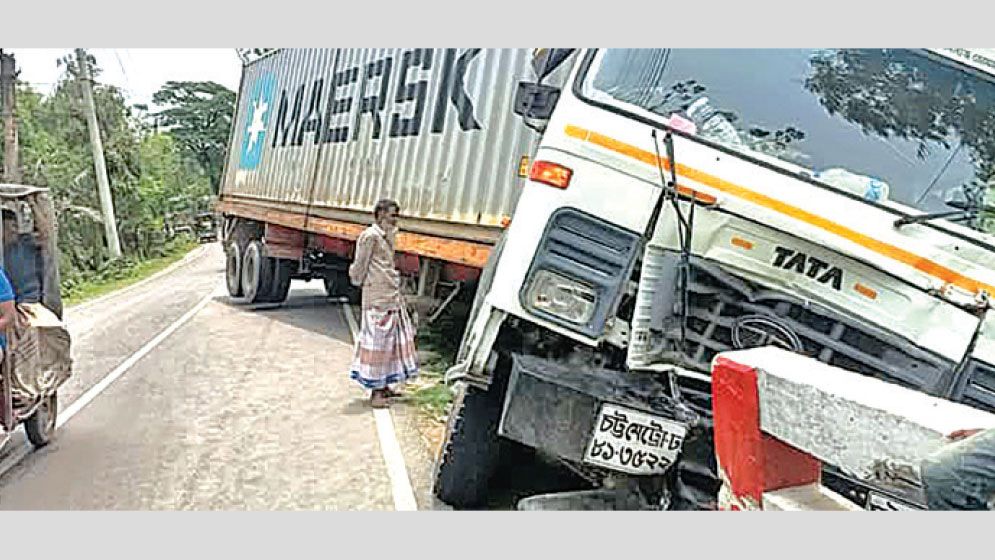
The 100-kilometre Lalmonirhat–Burimari highway, a key route in the northern part of the country, has become a major safety concern, with nearly 50 people killed in about 70 accidents over the past 15 and a half months.
According to local sources, from January 2025 to March 2026, dozens were killed, and hundreds were injured in frequent road accidents along the route. A total of 27 cases related to road accidents were filed during this period.
One of the latest tragedies occurred on 17 March in the Model Mosque area of Patgram upazila, where NGO worker Shariful Islam, his wife, and a child were killed after a truck hit their motorcycle. Another child injured in the incident is undergoing treatment at Rangpur Medical College and Hospital.
Design flaws and poor conditions blamed
Stakeholders attribute the alarming accident rate to major design flaws and poor road conditions. While national standards require a highway width of 10.3 metres, large portions of this road measure only about 5.5 metres.
The highway handles around 5,000 vehicles daily, including heavy trucks and passenger buses. It also has 84 sharp bends and 11 railway level crossings, which is rarely found together on a single highway in the country.
Train movement on the route halts traffic at least eight times daily, creating congestion and increasing accident risks. Large potholes, uneven carpeting, and wave-like surfaces in different sections further worsen driving conditions.
Drivers fear for safety
A number of drivers and passengers said that the route has become extremely dangerous.
Truck driver Kamal Uddin said he had “never seen such a narrow and winding road,” adding that avoiding accidents is difficult even at low speeds. Another driver, Maidul Islam, noted that the journey from Lalmonirhat to Burimari takes around three and a half hours due to the risky bends and rail crossings, though it could take less than half that time under better conditions.
Bus driver Dabiar Rahman said many transports frequently overturn on bends, describing driving on the highway as “a nightmare.”
Economic impact and demands for action
The highway is a vital trade corridor linking Burimari Land Port with other parts of the country. However, its poor condition is disrupting goods transport, increasing time and costs, and negatively affecting import-export activities.
Transport workers and local residents have long demanded widening and modernisation of the road, but visible progress remains absent, fueling frustration.
Burimari land port worker Anwar Hossain warned that accidents will continue unless the road is upgraded, calling the route a “permanent source of fear” for people in the region.
Authorities cite lack of funding
Mozammel Haque, sub-divisional engineer of the Lalmonirhat Roads and Highways Department, acknowledged the risks, saying the road’s design, with numerous bends and rail crossings, is highly hazardous.
“A permanent solution is not possible without a major project,” he said, adding that a proposal for urgent repairs has been submitted but is yet to receive approval.
Experts stress that immediate steps, including four-laning the highway, reducing dangerous curves, installing modern level crossings, and ensuring regular maintenance, are essential to prevent further loss of life.
Without prompt intervention, locals fear the highway will continue to claim lives and remain a “death trap” in the region.