


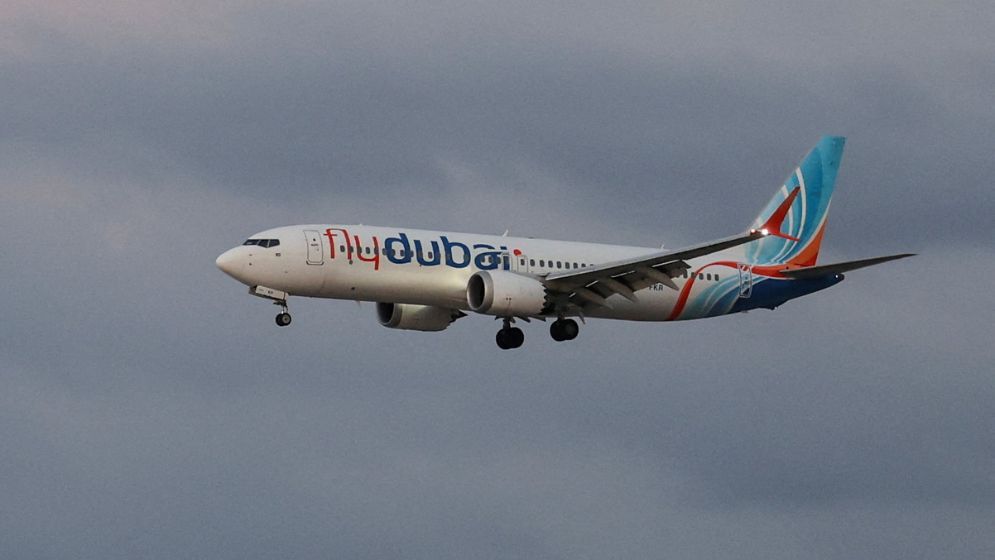
 For all latest news, follow the Daily Sun's Google News channel.


EXPLAINER
What do we know about flydubai flight 1073?
Reuters, London
Published: 03 Oct 2026, 06:14 PM
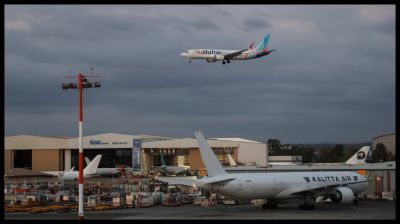
A plane, carrying passengers who were on the FlyDubai aircraft bound for Israel from the United Arab Emirates, which was diverted to Saudi Arabia following an emergency signal, arrives at the Ben Gurion International Airport, in Lod, near Tel Aviv, Israel, 30 September 2026. File Photo: Reuters
Here is what we know, and don't know, about the reported attempt by the copilot of flydubai flight 1073 to crash the plane on 30 September before it landed safely in Saudi Arabia.
What happened to the
plane?
The flight, carrying more than 170 mostly Israeli passengers
and crew, departed Dubai at 0305 GMT, according to flight data reviewed by
Reuters.
At 0521 GMT in Saudi airspace it made a sudden, sharp turn
and plunged towards the ground twice, before stabilising. The plane fell more
than 16,000 feet in just over 30 seconds during its most dramatic dive.
It then put out distress signals indicating an emergency and
unlawful interference. It changed course over Jordanian airspace and diverted
to land in Tabuk, Saudi Arabia.
At one point the transponder was turned off for nearly half
an hour, according to an Israeli official.
What happened in the
cockpit?
The copilot attacked and wounded the captain during the
flight, the captain, Israeli and Saudi officials say. The copilot used an axe,
which is normally kept in the cockpit for use during emergencies, for the
attack, the United Arab Emirates' prosecutor general said.
During one of the plane's plunges, the wounded captain who
was lying on the floor managed to open the door, he said, allowing passengers
to enter the cockpit and overpower the copilot.
Israeli officials cite witnesses saying that the copilot was
"bashing" the control panel, without elaborating. They say the
copilot appeared to be trying to crash the plane.
One of the passengers managed to steady the plane after the
copilot was subdued, which he knew how to do after watching an air-crash TV
show, according to his own account.
A second pair of off-duty pilots on board then took the
controls and landed, according to witnesses and Israeli officials.
Both the copilot and the captain suffered injuries, Saudi
officials said. Videos from inside the cabin verified by Reuters show a wounded
captain and copilot and blood apparently smeared on walls, and the copilot restrained
by the passengers.
What isn't clear?
The UAE's prosecutor general is calling the copilot's
actions an attempted "terrorist attack". It has not said what that
attack might have entailed if successful, and what the motivations were.
We also don't know the exact timings of events on board,
such as at what time the copilot overpowered the captain.
There was initial speculation the copilot had a knife
because a passenger on board asked about a knife in one video of the incident.
There has been no further information on that.
How close did the
plane come to crashing?
At its steepest point, the plane was losing altitude at
about 544 feet (166 metres) per second. Similar trajectories have resulted in
several major crashes.
What role did
passengers play?
One woman noticed a commotion in the cockpit when the
captain opened the door and alerted the rest of the plane. At least four
passengers rushed towards the cockpit, attacking and restraining the copilot.
The passenger who then steadied the plane before the
off-duty pilots could take over said he first pulled the copilot away from the
controls with the help of the other passengers.
Two other passengers attacked the copilot and tied him up using earphone cables, one of them said. A doctor on board treated the wounded captain.
Why were there other
trained pilots on the flight?
The two off-duty flydubai pilots were likely on board as
backup for tired crew, a pilot interviewed by Reuters said. Middle East flights
often have to reroute because of the ongoing US-Israeli war with Iran, the
pilot said.
Flydubai said on Friday a full investigation was underway.
What do we know about
the copilot?
The copilot's identity has not been publicly confirmed.
But two sources with knowledge of the incident have told
Reuters he has been identified as Hammam al-Hammami, an Omani national. Israeli
officials say he is Omani.
Omani authorities have not commented and there has been no
comment from him or a representative.
Israeli Prime Minister Benjamin Netanyahu told Fox News that
the copilot had undergone "Islamist radical indoctrination", without
providing details, and that he was suicidal. Israeli security officials have
said he was likely acting alone, though the investigation is ongoing.
Israel's ambassador to the United Arab Emirates has said no
motive has been determined.
The copilot had trained with Royal Air Maroc, but RAM said
it rejected his application to work there.
Was Iran or another
country involved?
Israeli security officials say Israel had not identified any
Iranian involvement so far. Iran has not commented.
Who is handling the
investigation?
The United Arab Emirates has ordered an investigation. UAE
judicial authorities have jurisdiction because the aircraft is registered in
the UAE and flies under its flag.
Netanyahu said Israel, which has a close diplomatic and
security relationship with the UAE, will be "possibly participating"
in the investigation.
Saudi Arabia said it had conducted the preliminary
investigation with security teams from the UAE.
How was this allowed
to happen?
Pilots undergo background checks and regular psychological
assessments, part of stringent measures in place since the 9/11 attacks in the
United States in 2001.
Israel has strict screening for anyone travelling there.
That includes not normally allowing in pilots from countries without diplomatic
relationships with Israel, such as Oman. Netanyahu has said Israel will look at
the "loophole" that allowed the copilot on board.
Israel is set to ramp up security checks on pilots flying into the country, Netanyahu's office said.