



 For all latest news, follow the Daily Sun's Google News channel.


India to get first vaccine to fight dengue in 2027
Qdenga received approval from India’s drug regulator in July 2026
India Today, New Delhi
Published: 21 Sep 2026, 05:18 PM
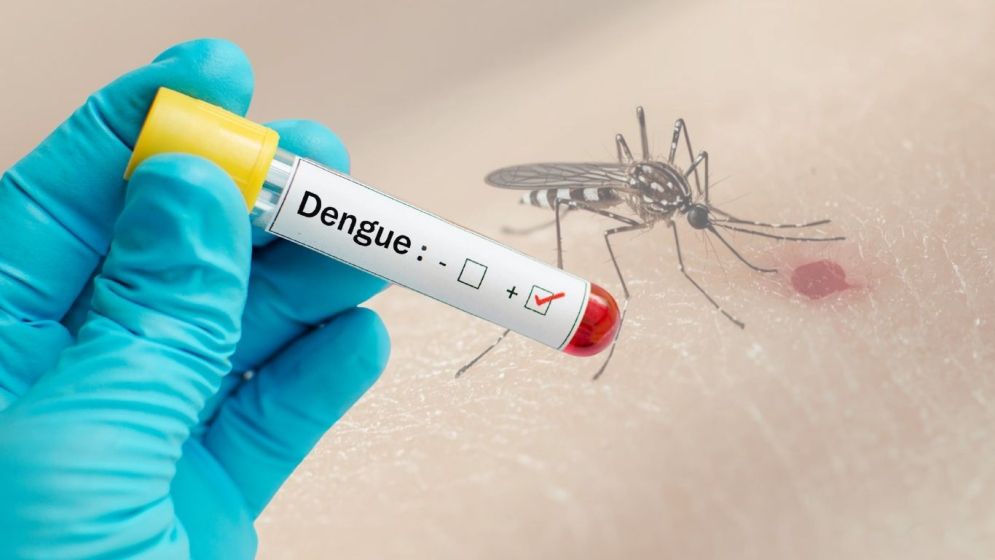
Representational Image
India could soon have an additional tool to fight dengue, a mosquito-borne viral disease that affects large parts of the country, particularly during and after the monsoon season.
Dr Reddy’s Laboratories has signed an agreement with
Japanese drugmaker Takeda Pharmaceutical to promote and distribute Takeda’s
Qdenga dengue vaccine in India, India Today reports.
The vaccine is expected to become available in the
first half of 2027, following regulatory and market authorisation processes.
The development comes at a time when dengue
continues to remain a public health concern in India. The disease is mainly
transmitted by Aedes mosquitoes, which can breed in stagnant water. Seasonal
outbreaks can put pressure on hospitals and healthcare systems, making
prevention an important part of dengue control.
What is Qdenga?
Qdenga is a dengue vaccine developed by Takeda
Pharmaceutical. According to the source, it is designed to protect against all
four dengue virus serotypes and is intended for children and adults between
four and 60 years of age.
The vaccine is administered as two injections of 0.5
ml each, with the second dose given three months after the first. One feature
of the vaccine is that it can be given regardless of whether a person has
previously been exposed to dengue, meaning pre-vaccination testing is not
required.
When will the dengue vaccine be available in India?
The vaccine is expected to be available in India
during the first half of 2027. However, its availability will follow the
necessary regulatory and market authorisation processes.
Qdenga received approval from India’s drug regulator
in July 2026, according to the source. The agreement between Dr Reddy’s
Laboratories and Takeda will allow the vaccine to be promoted and distributed
in the Indian market.
How effective is the vaccine?
The vaccine has shown protection against confirmed
dengue infections. The source states that Qdenga showed 80.2% efficacy against
confirmed dengue cases one year after the second dose in a late-stage trial.
The vaccine also showed 90.4% efficacy against
dengue-related hospitalisations after 18 months, meeting a secondary endpoint
of the study. These figures come from the clinical trial data cited in the
source and describe vaccine performance in the study population.
Why does India need a dengue vaccine?
Dengue remains a significant public health concern
in tropical and subtropical regions, including India. Outbreaks are often
concentrated during and after the monsoon, when stagnant water can provide
breeding sites for Aedes mosquitoes.
According to provisional data from the National
Centre for Vector Borne Diseases Control, India recorded 1,13,450 dengue cases
and 95 deaths in 2025. The figures highlight the continuing burden of the
disease in the country.
A vaccine could therefore become another preventive
measure alongside mosquito control and other public health efforts. However,
vaccination does not replace measures such as preventing stagnant water and
reducing mosquito breeding sites.
What does the development mean for dengue prevention?
The planned introduction of Qdenga gives India
another potential option for dengue prevention. The vaccine is designed to
provide protection against all four dengue virus serotypes, while its two dose
schedule is spaced three months apart.
Takeda has also said that it is working towards
increasing global manufacturing capacity to 100 million doses annually by 2030.
The company has reported that dengue cases in India have increased
substantially over the past two decades.
With Qdenga expected to enter the Indian market in
2027, dengue prevention could see an additional layer of protection. Until
then, controlling mosquito breeding, avoiding mosquito bites and following
public health guidance remain important ways to reduce the risk of infection.