



 For all latest news, follow the Daily Sun's Google News channel.


Where does Israel's destruction of underground Hezbollah base leave the group?
AFP, Beirut, Lebanon
Published: 13 Sep 2026, 09:07 PM
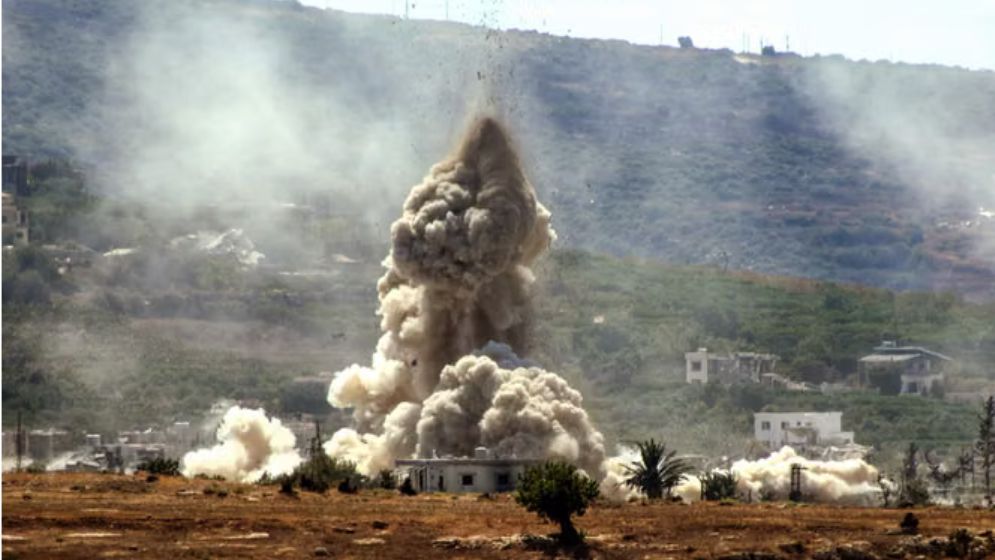
Photo: Collected
Israel's demolition on Thursday (10 September) of a tunnel network used by Hezbollah as a command centre in southern Lebanon, near the border, represents a significant setback for the Iran-backed group.
Experts
said that while Hezbollah is far from defeated, the group was now exposed after
two fierce wars with Israel in which it suffered major blows including the loss
of much of its top leadership and Israel's occupation of parts of southern
Lebanon.
How big of a blow is it?
A week
after capturing the site, the Israeli military on Thursday demolished the
tunnels in the Ali al-Taher ridge with huge explosions. The United States
Geological Survey reported a 4.1 magnitude tremor in the area.
Hezbollah never acknowledged losing the strategic highland, which lies around 10 kilometres (six miles) from the border with Israel and overlooks the major city of Nabatieh.
The
Israeli military previously said that the network comprised tunnels containing
dozens of Iranian-made rockets, missiles and drones, as well as other weapons.
Experts
say the tunnels, built over two decades, connected a network of villages in the
area, and that the Israeli military now had easy access to Nabatieh, where
Hezbollah holds sway.
"This
is a major loss, they cannot make another (headquarters) like it for decades to
come," Khalil Gemayel, a retired Lebanese general told AFP.
"Hezbollah
is now exposed in the area around the ridge," he added.
Reacting
to the tunnels' destruction on Friday (11 September), Israeli Defence Minister
Israel Katz said "now there is a strong security zone, stronger than ever
before, which protects the communities from attack and direct fire, and enables
us to maintain control and threaten Hezbollah deep inside the area".
Is Hezbollah militarily defeated?
While a
significant moment, Gemayel believed that "losing Ali al-Taher does not
mean Hezbollah is broken".
Israel
occupies a swathe of southern Lebanon, where Hezbollah built a now-dismantled
network of tunnels near the border.
The group
still maintains its major positions in Iqlim al-Tuffah -- a higher-altitude
part of the south further away from Israel -- in the Jezzine highlands
elsewhere in the south and in the Bekaa region in Lebanon's east and northeast.
"The
facilities present in Iqlim al-Tuffah are bigger than (Ali al-Taher),"
according to Gemayel.
But
Hezbollah no longer has a weapons supply route through Syria, where the new
authorities there are hostile to the group.
Military
expert Hassan Jouni also said that "the fact that Hezbollah did not carry
out a major operation in Ali al-Taher to defend it is a sign of weakness".
Hezbollah
has not claimed any attacks on Israel and its troops since June 20 while
Lebanon reports regular, sometimes deadly Israeli strikes despite a months-long
truce.
Israel has accused the group of attacks on its troops in that time.
Where does the group stand now?
Hezbollah
twice sparked wars with Israel in recent years, the first time with its attacks
in support of Hamas during the Gaza war, and the second in March in support of
Iran.
Jouni said
that while "Hezbollah lost a solid, fortified defensive base" when
Israel took Ali al-Taher, "it is not a devastating setback".
"It
has gone through unprecedented setbacks before the issue of Ali al-Taher,
especially with the assassinations and the (Israeli army)'s ability to occupy a
vast area" of southern Lebanon, he said.
During
these wars, Hezbollah lost several of its top commanders, including its former
chief, while an Israeli operation in September 2024 saw hundreds of Hezbollah
pagers and walkie-talkies explode, paralysing the group's communication systems
while killing dozens and wounding thousands.
More than
8,900 people have been killed in Israeli attacks since 2023, according to
Lebanon's health ministry. Hezbollah does not disclose how many fighters it has
lost, but most people killed in the war have been adult men.
On top of
these setbacks, Hezbollah is also dealing with a Lebanese president and prime
minister who have vowed to disarm it.
The
group's weapons have long been a point of contention in the country, with
critics accusing it of using them to support Iran's regional agenda to the
detriment of Lebanon.
Hezbollah
is also facing some scrutiny from its core support base, the Shia Muslim
community.
In online
petitions posted earlier this month, hundreds of Lebanese public figures,
including legal experts and human rights advocates, called for Lebanon's army
to be deployed in Nabatieh and Tyre, two of southern Lebanon's largest cities.
"This city does not belong to any political group," said the signatories in the Nabatieh petition, referring to Hezbollah.