


 For all latest news, follow the Daily Sun's Google News channel.


Imran Khan would not ‘confront’ Pak army chief if freed, aide says
Reuters, Karachi
Published: 20 Aug 2026, 11:35 PM
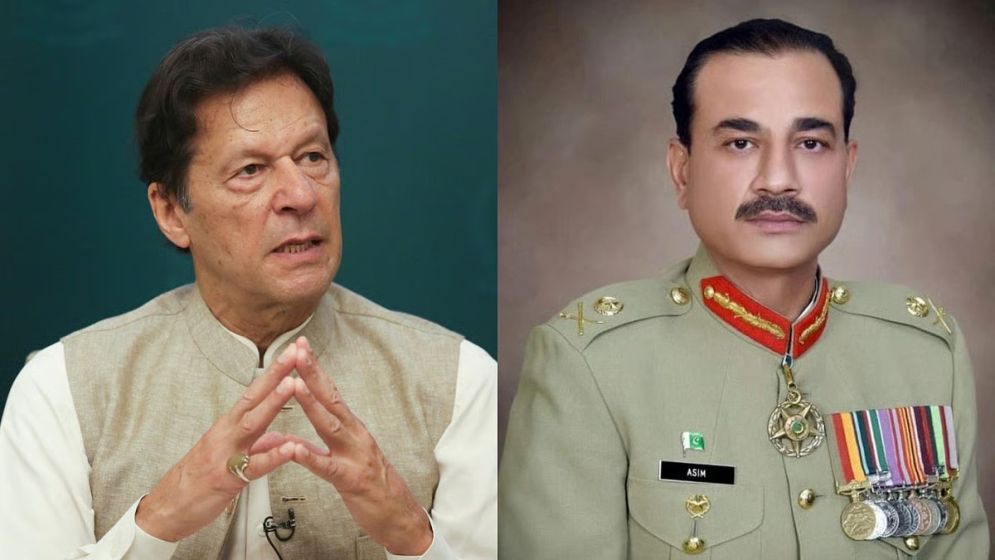
Jailed former Pakistani Prime Minister Imran Khan would not
confront the military or army chief Asim Munir if freed, one of his closest
aides told Reuters, portraying Munir as able to extend a "healing
hand" after a legal breakthrough this week.
The comments, which came after Pakistan's top court ordered
Khan to be moved to hospital for treatment, appeared to mark a significant
change in rhetoric by his party, Pakistan Tehreek-e-Insaf, or PTI.
Its supporters have for years rallied against Munir, who is
seen by them as the man who jailed Khan in 2023 after he fell out with the
military leadership. Khan, a former cricket hero, himself has described Munir
as "mentally unstable".
But in an interview on Wednesday, Khan aide Zulfikar
Bukhari, a PTI spokesperson, sent one of the strongest signals so far that the
party was willing to reconcile with the military, potentially easing one of the
tensest stand-offs in recent Pakistani political history, even as doubts
remained whether Khan himself shared that wish.
"If Imran Khan was released tomorrow, hypothetically,
he wouldn't do anything that would effectively damage the country,"
Bukhari said, describing him as "magnanimous".
"That doesn't mean you go loggerheads with the
establishment, with the military leader," he said. "You control your
own hurt. You curb your own pain. You swallow it for the betterment of your
country."
The government and military did not immediately respond to
requests for comment about Bukhari's remarks. The military has previously said
it does not interfere in politics, while the government says Khan's cases are
matters for the courts.
Analysts caution Khan's thinking may differ
The Supreme Court ordered authorities on Tuesday to transfer
Khan, 73, from prison to a private hospital within 48 hours – a decision widely
interpreted by analysts as a potential first step in lowering tensions between
the military and Khan's party, even if only temporarily.
Bukhari called the ruling a "new ray of hope" and
said PTI would comply with the court's instruction that its workers and leaders
not gather outside the hospital. As of Thursday afternoon, Khan had still not
been transferred and it was unclear if the government would resubmit a
challenge that was rejected on technical grounds earlier on Thursday.
Bukhari said there were no talks between PTI and the
military, but described Munir, who also holds the rank of field marshal, as
Pakistan’s most powerful man.
If Munir woke up "one fine morning" and said:
"Enough, I need to show I'm the father of the nation at the moment",
then he could "rub his healing hand on to the country," Bukhari said.
"I would feel that every political prisoner would be out within 24
hours."
Analysts cautioned that Khan's thinking may differ from that
of the PTI leadership that has escaped arrest. Much of the party's apparatus
has been dismantled by Pakistani authorities and many of its former top
officials remain in prison.
It's unclear if "PTI's leadership have the capacity, so
long as Khan is in jail, to present a common front in any potential engagement
or negotiation with the state", said Michael Kugelman, a senior fellow at
the Atlantic Council.
PTI to go ahead with protests in September
Party leaders last spoke with Khan eight months ago, said
Bukhari, who is in self-imposed exile in Dubai.
There have been no recent comments by Khan, who has been
kept in what human rights groups have described as solitary confinement. But in
comments attributed to him last November, he described Munir as "the most
tyrannical dictator in history," accused him of "inflicting every
form of cruelty upon me and my wife" and said "no matter what they
do, I will neither bow down nor submit to them".
Since he lost power in a parliamentary no-confidence vote in
2022, Khan has faced multiple legal cases, including over state gifts,
instigating violent attacks on military and state installations, and an
accusation of an unlawful marriage.
All convictions but one have been suspended or overturned,
with appeals pending. He denies
wrongdoing.
Despite signs of a careful rapprochement, Bukhari said PTI
would still proceed with a nationwide march on September 27 regardless of
whether Khan was transferred to hospital. It would demand implementation of his
court-ordered treatment, access for his family, doctors, lawyers and party
leadership, prompt hearings in his cases and, ultimately, his release.
Senior PTI leaders driven into hiding would participate or
help organise the mobilisation, he added.
"You'll probably see a lot of leadership come out of hiding," he said. "Even if you don't see them, you'll see them mobilising."