


 For all latest news, follow the Daily Sun's Google News channel.


What time is the solar eclipse? How and when to see today’s spectacular display
Daily Sun Report, Dhaka
Published: 12 Aug 2026, 05:00 PM
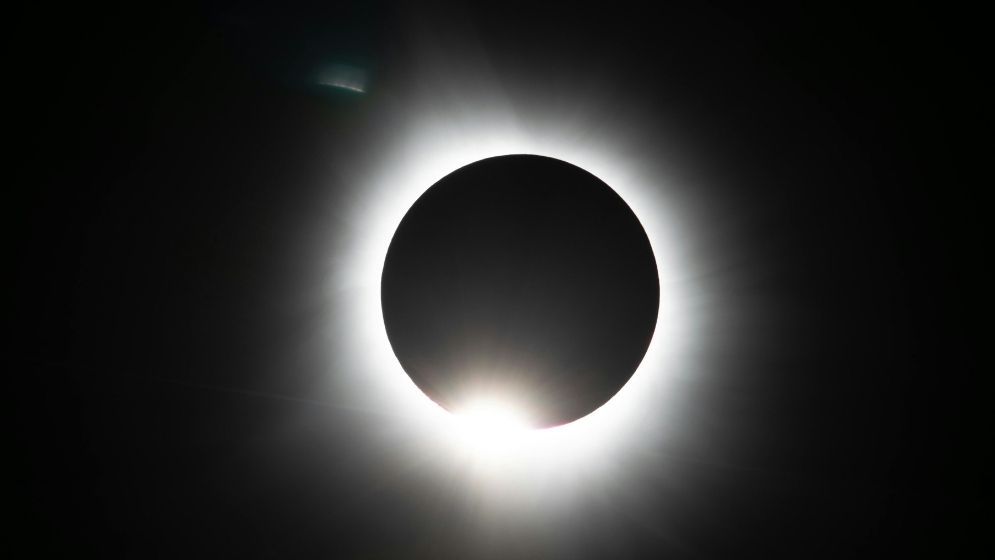
File Photo
The world is set to see one of the most beautiful and unnerving celestial spectacles this week, as the Moon moves in front of the Sun and forms a solar eclipse.
In many of the places where it can be seen –
including the UK and Ireland – it will be the most total eclipse that has been
seen in decades, and there won’t be another chance to see it for a similarly
long period of time.
It has led to excitement across the country,
with eclipse glasses selling out and people rushing to find the best place to
see it.
But knowing exactly when it will arrive in
the sky is not straightforward, and varies substantially depending on where you
are. That is both because it will pass over the Earth at different times, and
because timezones mean that working out exactly when that happens adds an extra
complication.
Whatever time it arrives, experts have urged
anyone looking up to make sure they do so safely. That includes using special equipment
– and not looking at it with the naked eye, or through normal sunglasses.
“During an eclipse, the sun appears dimmer
than usual. This makes it easier to look at directly – and that's precisely the
problem,” the UK Health Security Agency said.
“The reduced brightness can override the
body's natural reflex to look away, allowing intense sunlight to reach and
damage the retina.
“This damage happens without causing any
pain, so you may not realise harm is occurring until it's too late.”
After the 1999 solar eclipse, the Royal
College of Ophthalmologists reported about 70 cases of vision problems among
viewers. About 40 per cent of those had looked at it for less than a minute.
Ordinary sunglasses do not provide adequate
protection for viewing a solar eclipse – no matter how dark they may be, the
UKHSA said.
For those without eclipse glasses, the UKHSA
said the eclipse can be safely viewed through a pinhole viewer or by projecting
the sun’s image onto a sheet of paper using a pinhole projector.