


 For all latest news, follow the Daily Sun's Google News channel.


How Syria is dismantling IRGC networks, deepening Gulf Arab ties
Arab News, London
Published: 03 May 2026, 03:47 PM
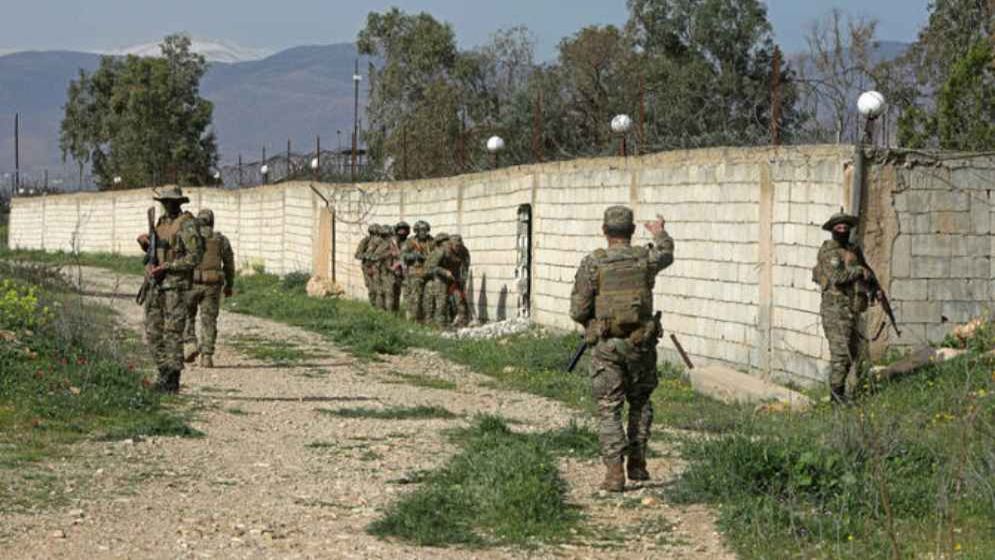
Syrian army soldiers patrol along the Syrian–Lebanese border in the rural area of Al Qusayr on April 1, 2026. Assad’s fall in late 2024 dealt a major blow to Iran. Interim authorities now seek tighter control of the borders. Photo: AFP
As Syria’s transitional government deepens ties with Arab Gulf states, it is also quietly trying to dismantle one of the most entrenched legacies of the war — Iran’s military and economic influence.
Syria’s partnership with the Gulf countries has been building since late 2024, after a rebel offensive toppled Bashar Assad’s regime. Since then, Saudi Arabia especially has moved to deepen cooperation with the interim government of Ahmad Al-Sharaa.
In May last year, Saudi Arabia persuaded US President Donald Trump to lift sanctions on Syria and helped facilitate a meeting between Trump and Al-Sharaa in Riyadh. The move marked a major diplomatic shift and put Syria on a path toward international reintegration.
Yet closer ties with Gulf states are only part of the story. For Syria’s new leadership, attracting Arab capital also means loosening the networks that Iran spent years building inside the country.
Iran, one of Assad’s key allies during the civil war, had embedded itself in Syria’s military, political and economic institutions. Those networks, analysts say, cannot be dismantled overnight.
“The situation here is much more complicated than it appears,” a Damascus-based security expert told Arab News on condition of anonymity.
“Even though the leadership is trying to move in that direction and distance itself from the axis of resistance, on the ground there are still many groups and individuals who remain closely tied to that same axis. So, the intention and the plan are there, but it’s going to take time.”
The “axis of resistance” is a loose, Iran-backed network of armed groups and some state-linked forces across the Middle East that defines itself in opposition to Israel and the US.
The alliance, bound together by the extraterritorial Quds Force of the Islamic Revolutionary Guard Corps, influences Iran’s relationships in Lebanon, Iraq, Yemen, Gaza and, at times, Syria.
A December 2022 investigation by the Organized Crime and Corruption Reporting Project and the Syrian Network Observatory found that mobile operator Wafa Telecom, established in 2017, had ownership links to figures and companies tied to the IRGC, despite efforts to present it as Syrian-owned.
Syria’s new authorities now appear increasingly willing to confront the remnants of Iran-linked networks.
On April 21, Saudi Crown Prince Mohammed bin Salman met Al-Sharaa in Jeddah. The two leaders discussed ways to strengthen bilateral ties, “particularly in the economic and investment fields and regional connectivity projects.”
The meeting highlighted Saudi Arabia’s growing role as a central diplomatic and economic player in Syria’s postwar reintegration. For both governments, the broader goal is to turn renewed political engagement into tangible economic gains.
“President Al-Sharaa needs Saudi investment,” Joshua Landis, director of the Center for Middle East Studies at the University of Oklahoma, told Arab News. The Saudi crown prince “can spur that along.”
Two days before Al-Sharaa’s visit to Saudi Arabia, Syria’s Interior Ministry said security forces had foiled a “sabotage plot” by a “Hezbollah-linked cell” in the southern province of Quneitra.
The cell had planned to use Syrian territory to mount a cross-border attack, state news agency SANA reported.
The April 19 incident was the latest in “several attempts to destabilize the country and undermine public security,” the ministry said, adding that the alleged plot involved remnants of Assad’s former regime and individuals linked to Hezbollah.
Authorities reported a similar case earlier in the month. On April 11, the Interior Ministry said its counterterrorism directorate had foiled a planned attack near the Mariamite Cathedral in Damascus and that preliminary investigations showed the cell was linked to Hezbollah.
Hezbollah, however, denied the accusations, calling them “false and fabricated.”
In a statement on April 12, the Iran-backed Lebanese group said it “has no activity, connection, or relationship with any party in Syria,” adding that it has no presence on Syrian territory.
The effort to curb Iran-aligned influence has also extended to Syria’s borders.
On April 15, Syrian authorities said they had discovered a tunnel in the southern countryside of Homs province that extended into Lebanon and seized weapons and ammunition depots allegedly prepared for smuggling, according to Syrian state TV channel Al-Ekhbariya.
Iran’s reach in Syria extended far beyond politics and security. It is also believed to have embedded itself into lucrative sectors, including telecommunications, real estate, ports and phosphates.