


 For all latest news, follow the Daily Sun's Google News channel.


Myanmar reduces Suu Kyi's sentence, frees former president
Reuters, Naypyidaw
Published: 17 Apr 2026, 05:17 PM

A protester holds up a poster featuring Aung San Suu Kyi during a demonstration against the military coup in front of the Central Bank of Myanmar in Yangon on 15 February 2021. Photo: AFP
Myanmar has reduced the sentence of imprisoned ex-leader
Aung San Suu Kyi, her lawyer told Reuters on Friday, as part of an amnesty by a
new president who ousted her government in a coup five years ago.
Suu Kyi, 80, was serving a 27-year sentence for a litany of
offences her allies said were politically motivated to keep her at bay, ranging
from incitement and corruption to election fraud and violating a state secrets
law.
The sentence has been cut by one-sixth, but it remains
unclear whether the Nobel Peace Prize winner will be allowed to serve the rest
of her sentence under house arrest, the lawyer said.
The wildly popular Suu Kyi, who had dismissed the charges
against her as "absurd", has not been seen in public since the end of
her marathon trials, and her whereabouts have been unknown.
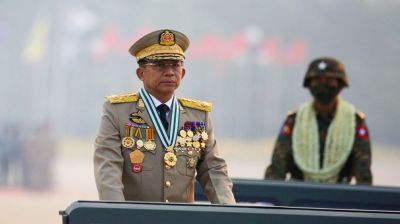
Earlier, state media reported that President Min Aung Hlaing approved an amnesty for 4,335 prisoners, the third such move in the past six months. Amnesties typically take place in Myanmar each year to mark Independence Day in January and New Year in April.
Among the prisoners freed was Win Myint, who served as
president from 2018 until the 2021 military coup.
Win Myint, an ally of Suu Kyi, was "granted a pardon
and the reduction of his remaining sentences under specified conditions",
state broadcaster MRTV said.
A spokesperson for the military-backed government did not
immediately respond to a request for comment.
The 2021 coup against Win Myint and Suu Kyi's democratically
elected government was led by Min Aung Hlaing. It plunged the Southeast Asian
country into a nationwide civil war that continues to rage.
Min Aung Hlaing was elected president on 3 April following
polls in December and January during which the opposition was stifled and
largely absent. Critics and Western governments dismissed the vote as a sham
designed to entrench military rule behind a democratic facade.