


 For all latest news, follow the Daily Sun's Google News channel.


Is the Iran conflict turning into a water war?
Middle East desalination plants at risk, fears of a “Karbala-like” crisis
Mushrifa Nuzhat, Daily Sun
Published: 07 Apr 2026, 11:50 AM
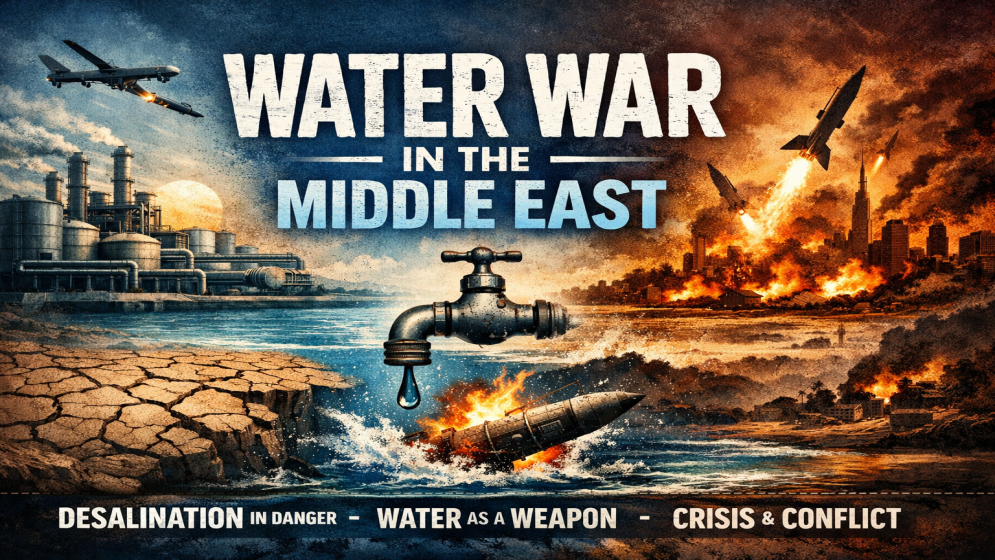
Middle East desalination plants at risk-
The ongoing conflict in the Middle East is typically viewed
through the lens of oil, gas, or military power. Yet beneath the surface of
this war, a quieter but deeply alarming crisis is emerging—one in which the
very foundation of human survival, water, is becoming a target.
Countries across the Gulf region are naturally water-scarce.
With no major rivers, limited rainfall, and rapidly depleting groundwater
reserves, their survival increasingly depends on desalination—the process of
converting seawater into potable water. Nearly 60 per cent of the world’s
desalination capacity is concentrated in the Gulf. The dependence is stark:
around 90 per cent of drinking water in the United Arab Emirates and Kuwait
comes from desalination plants, along with 86 per cent in Oman and 70 per cent
in Saudi Arabia. This reliance has now become a critical vulnerability.
Amid rising tensions between the United States and Iran, analysts warn that these desalination facilities are increasingly at risk of direct attack. There have already been reports of drone and missile strikes damaging installations in Kuwait and the UAE.
Meanwhile, Iran has hinted in retaliatory warnings that any
strike against it could trigger attacks on water infrastructure across the
Gulf. This signals a dangerous shift in the nature of the conflict.
In conventional warfare, the balance of military power is
key. However, this emerging strategy—targeting infrastructure—reflects the
realities of asymmetric warfare. Alongside electricity, energy, and industry,
water infrastructure has now been added to the list of potential targets.
The destruction of a single desalination plant does not merely mean the loss of a facility; it could shut down water supplies to an entire city within days. Experts caution that many urban centres in the region rely on only a handful of major plants—leaving them highly exposed to disruption. As a result, the consequences of such attacks would be felt directly by civilians. Some analysts have warned that strikes on these facilities could turn parts of the Middle East into a “Karbala-like” humanitarian crisis overnight.
History offers a stark warning. During the Gulf War, damage
to Kuwait’s water supply infrastructure led to prolonged disruption. Today, the
risks are even greater, as modern urban life is far more dependent on
desalination technology. Many observers are now referring to this evolving
dynamic as a “water war”—a new form of conflict centred on access to water.
Iranian state media reported last November that Tehran’s potable water sources
could run dry within two weeks.
The implications extend well beyond the Middle East. Instability in the Gulf region inevitably puts pressure on global energy markets, disrupts supply chains, and sends shockwaves to import-dependent economies, including Bangladesh. The issue is no longer purely geopolitical—it is fundamentally about human security.
Water in the Middle East is no longer just a resource; it is becoming an instrument of conflict. Attacks on desalination facilities would threaten not only Iran but the stability of the entire region. As the intensity of the conflict escalates, one conclusion is becoming increasingly clear: water itself could become a weapon of war in the Middle East.
Recommended Stories