


 For all latest news, follow the Daily Sun's Google News channel.


BIMSTEC chief stresses regional sufficiency to weather global supply shocks
Daily Sun Report, Dhaka
Published: 24 Mar 2026, 06:05 PM
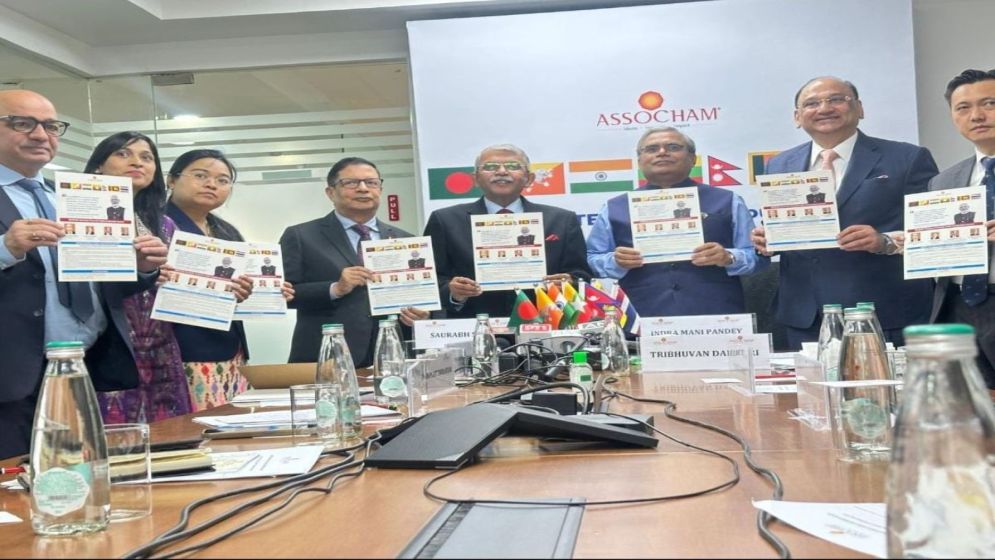
There is a need to create self-dependency regionally rather
than relying on global supply chains, be it for energy security, health
security or other issues, said BIMSTEC Secretary General Indra Mani Pandey.
Key business chamber Assocham has revitalised the India
Secretariat of the BIMSTEC Business Council by launching the leadership of
India for the council, Pandey said in a press statement released Monday (23
March).
The new BIMSTEC leadership has set a strategic agenda
focused on three core pillars: Trade Facilitation, Multi-modal Connectivity,
and MSME Cooperation. These priorities align closely with the BIMSTEC
"Bangkok Vision 2030," which seeks to transform Bay of Bengal into a
resilient, open and prosperous region.
Bangladesh, being the Lead member State for cooperation
under BIMSTEC in Trade, Investment and Development Sector has a significant
role in enhancing business to business exchanges and dialogues.
The Associated Chambers of Commerce and Industry of India
(Assocham) has reinforced India’s commitment to BIMSTEC, reflecting its
strategic vision of strengthening regional cooperation in the Bay of Bengal
region as part of its “Neighbourhood First” and “Act East” policies, the
statement said.
“We need to create dependency regionally rather than
depending on the global supply chains, whether for energy security or health
security. We can deal with such challenges working together,” the statement
quoted Pandey as saying.
The Bay of Bengal Initiative for Multi-Sectoral Technical
and Economic Cooperation (BIMSTEC) is a regional organisation that was
established in 1997 with the signing of the Bangkok Declaration.
Its members are Bangladesh, Bhutan, India, Nepal, Sri Lanka,
Myanmar and Thailand.
India, as a founding member of BIMSTEC, has consistently
played a proactive role in advancing connectivity, trade facilitation, energy
cooperation and capacity building among member states, the statement said.
India’s support for institutional strengthening, including
the BIMSTEC Secretariat, and its emphasis on inclusive growth, resilient supply
chains and sustainable development underscore its long-term commitment to
making BIMSTEC a vibrant and effective regional grouping, it said.
In his opening address, Tribhuvan Darbari, India Chair,
BIMSTEC Business Council, said, “BIMSTEC represents a USD 5 trillion
opportunity. The time is ripe to unlock this potential through deeper trade
integration, stronger supply chains, and seamless connectivity. The real opportunity
within BIMSTEC lies in converting policy alignment into business outcomes.”
Saurabh Sanyal, Secretary General, Assocham, said, “This
marks not just an institutional milestone, but a lasting commitment to
businesses across seven nations. Our focus is on turning intent into action
through robust industry-government collaboration.”
Dr. Shankar Prasad Sharma, Ambassador of Nepal to India, Penday Dorji, Counsellor (Economic), Royal Bhutanese Embassy, New Delhi, Thin Pyant Thida Kyaw, Deputy Chief of Mission/Minister Counsellor, Embassy of Myanmar, New Delhi, Geshan Dissanayake, Minister Counsellor (Commercial), The High Commission of Sri Lanka to India and Charoenporn Raksapolmuang (Counsellor), Royal Thai Embassy in New Delhi, also participated at the event, reads a BIMSTEC press release.