



 For all latest news, follow the Daily Sun's Google News channel.


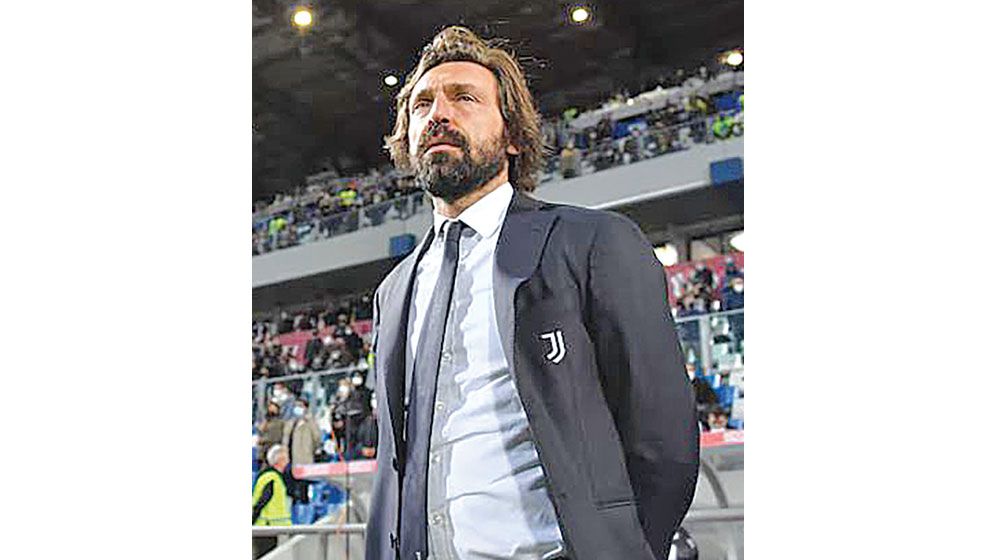
Italy failed to qualify for a third consecutive World Cup in April.
Gennaro Gattuso, his mission incomplete, walked away from the job, much as generals do after losing wars they perhaps never had the tools to fight with.
What followed was a scramble that revealed just how broken Italian football's self-image truly is.
Paolo Maldini, now technical director of the federation, first approached Carlo Ancelotti. Ancelotti said no politely, warmly, but definitively.
Then came the audacious swing at Pep Guardiola, an idea born more out of desperation than logic. Guardiola, characteristically, declined without fuss.
The Italian Football Federation (FIGC) were running out of names on a very short list. And then, almost inevitably, they came to Andrea Pirlo.
There is a particular poetry to it — painful and beautiful in equal measure.
Pirlo was the heartbeat of the last great Italy team, the 2006 World Cup winners who conquered Germany and lifted the trophy in Berlin.
He played the game in slow motion while everyone else sprinted, reading things three passes before they happened.
Now, 20 years on, the federation has handed him the wreckage of a programme that hasn't stood on a World Cup pitch since 2014 and asked him, simply, to fix it. The announcement, confirmed by La Gazzetta dello Sport and shortly after by the FIGC themselves, carried the weight of nostalgia and the urgency of crisis in the same breath.
A four-year contract through the 2030 World Cup in Morocco, Portugal and Spain. His trusted lieutenant Roberto Baronio - his assistant since United FC, a friend since they won the Under-21 Euros together in 2000 - will be beside him.
The structure is familiar, the setting is not. Because this Italy is not the Italy Pirlo once graced.
It is a nation football-mad and football-broken, and watched from home as the world's biggest tournament unfolded without the Azzurri for the third time running.
The talent pipeline, so rich in Pirlo's generation, has dried and cracked. Young Italian players sit on benches across Serie A while clubs prioritise imports.
The federation knows this. Pirlo knows this.
His coaching career has been, to be kind, uneven.
The Juventus job arrived too early, given to him almost as a romantic gesture by a club that perhaps confused gratitude with readiness.
He won the Coppa Italia and the Supercoppa, but the league suffered.
Subsequent stints — Sampdoria, Karagumruk, further stops — kept him active without elevating him.
He arrives not as a proven winner in the dugout, but as a legend whose presence alone might remind a nation what it once was capable of producing.
That, perhaps, is the bet the federation is making. Forget tactics for a moment. Forget pressing systems and set-piece coaches.
Italy's football problem is a cultural one - a loss of identity, of hunger, of the quiet arrogance that made them formidable for decades.
Pirlo never needed to shout to command a room. He had authority the way certain landscapes have authority - simply by existing.
The immediate task is Euro 2028 qualification. It is a target that sounds modest compared to the abyss Italy currently inhabits.
But it is a start. A direction. And in a programme that has been drifting without compass for years, direction is everything.
The maestro comes home.
Whether he can still conduct the orchestra or whether the instruments are too out of tune the world will watch and wonder.
Italy can only hope he hasn't arrived too late.