



 For all latest news, follow the Daily Sun's Google News channel.


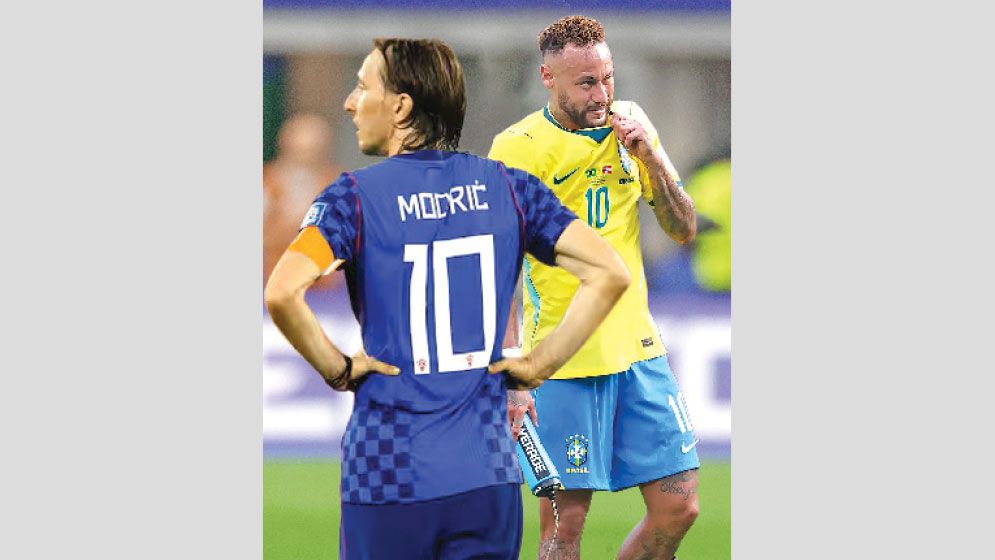
There is a particular kind of grief that arrives with a whistle, a scoreboard, a slow walk towards a tunnel you'll never come back through.
This summer in North America, the game said goodbye to some of them. Not all at once, not with ceremony — just with the clean, indifferent logic of knockout football. And then they were gone. In Toronto, a 40-year-old midfielder played what will almost certainly be the final World Cup match of his career — his fifth, across a span of 20 years. Still his country's most important player. Luka Modric ran until there was nothing left to run towards. Going back to 2012. He had just arrived at one of the world's great clubs, and no one was sure he was good enough. Too slight, too quiet, too cerebral for the appetite of that stadium. And then came those years — those extraordinary, gilded, impossible years — when he held the middle of the earth together. When the biggest nights in club football arrived and you knew, somewhere in that midfield, a man was already two moves ahead of everyone else. The ball would arrive and leave again, barely touched, perfectly placed, like a sentence with no wasted words.
He won the game's highest individual honour. He led his small nation to a World Cup final. He was the thinking part of the game made flesh.
And then, in a knockout match with six minutes left and his side trailing, a teammate had the ball in the net. For a moment, it was the same old magic. And then the screen lit up. Offside. That was it. He walked off and acknowledged the crowd, because that is what he has always done — carried the weight with grace, refused to let them see it. On the other side of the continent, in the wet July air of New Jersey, another farewell was unfolding. A striker who had been the most electric footballer on the planet for the better part of a decade announced he was done with his national team. Three words, quietly delivered pitchside: It is now over.
Neymar had first played for his country at that same stadium 16 years ago — a whole life ago. In those years between, there was a version of him, roughly between 2011 and 2015, that did things with a football suggesting the laws of physics were merely suggestions. He dribbled like the ball was attached to his foot by an invisible thread. He scored goals that made neutral supporters gasp and opposing defenders stare quietly at the turf.
Against his final opponents, he scored from a penalty in the dying minutes after being brought on as a substitute. He collapsed in tears when the final whistle went. He had only been fit enough to play 37 minutes across the entire tournament. The body that once made the game look effortless had spent too many years fighting itself to offer anything more.
His nation's loss marked a sixth consecutive knockout defeat against European opposition since their last title, a dream deferred again, and now perhaps deferred for good for this generation.
These were not ordinary footballers. They were a specific kind of music — the kind that defines a decade, that you hear years later and are immediately 23 again, certain that something beautiful is still possible.
Eventually the whistle blows. The screen confirms it. You walk off the pitch and the stands go quiet in a way that has nothing to do with sound — a quietness that belongs to people who grew up watching you, who understand, with a strange and unexpected grief, that part of their own timeline is over too.