


 For all latest news, follow the Daily Sun's Google News channel.


The One-Week Decision That Led Him to Oxford—and Beyond
How Dr Zakiul Hassan's Chevening journey began with a single weekend, and what he wants every applicant to know
By Mossabber Hossain
Published: 28 Jul 2026, 03:34 PM
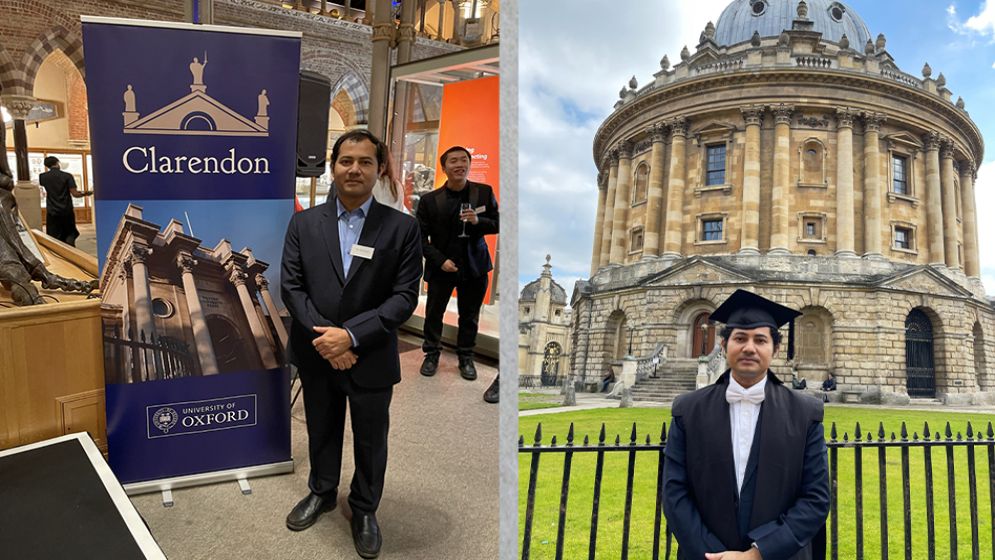
Photo : Courtesy
For many aspiring Bangladeshi students, studying at the University of Oxford feels like an impossible dream. Dr Zakiul Hassan once felt the same.
Today he is pursuing a DPhil (PhD) at Oxford's Pandemic Sciences Institute, where his research focuses on Nipah virus, a WHO priority pathogen with pandemic potential that causes outbreaks in Bangladesh almost every winter, and on broader pandemic preparedness. His work has been published in leading journals, including The Lancet Infectious Diseases, and he has contributed to the WHO Nipah Research and Development Roadmap. In recognition of his contributions, he was named an Emerging Leader in Infectious Diseases by the International Society for Infectious Diseases in 2024 and has received several national and international research awards including -young investigator award, clinical research award and a gold medal.
Yet a few years ago, Oxford seemed far beyond his reach.
Every year, as the UK Government's Chevening Scholarship opens for applications, Dr Hassan's inbox fills with the same questions from students and young professionals: Am I good enough? Where do I begin? What do I write? How do I stand out among thousands? Here, drawing on his own experience, he answers them.
A dream that once felt out of reach
Before Oxford, Dr Hassan was a young physician and researcher at icddr,b. He loved the work and was keen to learn, but studying at one of the world's leading universities felt like an ambition rather than a real possibility.
"Like many others, I ruled myself out before I even applied," he recalls. "I wondered whether scholarships like Chevening were really meant for someone like me."
The greatest obstacle, he now believes, was not his CV. "It was believing I actually had a chance." His first message to applicants follows directly from that: don't eliminate yourself before the selection panel has had the opportunity to.
The weekend that changed everything
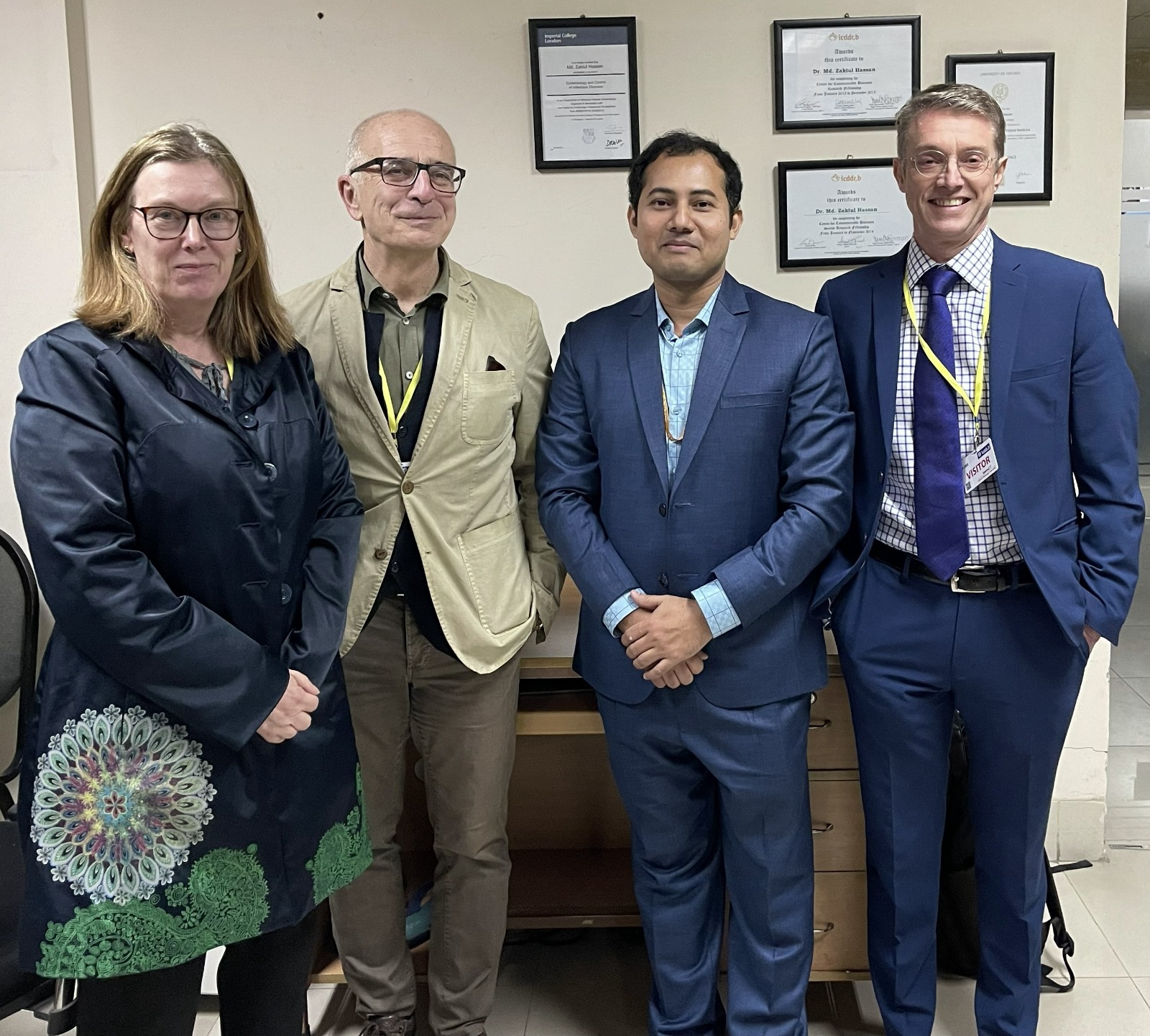
The turning point came, unexpectedly, in 2019. Dr Hassan travelled to London for a two-week infectious-disease course run by the Imperial College London at the St Mary's Hospital, with fees, accommodation and travel all covered. For a young researcher from Bangladesh, that alone was remarkable.
The course had a free weekend in the middle. On Saturday he explored Cambridge; on Sunday he took the train to Oxford. By chance, it was the university's Open Day, and the colleges, laboratories and libraries were open to visitors. He spent the whole day walking the city.
"It wasn't just the history," he says. "It was the research environment, the openness, the libraries, the atmosphere of academic curiosity."
On the evening train back to London, he made himself a quiet promise. No plan, no certainty, just a decision to apply to Oxford one day. Looking back, he calls that short journey one of the most important of his life.
One week before the deadline
Back in Bangladesh, he found the Chevening application, and discovered the deadline was a week away.
"Most people spend months preparing. I had one week," he says with a smile. "I told myself I might not get selected, but if I didn't apply, I'd never know."
That decision, made days before the cut-off, would change the course of his career.
More than a scholarship
Established in 1983, Chevening is the UK Government's flagship international scholarship, and over four decades it has funded thousands of professionals from more than 160 countries to study in the UK. Hundreds of Bangladeshis have received it and now work across government, research, business, law, journalism and health.
Competition is intense, and, Dr Hassan says, widely misunderstood. "Many people assume Chevening just wants the highest grades or the longest list of achievements. That's not what distinguishes successful candidates." What the scholarship looks for, in his experience, is demonstrated leadership, the ability to build networks, and a clear plan to contribute back home. "They are interested in your potential, not just your past."
Beyond the funding — tuition, living costs, flights — he is most grateful for something less tangible. "It gives you access to an extraordinary global network," he says. "For me, Chevening didn't end at graduation. It opened doors that still shape my work today."
How the process works
Dr Hassan breaks the selection into three stages.
First, the online application, built around four essays — on leadership, networking, studying in the UK, and career plans. "The essays are the single most important part," he says.
Second, the interview, usually held at the British High Commission for those who are shortlisted. It is not designed to catch candidates out. "The panel wanted to understand my journey and my plans. They weren't looking for rehearsed answers."
Third, the university offer — securing an unconditional place from one of the three eligible UK master's courses before the scholarship is confirmed.
Start long before applications open
The biggest mistake, he believes, is waiting for applications to open, usually in August, before preparing. "A strong application isn't built in a weekend. It comes from genuine reflection about who you are and what you want to accomplish."
His advice for the months beforehand: update your CV, gather real examples of leadership and impact, speak to potential referees, research your universities and courses, and think honestly about where you want to be in five or ten years.
Why the essays matter most
When Dr Hassan prepared his own application, he didn't begin by writing. He began with a blank sheet of paper and listed every meaningful experience he had — research, leadership, challenges overcome, lessons learned — then sorted them under the four essay themes.
He had no long publication list at the time, so he focused on impact, not numbers, asking himself of each experience: how did this change something, help others, or shape my direction? And he stayed honest. "I never tried to present myself as someone I wasn't. Your story is unique — imitating someone else's rarely works."
The most common error he sees is applicants turning essays into a retelling of the CV. "The panel already has your CV. The essays should tell the story behind it — why an experience mattered, what you learned, how it shaped your ambitions. Facts tell them what you've done; reflection tells them who you are."
On AI tools, now common among applicants, he is measured: they can help organise ideas or sharpen language, "but they should never replace your own voice. No software can describe your motivations. That has to come from you."
The emails he still remembers
Months later came the shortlisting email — "one of the happiest I've ever received." The next step was two references; he chose one from a medical-college teacher and one from his workplace supervisor. "Pairing an academic reference with a professional one worked well — it reflected both sides of me."
The interview he had dreaded turned out warm and conversational. "The questions mostly revisited what I'd already written, from different angles. So, reread your essays beforehand — and answer with real examples, not memorised lines."
Then the email he had been waiting for: he had won a Chevening Scholarship. Around the same time came an offer for the MSc in International Health and Tropical Medicine at Oxford — a highly competitive programme that admits under 7% of applicants. In the middle of the COVID-19 pandemic, he packed two suitcases full of dreams and left for Oxford.
What Chevening changed
Oxford gave him far more than a degree, he says—it gave him a global network of clinicians, scientists and policymakers working to prepare for future pandemics. During his Chevening-funded Master's, he received the NDM Prize for best graduate student, and that experience opened the door to further competitive scholarships to remain at the University of Oxford for a fully funded DPhil in Clinical Medicine at the Pandemic Sciences Institute.
Today, he leads international research on Nipah virus, a WHO priority pathogen with pandemic potential and one of the world's deadliest emerging viruses, as well as broader pandemic preparedness. His work has been published in leading journals, including The Lancet Infectious Diseases and The Lancet Microbe, helping strengthen the evidence needed to improve patient care and support the development of new therapeutics and future clinical trials for Nipah virus disease.
Rather than taking his expertise away from Bangladesh, Oxford enabled him to build bridges between Bangladesh's public health institutions and some of the world's leading research networks, ensuring that evidence generated in Bangladesh helps inform global pandemic preparedness.
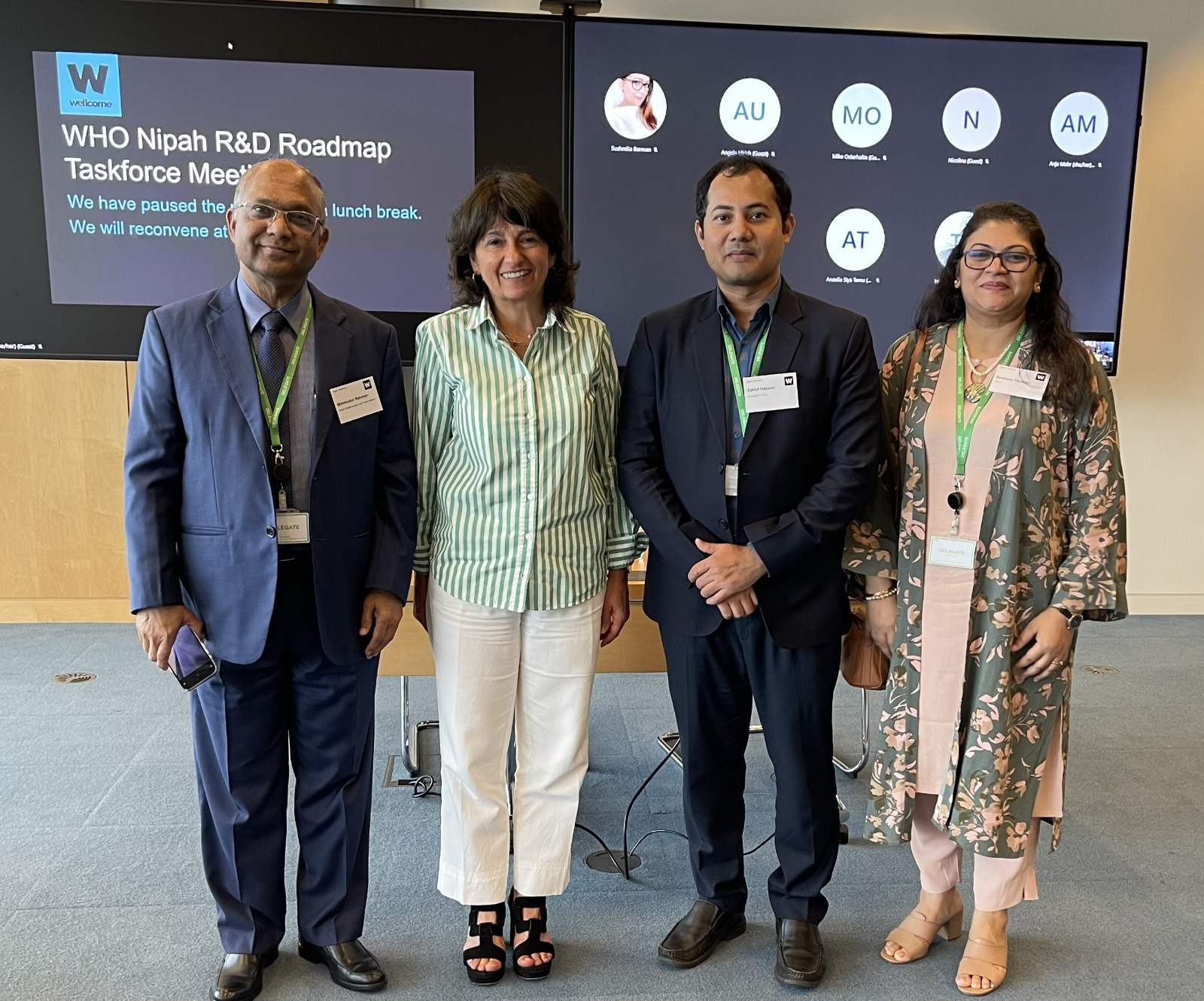
Beyond his research, he has helped strengthen collaborations between Bangladesh and the UK by helping facilitate new research partnerships by icddr,b, the Bangladesh Ministry of Health (IEDCR), and the University of Oxford, including the development of a Memorandum of Understanding to expand joint research, training and capacity building on emerging infectious diseases. He has also contributed to the WHO Nipah Research and Development Roadmap, helping ensure that evidence generated in Bangladesh informs global research priorities.
His work has been recognised nationally and internationally. In 2024, he was named an Emerging Leader in Infectious Diseases by the International Society for Infectious Diseases (ISID). He has also received the Young Investigator Award, the Clinical Research Award, and a Gold Medal for his research. Yet, he says, the achievement he values most is helping strengthen research capacity in Bangladesh and creating opportunities for the next generation of scientists.
"Chevening gave me much more than a scholarship," he says. "It gave me the confidence, network and opportunities to contribute to research that can help Bangladesh, and the world, prepare for future epidemics and pandemics."
His advice to future applicants
"Many scholarships give you a degree," he says. "Chevening gives you a network" — thousands of alumni across more than a hundred countries, many of whom become collaborators and friends.
As another application cycle approaches, his message is simple: begin early, reflect honestly, write in your own voice, and focus on the difference you want to make rather than a list of achievements.
"You don't need a perfect CV. You need a clear purpose and a compelling story about how you want to make a difference." He still thinks about that 2019 train from Oxford, and the quiet promise he made on it.
"The selection panel decides whether you succeed. But only you can decide whether to apply."