


 For all latest news, follow the Daily Sun's Google News channel.


Cultural programme at Shaheed Minar celebrates Rabindra-Nazrul-Sukanta legacy
Daily Sun Report, Dhaka
Published: 29 Aug 2026, 08:56 PM
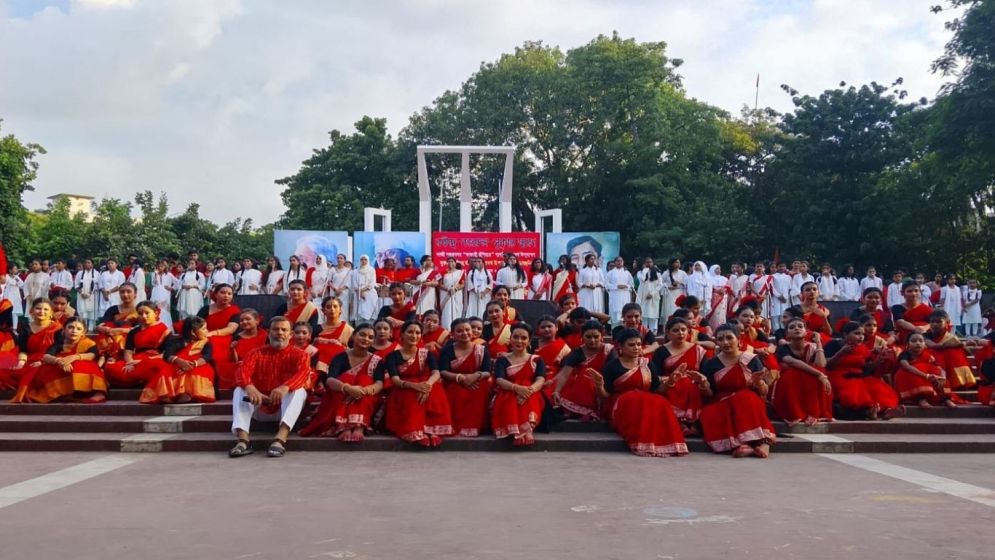
Photo: Daily Sun
A cultural programme celebrating the literary and musical legacy of Rabindranath Tagore, Kazi Nazrul Islam and Sukanta Bhattacharya was held at the National Shaheed Minar on Saturday.
The programme marked the centenary of Nazrul’s iconic song Kandari Hoshiar and the birth centenary of poet Sukanta Bhattacharya, while highlighting Tagore’s enduring contribution to Bengali literature and culture.
Organised by the Bangladesh Gana Sangeet Somonnoi Parishad, the programme was held from 4:30pm to 8:00pm, featuring songs, recitations and dance performances centred on equality, humanity, patriotism and resistance to injustice.
Manzar Chowdhury Sweet, general secretary of the Bangladesh Gana Sangeet Somonnoi Parishad, delivered the welcome address, while the organisation’s president, artist Kazi Mizanur Rahman, presided over the programme.
One of the main attractions was a rendition of Kandari Hoshiar by a hundred voices, performed by artists from affiliated cultural organisations.
A group dance directed by Anik Basu was also performed by 100 dancers from Spandan to Tagore’s songs from his Swadesh collection.
The programme featured recitations by 50 children and teenagers from Gandaria Kishloy Kachi-Kanchar Mela and Shilpa Brutta.
To mark Sukanta Bhattacharya’s birth centenary, his poem Purno Dhandha was presented through music and recitation.
Kazi Mizanur Rahman also read Nazrul’s renowned essay Mandir o Masjid, providing historical context to the period in which Kandari Hoshiar was written.
Eminent artists presented solo recitations of landmark works, including Tagore’s Africa by Iqbal Khorshed, Nazrul’s Jater Name Bajjati Sab by Mahfuza Mira and Sukanta’s Amra Aseem by Safia Khandaker Rekha.
Sur Sagar Lalit Kala Academy, Panchabhaskar and Padatik Sangeet Sangsad also took part in mass choral performances as part of the Shatakantha presentation.
The organisers said the literary and musical works of Tagore, Nazrul and Sukanta continue to strengthen the non-communal and humanitarian spirit of Bengali culture.
They also said such cultural gatherings can inspire younger generations to embrace social consciousness, equality and values of resistance to discrimination.