


 For all latest news, follow the Daily Sun's Google News channel.


ABG Sports City opens new chapter in Bangladesh’s sporting landscape
Bashundhara Group has shown that big dreams can become reality when vision, commitment and determination come together.
Ekramuzzaman
Published: 18 Oct 2026, 11:39 AM
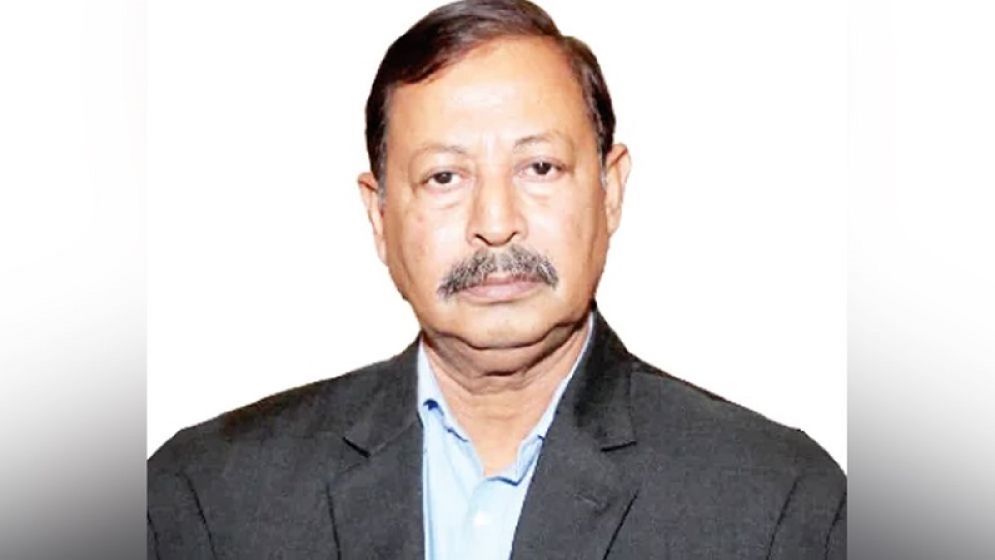
Ekramuzzaman. Photo: Collected
One of the biggest challenges facing sport in Bangladesh is the lack of adequate infrastructure. Much of what exists was built around outdated ideas, while many facilities have deteriorated over the years. Despite the growing needs of athletes and the public, modernisation and renovation have largely been neglected, with only a few exceptions.
Changing this situation requires more than building new stadiums or repairing old grounds. It calls for a broader shift in sporting culture, backed by a shared determination to make sport an integral part of national life. Such a transformation may not be easy, but it is certainly possible.
Bashundhara Group has taken a significant step in that direction by developing ABG Sports City within its own residential development. The facility represents a major addition to Bangladesh’s sporting infrastructure and, according to the original account, is the first of its kind in South Asia.
The project demonstrates what can be achieved when a clear vision is supported by the resources, commitment and genuine desire to contribute to society. For a country that has long struggled with inadequate sporting facilities, ABG Sports City offers a glimpse of what a more ambitious approach to sports development could look like.
For nearly four decades, Bashundhara Group has pursued its business activities alongside social responsibility initiatives. Work on ABG Sports City began in 2019, opening up new possibilities for a large section of the population whose sporting aspirations have often been held back by limited opportunities.
The development has helped introduce a different approach to sporting infrastructure in Bangladesh. With modern facilities for various disciplines, it has created more opportunities for sport, recreation and community engagement. It has also helped build confidence among young people who want to pursue their sporting interests.
Its significance extends beyond Bangladesh. ABG Sports City has attracted international attention, while its facilities have helped strengthen the country's image as a potential host of major sporting events. The development also sets Bashundhara Group apart as a corporate organisation willing to invest in sport on a scale rarely seen in the region.
For young people, the appeal goes beyond the playing fields. ABG Sports City combines sport with recreation, making it an attractive destination for Dhaka’s youth. It has increasingly become a place where young people can spend time, take part in sporting activities and embrace a more active lifestyle.
International recognition puts Bangladesh in the spotlight
Earlier this month, Brazil, five-time FIFA World Cup winners, played an international friendly against India. In August, a technical team from Brazil visited the region to assess the facilities and venues ahead of the fixture. During its visit to Bangladesh, the team inspected the National Stadium in Dhaka and Bashundhara Kings Arena.
The Brazilian delegation was reportedly impressed by the facilities at Kings Arena, including the main pitch, training grounds, players’ gym and recovery facilities. A spokesperson for the technical team said they had not expected to find facilities of such international quality at the venue.
That recognition matters. Appreciation from football professionals associated with one of the world's most celebrated teams is not merely a compliment to ABG Sports City. It is also an encouraging sign for Bangladesh’s sporting sector as a whole. International recognition of this kind can help challenge assumptions about the country's ability to host high-level sporting events.
Kings Arena had already received recognition from FIFA and the Asian Football Confederation (AFC). It has hosted important fixtures, including home matches in the FIFA World Cup qualifiers, AFC Cup matches and the South Asian Under-20 Women's Football Tournament.
There was a time when the National Stadium in Dhaka was unsuitable for international football. Kings Arena consequently became an important alternative, allowing Bangladesh to host matches at home rather than having to look for venues abroad.
The contribution of ABG Sports City is already becoming part of Bangladesh's sporting history. Its role is likely to grow as the facilities expand and more competitions are staged there.
From the outset, Bashundhara Group's approach has extended beyond developing facilities for its own teams. The broader ambition has been to involve other stakeholders, encourage sponsorship and bring young people into sport. Engaging the younger generation is one of the biggest challenges facing sports development, and the initiatives undertaken at ABG Sports City suggest that the group is trying to address it.
A vision that goes beyond business
Bashundhara Group Chairman Ahmed Akbar Sobhan is a businessman with a strong interest in turning ambitious ideas into reality. His involvement in sport reflects a desire to create opportunities for young people and establish a stronger sporting culture in Bangladesh.
His four sons — Sadat Sobhan Tanvir, Shafiat Sobhan Sanvir, Sayem Sobhan Anvir and Safwan Sobhan Tasvir — also share an interest in sport. The development of modern facilities, however, should be viewed in a broader context: it is an investment in the future of sporting participation, rather than simply an expression of personal enthusiasm.
ABG Chairman Sayem Sobhan Anvir, in particular, has spoken about the need for fundamental changes in the culture, values and outlook of Bangladesh's sporting sector. Such changes, he believes, are essential if the country's sporting development is to become sustainable.
In an interview published by Kaler Kantho on 18 October 2021, he expressed concern that football, despite being one of the world's most popular sports, had received relatively little attention in Bangladesh. He pointed out that several smaller countries had gained international recognition through football and argued that Bangladesh had the potential to follow a similar path.
He also expressed hope that the football academy at Bashundhara Sports Complex would produce talented players. If other business groups followed the same approach, he said, the country's sporting sector would have a much better chance of developing.
Drawing a comparison with cricket, Anvir said he hoped football would also experience a surge in popularity. His ambition was clear: to see Bangladesh one day compete on the FIFA World Cup stage.
That is an ambitious dream, and reaching it will require sustained investment, strong grassroots development, effective coaching and opportunities for young players to compete at higher levels. Modern infrastructure can provide an important foundation, but its long-term value will depend on how effectively those opportunities are used.
Abdus Sadeque, a legendary Bangladeshi hockey player and a respected figure across several sports, has also praised Bashundhara Group's contribution. He is the elder brother of Ahmed Akbar Sobhan.
Writing in Kaler Kantho on 12 January 2026, Sadeque described the group's investment as a major step forward for Bangladesh's sporting sector. He highlighted its development of stadiums and a wider sports complex, as well as the success of Bashundhara Kings, which he compared with the impact Abahani made on the country's sporting landscape after Bangladesh became independent in 1972.
He also pointed to the group's growing interest in cricket and hockey and its introduction of padel tennis to Bangladesh. The sport, which is gaining popularity internationally, has attracted regular participation at the complex.
Sadeque argued that other business groups should also become involved in building teams, supporting athletes and sponsoring competitions. In many countries, private companies play an important role in developing professional sport, and Bangladesh could benefit from a similar approach.
Building opportunities for the next generation
Imrul Hasan, director of ABG Sports City, senior vice-president of the Bangladesh Football Federation, president of Bashundhara Kings and deputy managing director of Bashundhara Group, has emphasised the family's commitment to sport.
He said Ahmed Akbar Sobhan and his family had long been interested in sporting development. The chairman's broader ambition, he explained, was to strengthen Bangladesh's international image through sport.
According to Hasan, the group believes Bangladesh can improve its standing in international sport and that the investment being made today will produce results in the coming years.
He also pointed to the wider social benefits of the project. The development of facilities for different sports has created employment opportunities, while organised sporting activities can help young people lead healthier lives and steer them away from drug abuse and other harmful activities.
These benefits are important in a country where access to organised sport remains uneven. Facilities alone cannot solve every social problem, but well-run sporting programmes can give young people opportunities to develop discipline, teamwork, confidence and a sense of belonging.
Bashundhara Kings Arena, a central part of the complex, was formally inaugurated by Ahmed Akbar Sobhan on 17 February 2022. The venue hosted its first international match, against Afghanistan, on 3 September 2023. Since then, the complex has continued to expand its activities.
An academy for non-residential football training was inaugurated on 5 October 2024. The plan is to launch a residential academy once the dormitory is completed. The long-term aim is to develop players consistently through structured training, creating a pathway for young talent to progress.
Football is not the only focus. A cricket academy is also operating at ABG Sports City, and Bangladesh have already played an international match against Malaysia at Anvir Cricket Stadium. A warm-up match is also scheduled to take place there during the West Indies cricket team's upcoming tour, according to the original account.
The venue has also hosted matches in the domestic Premier Cricket League, while the ABG Cricket Network team has begun competing in the cricket league. These activities suggest that the complex could become a regular venue for both domestic and international cricket.
Expanding beyond football and cricket
ABG Sports City has also begun establishing a presence in other disciplines. An international squash competition was recently held there, with participants from 11 countries, including Bangladesh.
The venue also hosted the second edition of the Zulcan Fighting Championship, titled ZFC-2: Pride of Bangladesh, an international combat sports competition featuring participants from seven countries.
Football and cricket tournaments involving 10 private universities each are also scheduled to begin at the complex this month. The organisers hope to expand these competitions in the future, creating more opportunities for university students to participate in organised sport.
Meanwhile, work on the hockey astroturf is nearing completion. Once the facility is ready, it is expected to provide a venue for international hockey matches and tournaments.
The complex is also planning to honour figures who have contributed to sport and the country's sporting heritage through the naming of its facilities. Under the plan, the cricket stadium will be named Shah Alam Cricket Stadium, the hockey stadium Abdus Sadeque Stadium and the international-standard swimming pool Abdus Sobhan Swimming Pool.
Abdus Sobhan, the father of Ahmed Akbar Sobhan, was a student in the first batch of the University of Dhaka and a skilled swimmer who competed for the Bengal team during his time.
Hasan has also said that Bashundhara Group is considering organising a distinctive sporting and entertainment festival involving several established clubs in Bangladesh. If realised, the initiative could create another platform for bringing clubs, athletes and sports enthusiasts together.
Turning infrastructure into lasting progress
ABG Sports City has already made a notable contribution to Bangladesh's sporting landscape. Its significance, however, should ultimately be measured not simply by the number of stadiums it builds or competitions it hosts, but by the opportunities it creates for athletes and the wider public.
Modern facilities can attract international events, encourage private investment and help raise the profile of Bangladeshi sport. But sustained progress will require more than infrastructure. Youth academies must develop talent, competitions must provide regular opportunities to play, and athletes must have access to quality coaching and long-term support.
There is also a need for more businesses to invest in sport. If other corporate groups follow Bashundhara's example, Bangladesh could build a broader and more sustainable sporting ecosystem, reducing its reliance on a small number of organisations.
The challenge is to turn today's investment into tomorrow's achievements. ABG Sports City has provided a substantial foundation. Its next chapter will depend on how effectively that foundation is used to develop athletes, broaden participation and strengthen the country's presence on the international sporting stage.
For a nation with a large young population and ambitions to make its mark in world sport, that is a goal worth pursuing.
The writer is a columnist and analyst, former senior vice-president of AIPS Asia, a life member of the Bangladesh Sports Press Association and a panel writer for Football Asia.