



 For all latest news, follow the Daily Sun's Google News channel.


COLLECTED PHOTO
They say cricket is a game of glorious uncertainties. Sunday's carnage at the Great Barrier Reef Arena proved otherwise, yet somehow, Bangladesh emerged from the wreckage wearing a crown they'd never worn before.
Battered, bruised and bundled out inside two days. An innings-and-51-run thrashing that left scorecards blood-stained and reputations shattered. Yet when the dust settled, and the ICC rankings were updated, there it was in black and white: Bangladesh, sixth in the world. The highest perch they've ever occupied in 24 years of Test cricket.
Sometimes, you lose the battle but win something far more precious.
The Tigers climbed three spots with 78 rating points from 24 matches, leapfrogging Sri Lanka, Pakistan, West Indies and Zimbabwe in one almighty bound. Their previous pinnacle was seventh, scaled in 2024 after whitewashing Pakistan 2-0 on home soil.
But Mackay? Mackay was merciless.
The match lasted just 750 deliveries, the fourth-shortest completed men's Test in history and the second-shortest ever played in Australia. Only the infamous 1932 Melbourne bloodbath between Australia and South Africa, which barely made it past 656 balls, was briefer.
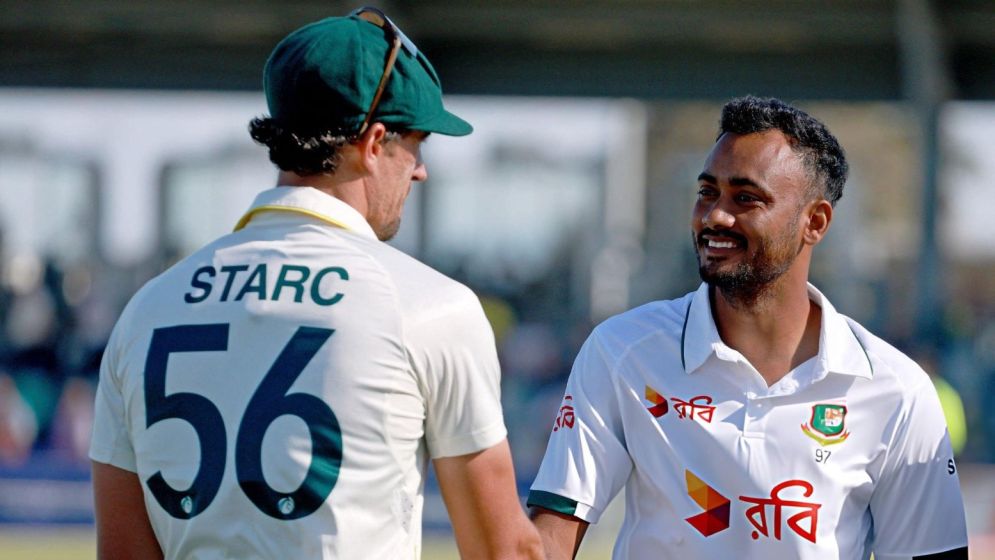
Mitchell Starc excelled against Bangladesh, taking 10 wickets for 51 runs. He recorded figures of 6 for 12 in the first innings, dismissing them for just 64 runs, and then added 4 for 39 in the second innings, leading to a total of 95 runs. This made Bangladesh the first team since Zimbabwe in 2005 to be bowled out for under 100 runs in both innings.
Australia's 204 in reply proved mountainous. The contest produced a miserly 369 runs, the sixth-lowest aggregate for a completed men's Test.
The 36-year-old's ten-wicket haul came in a blistering 109 deliveries, the quickest for Australia, eclipsing his own 123-ball masterclass in the previous year's Ashes. It marked his fourth ten-for in Tests, trailing only the legendary Dennis Lillee (seven) amongst Australian quicks.
Six batsmen departed without troubling the scorers: only Jim Laker's eight golden ducks in 1956 stands taller.
Eight victims were left-handers, equalling feats by Bangladesh’s Mehidy Hasan Miraz (against England in 2016), Trent Boult (against England in 2015), and Ravi Ashwin (against South Africa in 2015).
Player of the Match Starc finished the series with 12 wickets at a staggering 12.08.
But here's where the narrative shifts.
Amid the rubble, Shoriful Islam stood tall among Tigers, a lone warrior firing bullets at giants. His breathtaking 7-48 ranks as Bangladesh's third-best Test bowling figures ever. More significantly, he became the first Bangladeshi quick to claim a seven-wicket haul in the format's highest form.
The last left-arm quick to terrorise Australia with seven wickets? England's Dick Barlow in Manchester in 1886.
Shoriful joined that exclusive club 139 years later, proving Bangladesh pacers can match anyone when conditions align.
A bizarre subplot saw Steve Smith cautioned by umpires on Day 1 after seemingly urging Bangladesh to review an LBW appeal against himself. "I'm halfway down the wicket, it's going miles over," Smith chirped at the fielders. "Go for it." Captain Najmul Hossain Shanto wisely declined.
Despite the hammering, Bangladesh clung to fourth in the World Test Championship with 55.56 percentage points from six Tests, down from 66.67. India (53.33 from ten) could vault them by conquering Sri Lanka.
Starc's fury left them gasping, but they finished sixth in the world—higher than ever. In cricket, as in life, it's about how high you can rise after a fall.