


 For all latest news, follow the Daily Sun's Google News channel.


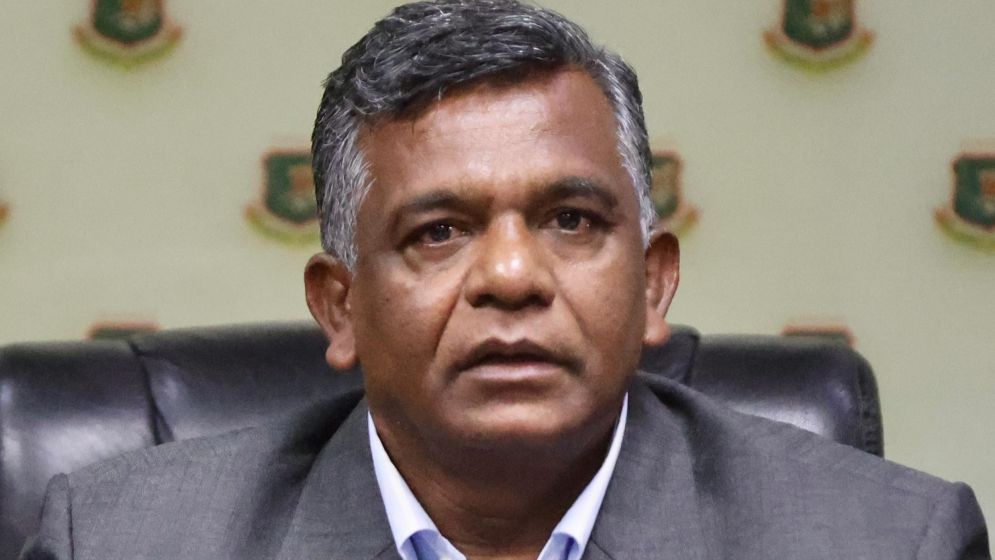
File Photo
The Aminul Islam Bulbul era at the Bangladesh Cricket Board reached a predictable, albeit messy, conclusion on Tuesday. Following the National Sports Council’s decision to dissolve the board, the “last to leave” Bulbul has finally been evicted.
While the former Bangladesh captain attempted to frame his tenure as one of resilience, the reality left behind is a trail of administrative wreckage that will take years to clear.
As an 11-member ad-hoc committee takes the reins, here is the autopsy of a board that spent more time fighting its own stakeholders than developing the game.
The World Cup exile
The crown jewel of this board’s incompetence was the surrender of Bangladesh’s spot in the T20 World Cup. Masking a catastrophic failure of diplomacy and logistics as "security concerns," the administration effectively orphaned the national team on the global stage.
Watching Scotland take the field while our players sat at home remains a historic stain - a USD27m loss that proved the board was more interested in political posturing than cricketing participation.
The starvation of domestic cricket
While the boardroom stayed air-conditioned, the cricket grounds of Dhaka remained ghost towns. Presiding over the peak months of March and April without a single ball being bowled in the Dhaka Premier Division Cricket League was an act of unforgivable lethargy. By failing to even attempt a resolution, Bulbul’s administration essentially cut off the financial oxygen to hundreds of professional cricketers, treating the backbone of the national game as an optional luxury.
Rewarding the toxic
In a move that reeked of boardroom cronyism, the reinstatement of M Najmul Islam was a direct insult to the playing fraternity. To bring back a man who publicly branded legendary figures like Tamim Iqbal as "agents" of a foreign power was a clear signal: under this board, toxicity was not just tolerated, it was rewarded.
It was a management style that prioritised sycophancy over the sanctity of the dressing room.
Distance with CWAB and cricketers
The distance between the board and the Cricketers' Welfare Association of Bangladesh became a canyon of mutual distrust. The administration treated the players - the very product they are meant to manage - with a chilling indifference.
Requests for dialogue were met with silence, and concerns over livelihoods were treated as nuisances, creating a fractured ecosystem where the athletes felt like enemies of the state rather than partners in progress.
The war with media
The board’s final days were marked by a pathetic descent into paranoia. Bypassing editorial protocols to directly threaten photojournalist Tanvin Tamim of Daily Sun was the act of a bully in a corner. By targeting a journalist for simply documenting the rifts in the President’s Box, the board declared war on the truth.
The resulting media boycott of the Odommo T20 Cup final was a fitting response to an administration that thought it could intimidate the press into silence.
Beyond the formal letters, the visible, icy distance between the board boss and media personnel became the defining image of a leadership that had lost its way.