


 For all latest news, follow the Daily Sun's Google News channel.


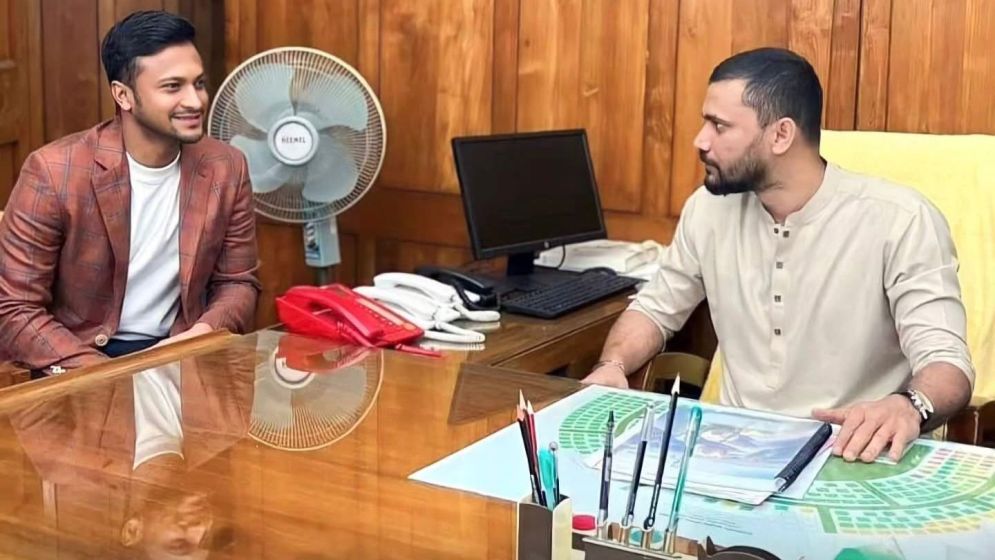
File Photo
In this part of the world, athletes have long been used to add political value, with major parties routinely seeking them out to inject star power into their ranks. The Bangladesh Awami League’s decision to bring sports personalities under its banner — including two active cricketers, Mashrafe bin Mortaza and Shakib Al Hasan — was therefore hardly surprising.
But everything has a price. Every action carries consequences, and the ripple effects are not always visible at first.
For Mashrafe and Shakib, that cost is now painfully clear. In the aftermath of the Awami League government’s fall following the student movement in July 2024, both men — once among the most loved figures in the country — have found themselves pushed into isolation because of their political identities.
Shakib, who still has several years left in his cricketing career and had hoped to sign off in front of home supporters, has remained abroad, unsure of when he can safely return. Mashrafe, meanwhile, has stayed in Bangladesh, but out of public sight — a stark contrast to his long-held image as a people’s man. His home in Narail, the constituency from which he was twice elected MP, was set ablaze during the political turmoil, a harsh reminder of how quickly public sentiment can turn.
Multiple cases have been filed against both cricketers, and until these matters are resolved, neither appears willing to take the risk of resurfacing publicly.
The irony is sharp: two men once celebrated as national icons now living as political liabilities. Only a short time ago, they were fixtures in the hearts of everyday Bangladeshis.
Their popularity had always been different in nature. Shakib stands unmatched in Bangladesh cricket in terms of achievement, while Mashrafe has long embodied the image of a humble, grounded leader who bridged the gap between sport and ordinary life.
That is why many citizens are now questioning whether it was ever right for them to enter partisan politics — especially while still active or recently active in their sporting careers. To many, they were more than politicians; they were idols.
The new government appears to have taken note. Prime Minister Tarique Rahman, while launching a major athlete welfare initiative — including a monthly allowance and a “Sports Card” for national players — made a pointed remark: athletes should steer clear of politics during their professional careers. His message was clear: a player represents the country, not a party.
“During professional careers, there should be no representation in a political party. Players represent their country on the world stage and take Bangladesh to greater heights,” he told athletes at the programme.
It was a breath of fresh air for many, signalling a distinct shift from past practices. The Bangladesh Nationalist Party’s message seems unambiguous: the era of blending politics with sporting stardom is coming to an end.
And perhaps, the Shakib–Mashrafe saga will stand as the cautionary tale that accelerates this new approach — where athletes are encouraged to focus on sport, and politics finally stops using the pitch as a recruitment ground.