


 For all latest news, follow the Daily Sun's Google News channel.


The hidden strain
Health crises among players and officials shake Bangladesh cricket
Muhammad Jubair, Dhaka
Published: 18 Jan 2026, 10:41 PM
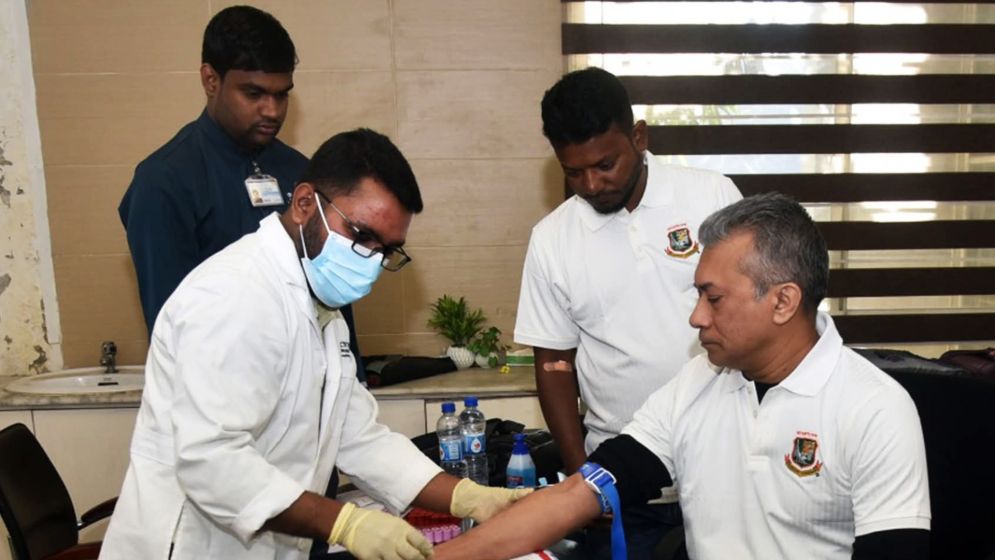
BCB PHOTO
A growing number of medical emergencies involving players, officials and support staff has exposed uncomfortable gaps in Bangladesh cricket’s duty-of-care framework, raising urgent questions about whether the Bangladesh Cricket Board (BCB) is doing enough to protect those working under increasingly demanding conditions.
The warning
signs have been stark and, increasingly, impossible to ignore.
During the
Sylhet leg of the Bashundhara Cement Bangladesh Premier League (BPL), Dhaka
Capitals assistant coach Mahbub Ali Zaki collapsed after complaining of chest
pain and later died in hospital. He was 59. His sudden death sent a chill
through the domestic cricket circuit, particularly among match officials and
support staff who share similar working conditions but far less visibility.
Days later,
as the Dhaka phase of the BPL began, official scorer Shawkat Hossain was rushed
to hospital after experiencing chest pain while on duty. He remains under
medical treatment.
The concern
escalated further when former Bangladesh captain Tamim Iqbal suffered a heart
attack while leading Mohammedan Sporting Club in a Dhaka Premier Division
Cricket League (DPL) match at BKSP. Tamim collapsed shortly after the toss and
required emergency medical intervention, including CPR, before undergoing
angioplasty surgery. Though he has since been discharged, the incident sent
shockwaves through the cricket community.
Taken
together, the cases cut across roles, status and competitions — from an
international icon to domestic officials — making it increasingly difficult to
dismiss them as isolated or coincidental.
Similar
alarms had already been sounded last year. Umpires Gazi Sohel and Mahfuzur
Rahman Litu were hospitalised after falling ill during DPL matches, with
extreme heat widely cited as a contributing factor. Those incidents, too,
raised concerns about long hours in harsh conditions, limited recovery time and
inadequate on-ground medical preparedness.
The common
thread running through these episodes is prolonged exposure to physical strain,
mental stress and heavy workloads, often without structured medical oversight.
Match officials, scorers and support staff routinely work back-to-back
fixtures, arriving early and leaving late, sometimes for weeks at a stretch.
Unlike players, many do so without access to regular health screening, workload
management or recovery protocols.
“Look at
everyone’s faces,” one official said, describing the atmosphere around domestic
matches. “Everyone is stressed. People are working under serious physical and
mental pressure. Many are dealing with personal and financial issues. Most of
them are underpaid. And they have to keep working through that pressure.”
Another
official, who witnessed Mahbub Ali Zaki’s collapse at the Sylhet International
Stadium, spoke candidly about the lack of emergency preparedness at venues.
“We have
ambulances at the ground, yes,” he said. “But we don’t have defibrillators at
any of our grounds. That’s a basic requirement. In Australia, every ground has
one. I was at the ICC Academy when two people suffered heart attacks — both
survived because we had defibrillators.”
Bangladesh’s
domestic calendar has expanded rapidly in recent years, with multiple
tournaments compressed into short windows, often during the hottest months. The
demands on human resources have grown accordingly, but medical infrastructure
and welfare safeguards have struggled to keep pace.
Asked about
the recent spate of incidents, BCB chief physician Dr Debashish Chowdhury
outlined the board’s response and acknowledged gaps in compliance.
“First of
all, every BCB employee has health insurance — everyone. But despite that, most
of them don’t go for regular check-ups. Many take it lightly. They don’t do
it,” he said.
“Since we
are paying for the insurance, we are making health check-ups mandatory for
everyone. Everyone has to undergo medical screening and submit their reports to
us. This decision has been taken recently, and now it is compulsory,” he said.
He added
that the process has already begun for those directly involved on matchdays.
“Umpires,
coaches, physios and trainers — we have started testing them through the BCB
medical department. Doctors, physios and trainers have already gone through the
process. A number of umpires have been tested as well. After this BPL, we will
test coaches and others. We will proceed group by group.”
He also said
age-specific measures are being enforced. “Anyone above 45 years must undergo a
medical check-up once a year. That is now mandatory.”
Recent
incidents have made one thing clear: the health of the game can no longer be
separated from the health of those who serve it.