



 For all latest news, follow the Daily Sun's Google News channel.


Rebuilding a republic begins long before its citizens enter the workplace, cast their votes or assume positions of responsibility. It begins in the classroom, where children learn to think independently, communicate clearly, respect others and distinguish knowledge from assumption. If Bangladesh is to build a more capable, equitable and forward-looking nation, education reform must begin with a fundamental question: what should every child know, understand and be able to do by the time they leave school, and what values should guide their lives?
The answer need not be another wholesale curriculum overhaul. Replacing the entire national curriculum at once would require new materials, extensive teacher retraining, revised assessments and substantial investment. It could also create uncertainty for students, teachers and families.
A more practical approach is to begin with two priorities: rebuilding English education from the early years to Grade 12, and rebuilding teachers’ capacity to deliver meaningful learning. Alongside these priorities, schools can strengthen character development, reduce unnecessary curriculum overload and gradually make science and social studies more inquiry-driven. This is not about copying another country’s education system. It is about adapting effective educational principles to Bangladesh’s needs, resources and aspirations.
The foundation: character before competition
Education must prepare children not only to earn a living, but also to live responsibly with others. Honesty, empathy, respect, self-discipline, cooperation and responsibility cannot be developed simply by asking students to memorise definitions of good behaviour. Children must have opportunities to practise these values in their everyday school life.
International educational practice offers valuable lessons in integrating moral development into classroom routines, relationships, practical experiences and the wider school environment. Japan’s Ministry of Education, for example, identifies moral development, independence, responsibility, cooperation and care for others as important educational aims. Its approach offers useful principles that Bangladesh can adapt without importing another country’s curriculum.
Bangladesh could establish a Foundation for Character, Competence and Learning from early childhood through Grade 3. During these formative years, academic foundations remain essential, but equal attention should be given to communication, creativity, critical thinking, problem-solving, physical development and social responsibility.
A practical progression could be introduced:
• Age 3-4: Develop sharing, turn-taking, classroom routines, curiosity, oral language and coordination through play, stories, movement and exploration.
• Age 4-5: Build independence, cooperation, emotional awareness, early literacy, counting and problem-solving through guided activities.
• Age 5-6: Encourage responsibility, confidence, early reading and writing, number sense, construction, observation and collaborative play.
• Grades 1-2: Combine systematic literacy and numeracy instruction with empathy, honesty, perseverance, creative activities, simple investigations and shared responsibilities.
• Grade 3: Consolidate foundational learning while developing reflection, teamwork, independent thinking and the ability to explain choices and solve practical problems.
Children might care for classroom materials, maintain a reading corner, grow plants, reduce waste or undertake small projects that benefit their school community. Stories and everyday situations can help them discuss fairness, kindness, responsibility and the consequences of their actions.
Character development should not become a competition in obedience. Teachers should guide children to understand why actions matter, reflect on their choices and develop sound judgement. The objective is to nurture responsible, compassionate and independent citizens.
A learning journey that grows with the child
The curriculum should become progressively more demanding as children mature, while remaining practical at every stage.
Early years: activity-based learning. Children learn through play, movement, stories, exploration, conversation and hands-on experiences.
Grades 1-3: foundation-based learning. Literacy, numeracy, character, creativity, communication and problem-solving are developed through structured activities and guided discovery.
Grades 4-5: project-based learning. Children connect knowledge across subjects to investigate questions, create products, solve practical problems and present findings.
Grades 6-8: application-based learning. Students conduct investigations, interpret data, examine evidence, design solutions and connect academic knowledge to real situations.
Grades 9-12: advanced application and independent learning. Students undertake rigorous subject study, research, extended writing, practical assignments and increasingly independent problem-solving.
This progression does not mean abandoning textbooks or lowering academic expectations. It means moving from experiencing and understanding concepts to connecting ideas, applying knowledge and eventually using it independently.
Curriculum overload must also be addressed. Where subjects contain repetitive or unnecessarily extensive content, NCTB should review what is essential at each stage. Related concepts could be integrated through carefully designed projects while core subject knowledge remains intact.
For example, a project on local water use could combine scientific understanding, mathematics, reading, writing, geography and civic responsibility. Students would learn the required concepts in a meaningful context rather than rush through disconnected chapters.
The aim is not to remove important knowledge, but to create enough time for children to understand, practise and apply it.
Priority one: rebuild English education
English should be redesigned as a coherent learning journey from early childhood to Grade 12. NCTB already provides English for Today textbooks and secondary EnglishGrammar and Composition resources. These provide a starting point for review rather than requiring an entirely new system.
International frameworks can inform the progression. The Common Core State Standards provide grade-specific expectations for reading, writing, speaking, listening and language. Pearson Edexcel International GCSE English Language B offers further reference points for purposeful reading, analysis and varied forms of writing.
Bangladesh should adapt these principles to its linguistic context and national priorities, with clear learning outcomes for every grade.
A proposed progression would be:
• Age 3-4: Recognise and begin writing English letters, develop pencil control and vocabulary, and recognise numbers 1–30.
• Age 4-5: Develop letter-sound awareness, simple word families and early blending; introduce Bangla letters and sounds, and numbers up to 200.
• Age 5-6: Read short, decodable English sentences, write familiar words in English and Bangla, and develop early comprehension.
• Grades 1-2: Consolidate phonics, reading fluency, vocabulary, sentence construction, punctuation, listening and speaking. By Grade 2, pupils should begin writing connected paragraphs.
• Grades 3-5: Develop fluent reading, comprehension, summaries, paragraphs, descriptions, letters, instructions and short reports. Teach grammar through meaningful use alongside focused practice.
• Grades 6-8: Develop inference, comparison, research, note-taking, reports, reviews, formal correspondence, evidence-based writing and oral presentations.
• Grades 9-10: Emphasise critical reading, analysis of language and viewpoint, persuasive writing, structured essays, editing and communication for different audiences.
• Grades 11-12: Develop advanced comprehension, synthesis of multiple sources, research writing, evaluation of evidence, academic integrity and communication skills for higher education and employment.
The proposed early-years number targets should be treated as developmental milestones, not rigid examination requirements. Across all grades, progress should be monitored and additional support provided where needed.
Assessment must reflect these outcomes. A pilot model could allocate 70 marks to written examinations and 30 to school-based assessment, including reading, writing, speaking, listening, projects and presentations. For example, ten marks could be allocated to an individual presentation assessed against a transparent rubric covering content, organisation, clarity, language and responses to questions.
Common assessment criteria, teacher training and moderation would be essential to ensure fairness across schools. The purpose is to develop competent communicators, not simply successful candidates in written examinations.
Make science and social studies inquiry-driven
Science and social studies should teach children to ask questions, examine evidence, understand causes and consequences, and explain conclusions. Students should not encounter every chapter only through a teacher’s explanation followed by textbook exercises.
A manageable reform would introduce a structured inquiry cycle while retaining existing subject content and textbooks.
For a typical chapter, a ten-day sequence could work as follows:
Day 1: Diagnose prior knowledge, invite predictions and identify misconceptions.
Days 2-3: Provide age-appropriate articles, information sheets, diagrams, data and other reliable resources. Students read, discuss and prepare an initial group report.
Days 4-5: The teacher explicitly teaches key concepts, clarifies misunderstandings and models subject-specific thinking.
Days 6-7: Students revisit their initial reports, combine their research with the teacher’s explanation and textbook reading, and produce a revised report supported by evidence.
Days 8-9: Students complete classwork, practical tasks, textbook exercises and applications that consolidate learning.
Day 10: Review understanding, assess individual learning and address gaps.
The sequence should be flexible according to the topic, age group and complexity of the learning. Younger children may report through drawings, diagrams or oral explanations; older students should produce structured reports with evidence and conclusions.
Reports should be assessed so that students take group work seriously. However, group marks must be supplemented by individual questions, quizzes or explanations to ensure that every learner demonstrates understanding. Roles should rotate so that all students have opportunities to research, write, explain and lead.
The textbook remains important. The change is that students encounter information, develop questions, receive explicit teaching, revisit their understanding and apply what they have learned.
Reform without overwhelming the system
Why not change every subject at once? Because a reform that cannot be implemented effectively risks becoming another exercise in compliance.
Changing every textbook, syllabus, assessment system and teaching method simultaneously would place immense demands on teachers and institutions. Teachers would need to master new content and unfamiliar pedagogy at the same time. Without adequate preparation, the intended transformation might never reach the classroom.
A phased approach is more credible. Begin with English progression, strengthen early-years and primary foundations, and pilot inquiry-based science and social studies. Review curriculum overload and integrate related content where appropriate. Test the changes in diverse schools before scaling them nationally.
Baseline assessments, follow-up measures, classroom observations and independent evaluations should guide implementation. The results must inform revisions before expansion. Training time, teaching resources, assessment moderation and additional support for disadvantaged schools must be funded from the beginning.
Bangladesh’s foundational literacy challenge makes this urgency clear. The World Bank’s learning-poverty data report that 51.2% of children of late-primary age were below minimum reading proficiency in 2022, after accounting for children out of school. This is not an English-only measure, but it underscores the need to strengthen foundational learning.
Teachers must be partners in rebuilding
No curriculum can outperform the teachers expected to deliver it without adequate preparation. Mandatory professional development must therefore accompany the new framework.
Training must extend beyond one-day orientations. Teachers need practical demonstrations, model lessons, guided practice, collaborative planning and classroom coaching. Early-years teachers require preparation in child development, play-based learning and foundational literacy. Primary teachers need expertise in project design, assessment and differentiated instruction. Secondary teachers need support in inquiry, subject-specific pedagogy, critical thinking and practical application.
School leaders must also learn to support implementation, observe learning and guide improvement. Trained master trainers can extend access, provided their preparation and the quality of subsequent training are monitored. Teachers should participate in reviewing materials, identifying implementation challenges and sharing effective practices.
Reform must build professional capacity and confidence, not simply impose new instructions. Accountability matters, but it must be accompanied by the resources, time and professional respect teachers need to succeed.
Rebuilding begins with the child
Bangladesh does not need to choose between national identity and international standards, or between academic rigour and human development. It can preserve the core national curriculum while making learning more coherent, practical and purposeful.
In the early years, children should learn to care, explore, communicate and create. By Grade 3, they should have developed strong foundational skills, responsible habits, curiosity and confidence. From Grades 4–5 onwards, academic rigour should increase through projects, investigation and increasingly demanding application. By Grade 12, students should be able to use knowledge independently, communicate effectively, evaluate evidence and contribute responsibly to society.
The first phase of reform should establish this progression, strengthen English education and prepare teachers to deliver it. Further changes should follow evidence of what works.
Rebuilding a republic is not accomplished through declarations or revised documents alone. It is accomplished when learning improves in ordinary classrooms, including those serving children with the fewest advantages.
The most consequential curriculum reform may not be the one that changes the most subjects. It may be the one that ensures every child develops character, learns to think independently, communicates with confidence and uses knowledge to solve real problems. Bangladesh does not need to change everything at once. It needs to change the right things first, and equip its teachers to make those changes work.
_______________________________________________
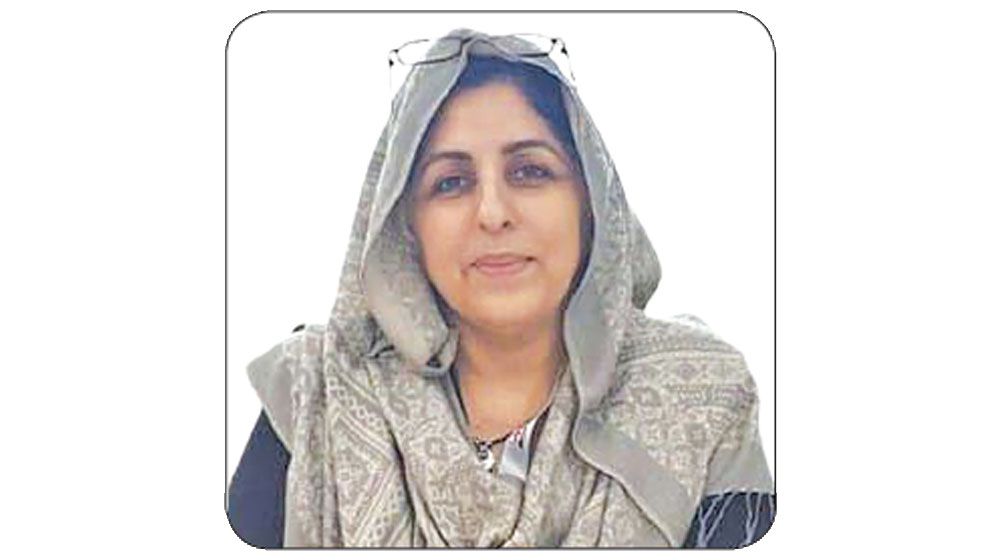
The writer is an education leader, school principal, curriculum specialist and teacher trainer