


 For all latest news, follow the Daily Sun's Google News channel.


Higher Education: Access to Excellence in Quality, Research and Global Competitiveness

Over the past three decades, Bangladesh has made remarkable progress in expanding access to higher education. Universities have multiplied, enrolment has increased and private universities have emerged as an important component of the national education system. Together with public universities and affiliated colleges, these institutions have opened doors to millions of young people who might otherwise have been denied university education.
This expansion represents a significant national achievement. Yet the growth of institutions and student numbers is only one dimension of educational progress. The more pressing question is whether academic quality, research capacity, institutional governance and graduate competence have advanced at a comparable pace.
A university degree should signify more than the completion of examinations. It should reflect the ability to think critically, communicate effectively, solve problems, apply knowledge and adapt to changing circumstances. Universities must also generate new knowledge, encourage innovation and nurture ethical leadership.
Bangladesh has reached a defining moment in its higher-education journey. The priority must now shift from expansion alone to excellence, ensuring that educational opportunity translates into intellectual growth, professional competence and meaningful contributions to national development.
The expansion of higher education has transformed Bangladesh’s educational landscape, creating opportunities for students from diverse geographical, economic and social backgrounds. Graduates now contribute to medicine, engineering, business, science, technology, administration and numerous other professions. However, access alone cannot determine educational success. A university does not fulfil its purpose merely by admitting students, conducting examinations and awarding degrees. Its real value lies in the knowledge, skills, attitudes and intellectual independence students develop throughout their academic journey.
Universities must cultivate curiosity, independent thinking, evidence-based reasoning and creativity. Students should learn not merely to absorb information but also to question assumptions, interpret evidence and apply knowledge to unfamiliar problems. The next phase of development must therefore focus on what students learn, how they learn and what they can contribute after graduation. Quality must become a defining characteristic of the entire higher education system rather than a privilege reserved for a limited number of institutions.
One of the most pressing challenges is the gap between university education and the changing demands of employment and society. Employers increasingly seek graduates who can analyse information, communicate clearly, work collaboratively, use digital technologies and respond constructively to unfamiliar problems. A degree remains valuable, but it cannot guarantee professional competence. Graduates must be able to translate theoretical knowledge into practical solutions.
Universities should expand project-based learning, internships, industry partnerships, entrepreneurship and interdisciplinary study. Employers and alumni can help shape curricula, and career services should prepare students well before graduation. Outcome-Based Education (OBE) is useful only when implementation goes beyond documentation: teaching and assessment must genuinely build and measure intended competencies.
At the same time, higher education must not be reduced to narrow vocational training. Bangladesh needs scientists, engineers and technology specialists, but it also needs historians, economists, philosophers, artists and social researchers. The humanities and social sciences are indispensable to understanding society, strengthening ethical judgement and addressing complex national challenges.

The objective should be to combine academic depth with practical relevance, preparing graduates not merely for their first jobs but for lifelong learning in a rapidly changing world. Universities cannot fully serve a modern knowledge-based economy if they merely transmit existing knowledge. Research enables institutions to challenge established ideas, generate discoveries and develop solutions to emerging problems.
Bangladesh faces significant challenges involving climate change, public health, food security, energy, urbanisation, environmental protection, agricultural productivity, artificial intelligence and industrial transformation. Universities should be central to addressing these concerns through scientific inquiry, interdisciplinary collaboration and evidence-based policymaking.
Meaningful research needs more than enthusiasm: it requires modern laboratories, scholarly databases, research assistants, doctoral programmes, competitive grants, international partnerships, adequate time, institutional support and an environment that values intellectual contribution. Evaluate research not just by publication numbers, but also by its significance, originality, credibility and practical relevance. Where appropriate, research should advance innovation, patents, public policy, entrepreneurship and social development.
Stronger partnerships among universities, industries, hospitals, government agencies and local communities would help align research with national priorities. Such collaboration could also attract international investment, retain talented academics and strengthen Bangladesh’s position in the global knowledge economy. Smart classrooms, digital platforms and artificial intelligence are transforming education, but no technology can compensate for ineffective teaching. Faculty members remain the foundation of academic excellence.
Bangladesh must invest systematically in faculty development through doctoral and postdoctoral opportunities, professional training, research mentoring, international exposure and collaboration with reputable institutions. Recruitment and promotion should be grounded in academic merit, professional competence, integrity and institutional requirements. Performance assessment should recognise effective teaching, student mentoring, research, innovation, academic leadership and meaningful community engagement.
Equally important is creating the conditions for talented academics to build sustainable careers at home. Competitive pay matters, as do adequate research facilities, academic freedom, professional recognition, and opportunities for intellectual growth. Investment in physical infrastructure must go hand in hand with investment in the people who make it academically productive. Laboratories and libraries create potential; capable teachers and researchers turn it into educational achievement.
Academic excellence is difficult to achieve without effective institutional governance. University leadership, faculty recruitment, financial management, procurement, examinations and quality assurance all influence institutional performance. Bangladesh needs a stronger culture of professional university management in which leadership responsibilities are entrusted to individuals with appropriate academic standing, administrative competence, integrity and demonstrated leadership capacity.
Universities need autonomy to develop programmes, hire faculty, conduct research and build international partnerships. Excessive administrative intervention stifles initiative, delays decisions and limits innovation. Yet universities are accountable to students, parents, regulators and society, so their academic standards, finances and decisions require appropriate scrutiny.
The guiding principle should be responsible autonomy: institutional freedom accompanied by transparent governance, clear performance expectations and accountability for educational outcomes. Regulatory bodies should increasingly emphasise standards, student protection, institutional improvement and measurable results rather than relying excessively on procedural compliance. A mature higher-education system requires a balance between academic independence and public responsibility.
Quality assurance strengthens higher education only when it improves teaching, learning and institutional performance. Committees, reports, inspections and accreditation matter, but cannot guarantee quality. What counts is whether students meet learning outcomes, assessments are fair and rigorous, faculty are prepared, and academic support meets students’ needs. Universities should make quality assurance continuous, not just a pre-inspection exercise, by identifying weaknesses, reviewing evidence and taking corrective action. Moving from compliance to continuous improvement makes quality evident in classroom practice, academic decisions, research integrity and student achievement.
High-quality higher education requires sustained, reliable funding for laboratories, libraries, digital infrastructure, research, scholarships, doctoral programs and faculty development. Public universities need predictable funding, transparent management and additional support from research partnerships, alumni, endowments and continuing education. Private universities must invest in lasting academic capacity, qualified faculty, research facilities and student support, not just infrastructure. Scholarships ensure capable students aren’t excluded by financial circumstances. Higher education is not merely an expense; it invests in human capital, productivity, innovation and national resilience. Building a knowledge-based economy requires financing institutions that create, preserve and apply knowledge.
Bangladesh should reconsider the assumption that every university must offer an increasingly similar range of academic programmes. Expansion has widened access, but the next stage should encourage institutional differentiation and specialisation. Some universities could develop distinctive strengths in climate science, environmental studies and disaster management. Others might specialise in public health, nursing, biotechnology, artificial intelligence, data science, renewable energy, agriculture, marine studies, logistics or advanced manufacturing.
Specialisation would enable institutions to concentrate resources, attract relevant expertise, strengthen research and develop meaningful partnerships with industries and public agencies. Not every university needs to teach everything. Each institution should identify the fields in which it can make a distinctive contribution and develop the capacity to excel in them. Such differentiation need not undermine broad-based education. Instead, a sound academic foundation combined with specialised strengths could create a more efficient, diverse and competitive higher-education system.
AI is reshaping knowledge, work and education. Students use it to write, analyse information, code and research, so universities must ensure it supports learning. Students should verify outputs, spot errors and bias, protect data, respect intellectual property and maintain academic integrity. Faculty must adapt teaching and assessment to measure genuine understanding. Banning AI will not prepare graduates for its growing presence, but relying on it too heavily can weaken independent thought. Universities should set clear policies for transparent, responsible use, supported by digital literacy and effective assessment. As AI advances, ethical judgement, creativity, empathy, critical reasoning and asking meaningful questions will matter more. Universities must teach students what to know, how to think and question and how to keep learning. AI should strengthen human capabilities, not replace human judgement.
Bangladesh has considerable potential to strengthen its position in international higher education. Realising this ambition requires more than affordable tuition or promotional campaigns. International students and scholars seek credible qualifications, competent faculty, well-equipped laboratories, efficient administration, suitable accommodation, safety and a supportive academic environment. Improving these conditions would also benefit domestic students and strengthen institutional credibility.
Internationalisation should encompass joint research, visiting faculty, student exchanges, collaborative publications, dual-degree programmes, and partnerships with reputable foreign institutions. These engagements can expose students and academics to new perspectives, research methods, and opportunities for innovation. The goal should not be simply to discourage students from studying abroad; international mobility can be valuable. Instead, Bangladesh should aim to build institutions that attract international students, researchers, and academic investment while creating better opportunities for its own graduates and scholars.
Bangladesh needs consistent implementation, institutional commitment and measurable progress in education. Five priorities stand out: improve learning by assessing demonstrated skills, not just exams or enrolment and graduation figures; strengthen research through sustained investment in funding, facilities, doctoral programmes, management and international collaboration; professionalise governance with merit-based leadership and transparent accountability alongside autonomy; connect universities with society and the economy through internships, partnerships, entrepreneurship and applied research while protecting higher education’s intellectual purpose; and make quality assurance and accreditation tools for addressing weaknesses and improving teaching and student outcomes, not procedural exercises.
These priorities require cooperation among government, regulators, institutional leaders, academics, students, employers and civil society. Their responsibilities differ, but their shared interest is clear: building a higher-education system capable of developing the knowledge, skills and values Bangladesh needs for the future.
Bangladesh should measure higher education not by university numbers, enrolment or degrees awarded, but by graduate competence, research quality, institutional integrity, employability and national contribution. Expansion widened access and was necessary, but access must now be matched by quality, and growth by intellectual depth. The demographic dividend will not automatically bring prosperity; it depends on human capital, productive opportunities for graduates and institutions’ ability to generate and apply knowledge. The next chapter demands better universities, more capable graduates, meaningful research and degrees with greater intellectual, professional and social value.
Bangladesh has spent decades opening the doors of higher education. The task now is to ensure that what lies beyond those doors fulfils the aspirations of the generation entering them. The country’s future will depend not merely on how widely educational opportunity is distributed, but on how effectively that opportunity is transformed into knowledge, capability, innovation and national progress. The journey from expansion to excellence is no longer a distant aspiration. It is the defining responsibility of Bangladesh’s next phase of higher-education development.
___________________________________________________________
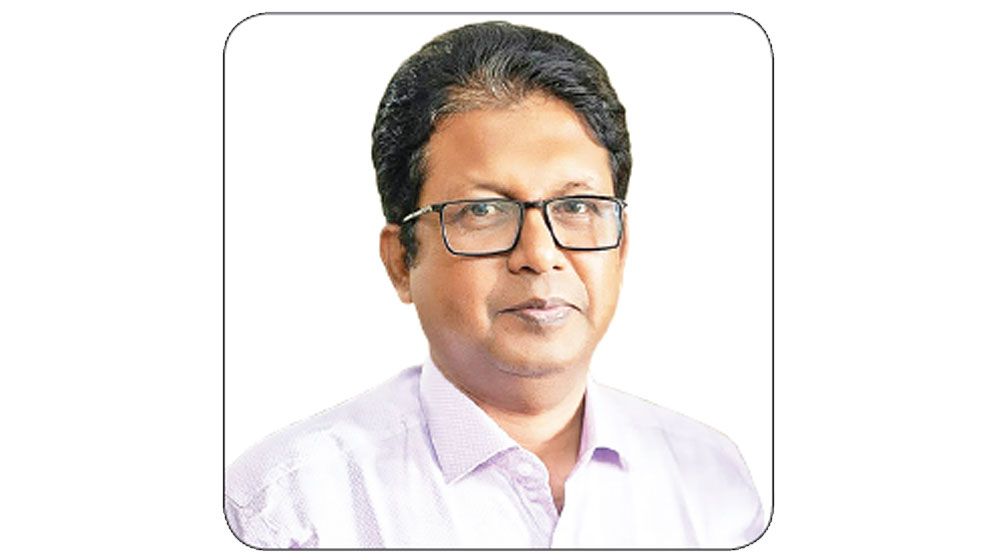
The writer is a Registrar, University of Science and Technology Chittagong (USTC).
He can be reached at [email protected]