



 For all latest news, follow the Daily Sun's Google News channel.


The closest planet to our sun is shrinking
New study suggests the smallest planet may have contracted up to 30% more than previously estimated, offering clues about its interior
CNN
Published: 14 Sep 2026, 06:04 PM
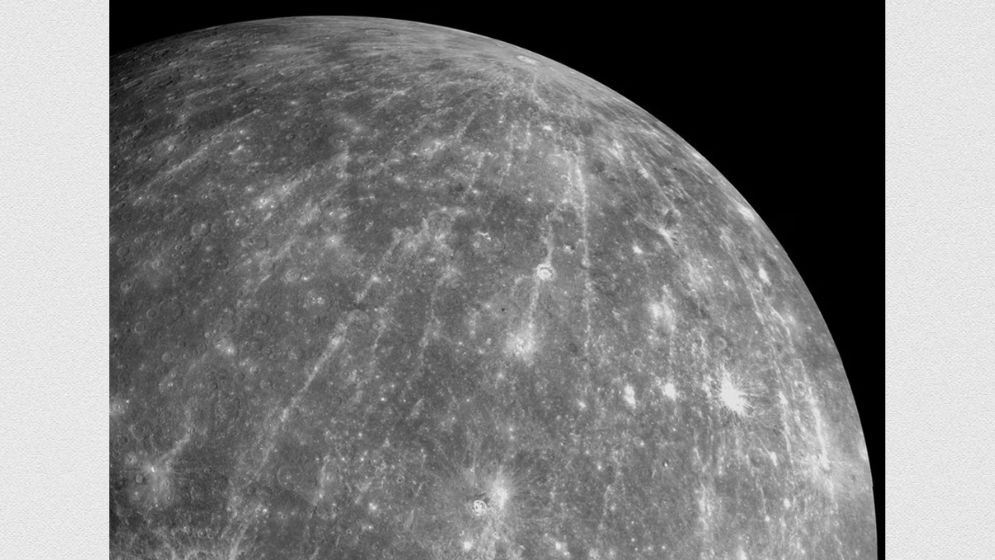
A mosaic of images taken by NASA's MESSENGER spacecraft shows impact craters on Mercury in October 2008. Photo: NASA
Telltale wrinkles that cover Mercury, the closest planet to the sun, suggest it was once a larger world that has shrunk in size — and it may be shrinking more than scientists realized.
The smallest planet in our solar system is about 36 million
miles (58 million kilometers) from the sun on average and completes one orbit
around our star every 88 days, according to NASA.
The rocky world formed from swirls of gas and dust roughly
4.5 billion years ago. The early days of our solar system were chaotic, marked
by violent interactions as a multitude of space rocks orbiting the sun crashed
into other objects.
Newly formed planets are already hot, much like volcanic
lava, but the energy from such collisions generate even more heat. As the heat
escapes these worlds over time, the interiors of planets such as Mercury
shrink.
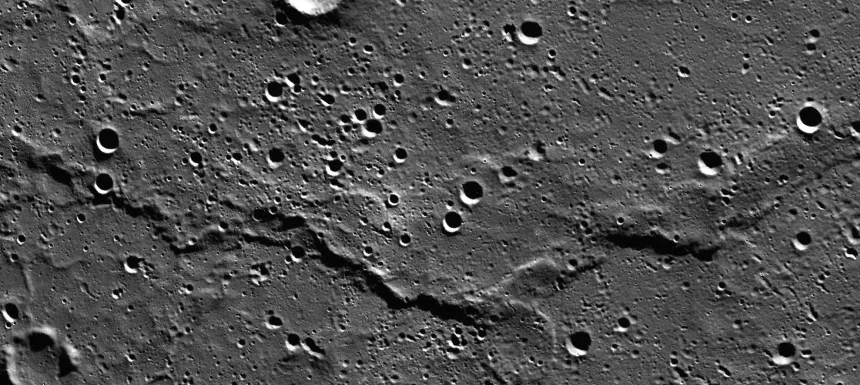
Mercury’s cracked surface bears scars from such shrinkage —
scientists call these ridges and cliffs shortening structures. Some of the
cliffs can reach up to 1 mile (1.6 kilometers) in height and can extend for
hundreds of miles in length.
But asteroids and comets have also bombarded Mercury,
riddling it with impact craters, much like the pockmarked surface of Earth’s
moon.
Debris from the impacts might have hidden just how much
Mercury has contracted over time, according to a new study published Thursday
in the journal Geophysical Research Letters.
Understanding Mercury’s shrink rate can shed light on how
the planet has evolved and reveal secrets about its mysterious interior.
“There are lessons about the formation and evolution of
large, rocky bodies like our Earth, that can be learned on Mercury better than
anywhere else in our Solar System,” wrote Dr. Hannes Bernhardt, who was not
involved in the study, in an email. Bernhardt is an assistant research
scientist in the department of geological, environmental and planetary sciences
at the University of Maryland, College Park.
The new study also highlights just how many questions linger about this tiny world — some of which could soon be answered by an unprecedented mission that will release two orbiters around Mercury in November.
A shrinking planet
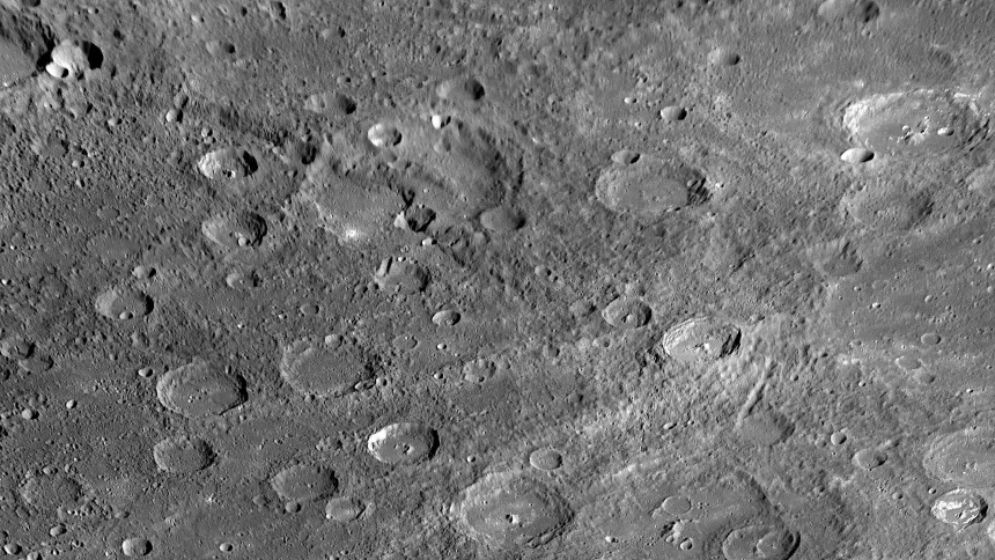
As Mercury shrank, cracks likely appeared across its surface
in a consistent way. But craters and debris from billions of years of impacts
covered many of these fissures, said lead study author Gaku Nishiyama, a
planetary scientist at the German Aerospace Center’s Institute of Space
Research in Berlin.
Mercury’s proximity to the sun has made it a challenging planet to study and explore. Only two missions have ventured into this harsh environment in previous decades: NASA’s Mariner 10 in 1974 and the agency’s MESSENGER mission in 2011.
Mariner 10 conducted flybys of the planet that revealed
Mercury’s intriguing wrinkles, while MESSENGER provided a more global portrait
of the planet’s features, said Bernhardt, who has also studied Mercury’s
shrinking.
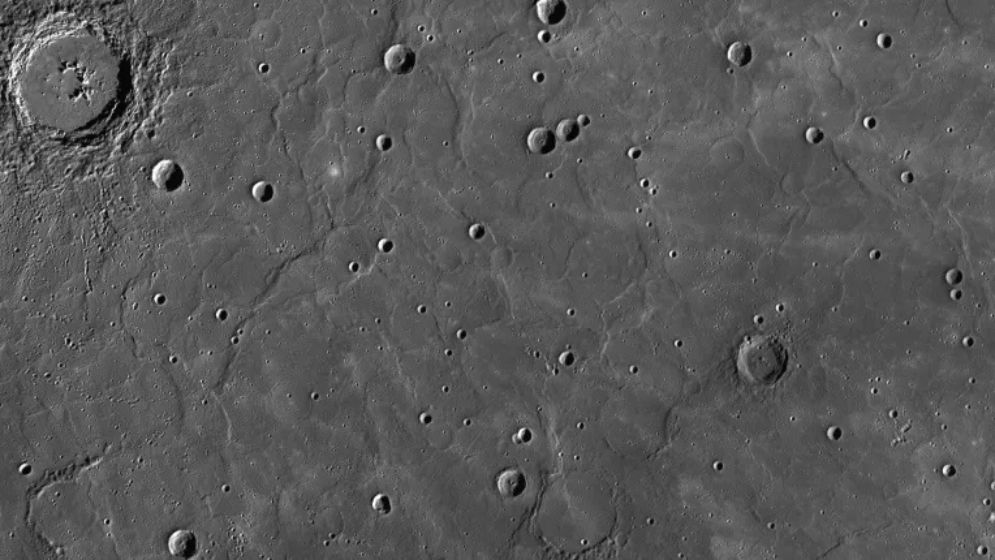
Nishiyama and his team used data from MESSENGER to create a
global map of Mercury’s surface roughness. They spotted a trend of fewer
wrinkles in the roughest parts of Mercury, compared with smoother regions of
the surface.
“It made us think that there’s a process obscuring shortening structures,” Nishiyama said, such as debris cloaking signs of contraction on the surface.
The team estimated how many wrinkles might be present across
Mercury’s surface if they weren’t hidden by debris. The computations determined
that the planet may have shrunk 10% to 30% more than previously believed, or a
radius change of about 7.2 miles (11.6 kilometers). Previous studies have
suggested a change in radius between 0.6 to 1.2 miles (1 to 2 kilometers) and
up to 4.3 miles (7 kilometers).
Dr. Paul Byrne, associate professor of Earth, environmental
and planetary sciences at Washington University in St. Louis, said it’s
plausible that previous studies of Mercury’s shrinking, including one of his
own, missed geological cracks on the planet because they were hard to see in
rough areas or because they hadn’t formed at all due to Mercury’s extremely
rugged crust. Byrne was not involved in the latest study.
“Yet if we can accurately measure how much Mercury has contracted, we can make better estimates of its interior layering, the size and make-up of its core, its tectonic and volcanic histories, how its magnetic field is generated, and a whole lot more,” wrote Byrne, also the director of the NASA Planetary Data System Geosciences Node, in an email.
Mercury is the second densest planet in our solar system
after Earth, mainly due to its large metallic core.
Calculating how much the planet has shrunk could provide a
window into Mercury’s core and what has transpired inside the planet as it
cooled.
“More shrinking means Mercury could have a larger metal
core, less light elements like silicon mixed into the metal core, or a higher
starting temperature,” Nishiyama said.
An unprecedented look
at Mercury
The BepiColombo mission, which recently began its arrival at
Mercury after traveling for nearly eight years, will position two orbiters near
the planet at the end of this year.
Topography data that the mission collects could enable
scientists to estimate more precisely how much Mercury has contracted over time
and showcase the planet’s cliffs, craters and ridges like never before, said
Nishiyama, who is a member of BepiColombo’s science team.
BepiColombo will make the first comprehensive global
measurements of Mercury’s topographic properties, which is something MESSENGER
couldn’t do, Byrne said.
“Those new data will be key to testing whether this and
other global contraction papers are right,” Byrne said. “But I suspect we’ll
find that they are, and that we still have so very much to learn about the tiny
innermost planet.”
While MESSENGER collected high-resolution data for Mercury’s
northern hemisphere, BepiColombo’s Mercury Planetary Orbiter will also measure
topography and surface roughness across the southern hemisphere, said Dr.
Kelsey Crane, geologist at Seres Engineering and Services in Charleston, South
Carolina. Crane was not involved in the new study but previously analyzed
Mercury’s surface features using MESSENGER data.
“The instruments onboard will detect gravity anomalies,
improve estimates of crustal thickness and interior structure, and detect
elemental and mineral compositions of the surface,” Crane said. “All these
types of data complement each other, helping scientists tell a more complete
story of planetary evolution and spurring new questions for future missions to
address.”
Mercury has likely shrunk more than any other planet because
its core is much larger relative to the planet’s size than other rocky worlds
in our solar system, Bernhardt said.
While he found the methodology and results of the paper to
be compelling and sound, Bernhardt said he believes that such a dramatic
decrease in Mercury’s size would have initiated visible large-scale buckling
across the planet’s surface.
Bernhardt and his team are working on their own research to
determine how much the planet has shrunk, but said orbital data alone might not
answer the question.
“With all the things that government money can buy, maybe
supporting our best engineers and scientists to put robotic boots into
Mercury’s scorched dust is one of the most inspiring ones,” he said.