



 For all latest news, follow the Daily Sun's Google News channel.


Apparel exports to EU plunge 11.7% in 8 months
Shipments fall to €11.93b as prices and volumes decline; industry sees signs of recovery

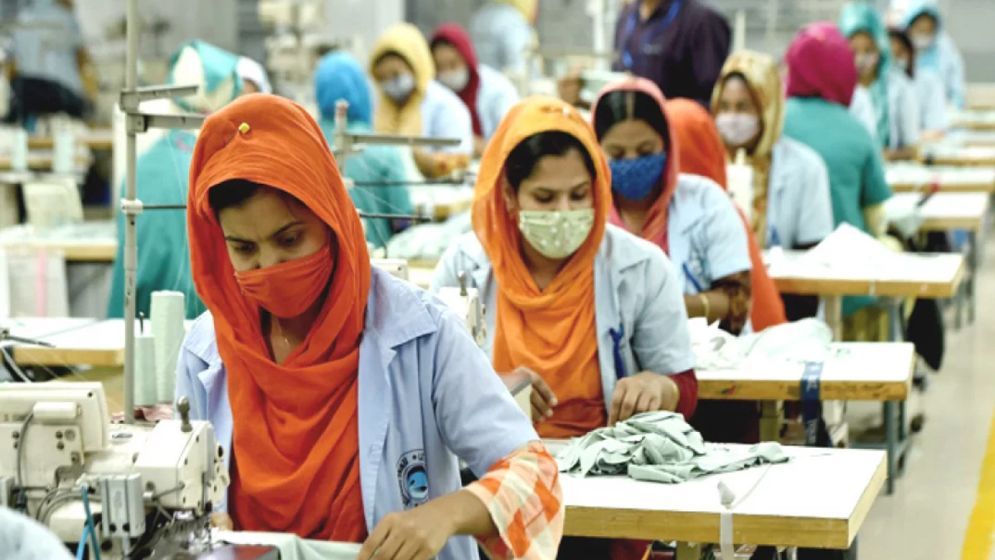
Photo: Collected
Bangladesh’s apparel exports to the European Union (EU) fell 11.67% to €11.93 billion (around US$13.40 billion) in the first eight months of 2026, as both shipment volumes and average prices declined, although industry insiders see signs of a gradual recovery in European demand.
The country’s garment exports to the bloc dropped by around €1.58 billion from €13.50 billion in the same period last year, according to Eurostat data compiled by Bangladesh Apparel Voice (BAV).
Export volume declined 4.58%, while the average unit price fell 7.43% to €13.76 per kilogram from €14.87, indicating that lower prices contributed significantly to the drop in export earnings.
However, industry insiders expect Bangladesh’s apparel exports to regain momentum towards the end of this year and into 2027 as the contraction in European apparel imports gradually eases.
Eurostat data showed that the EU’s overall apparel imports fell 3.83% to €60.29 billion during January-August 2026, compared with €62.69 billion a year earlier.
Import volume declined 2.57%, while the average unit price slipped 1.29% to €19.65 per kilogram from €19.91.
The August figures, however, offered some signs of improvement. The EU’s apparel import value rose 0.72% year-on-year, despite a 0.57% decline in volume, as the average unit price increased 1.29%.
The figures show that Bangladesh’s apparel exports suffered a much sharper decline than the EU’s overall import market, with falling unit prices compounding the impact of reduced shipment volumes.
Former Bangladesh Garment Manufacturers and Exporters Association (BGMEA) Director Mohiuddin Rubel said economic pressures in Europe had weakened apparel demand, but recent trends pointed to a gradual recovery.
“Bangladesh has performed better in the European market over the last three months than in the first five months of this year. European imports have also increased gradually,” he said.
If the trend continues, Bangladesh could see stronger export growth towards the end of 2026 and into 2027, he added.
Rubel, founder and CEO of Bangladesh Apparel Voice, said the European market remains crucial to Bangladesh’s garment industry, accounting for nearly half of the country’s apparel exports.
Bangladesh also supplies around 20% of the EU’s total apparel imports, making changes in European demand particularly significant for the country’s export earnings.
He said the country must strengthen its competitiveness and comply with European regulations to sustain export growth and protect its market position.
“The industry needs to focus on the factors European buyers consider when sourcing garments, particularly compliance requirements, sustainability standards and other regulatory conditions,” he said.
Rubel called for greater investment in value-added garments, product diversification and stronger engagement with international brands.
He said manufacturers should expand their range of higher-value products and garments made from different types of fibres to improve competitiveness.
Substantial progress in sustainability and compliance would also be essential to securing long-term growth, he added.
Rubel further stressed the need to prepare for challenges arising from Bangladesh’s graduation from the least developed country (LDC) category, particularly the potential loss of existing trade preferences under the EU’s Generalised Scheme of Preferences (GSP).
He said the country must begin addressing these challenges well in advance to safeguard market access and export competitiveness.
Sustained improvements in competitiveness, product diversification, sustainability and regulatory compliance would put Bangladesh in a stronger position to benefit from a recovery in European demand, he added.