


 For all latest news, follow the Daily Sun's Google News channel.


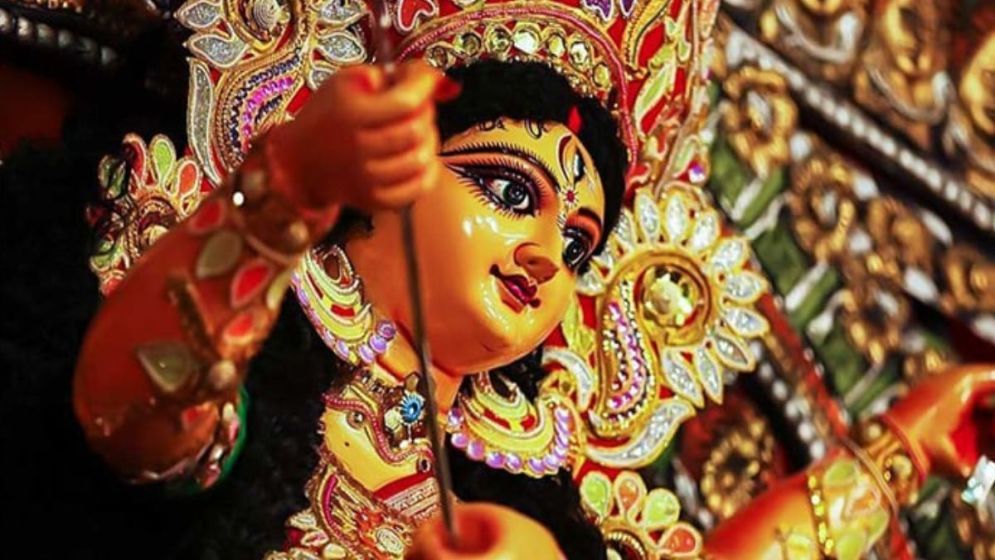
File Photo: BSS
The clay figure of Goddess Durga has taken shape. Sitting beside veteran artisan Balai Pal, Nishi Pal meticulously moulds the deity’s fingers, whilst another craftsman fixes her flowing hair.
Around them in Old Dhaka, the air is thick with the familiar sights and scents of an age-old craft – straw, clay, hemp rope, raw paint, and the rhythmic movements of skilled hands.
With Durga Puja fast approaching, artisans across the capital and throughout the country are working virtually non-stop, often from 10 am until dawn, to deliver idols to various puja committees. Yet this year, the rush against time is compounded by a bitter reality: soaring material costs, a dwindling workforce, and uncertain financial returns. At Zamindar Bari on Northbrooke Hall Road, Balai’s workshop, Shimuliya Shilpalaya, is crafting nine idols this year – a sharp drop from their usual 15 or 16.
“We are working almost around the clock to finish by mid-October,” Balai says. “Younger generations simply aren't interested in such physically demanding labor, making skilled hands exceptionally hard to find.”
The economic pressure begins long before the first layer of clay touches the bamboo frame. Sourcing suitable clay has become increasingly difficult, whilst essential raw materials have seen steep price hikes. Balai points out that jute now costs Tk30-40 more per kilogramme, and rope has jumped by nearly Tk100 per kilogramme. Consequently, an idol that fetched Tk70,000 to Tk80,000 last year now costs around Tk1 lakh. For craftsmen like Rabindranath Dey in Sutrapur, who has been moulding deities for four decades, rising costs are exacerbated by client defaults. Rabindranath has halved his output to just three idols this year. “Even when an idol is commissioned for Tk50,000, production expenses eat up at least Tk30,000,” he explains. “To make matters worse, organizers often dock Tk10,000-15,000 from the agreed fee upon delivery.”
Despite clients increasingly bringing intricate designs downloaded from the internet, both Balai and Rabindranath remain steadfast in preserving traditional aesthetics. “We refer to her as ‘Ma’, and we dress her with the dignity a mother deserves,” Balai says, emphasizing that cultural heritage must not be compromised for novelty.
According to the Bangladesh Puja Udjapan Parishad, Durga Puja will be celebrated across 33,851 mandaps nationwide this year – an increase of nearly 1,500 from last year. In Dhaka’s Sutrapur area alone, around 25 mandaps are being prepared, the highest concentration in the capital.
As final preparations gather pace from Satkhira to Magura and Rangpur, artisans and their families continue working against the clock. For them, the countdown is about far more than meeting a festival deadline; it is a battle to keep an ancestral heritage alive amidst mounting financial odds.