



 For all latest news, follow the Daily Sun's Google News channel.


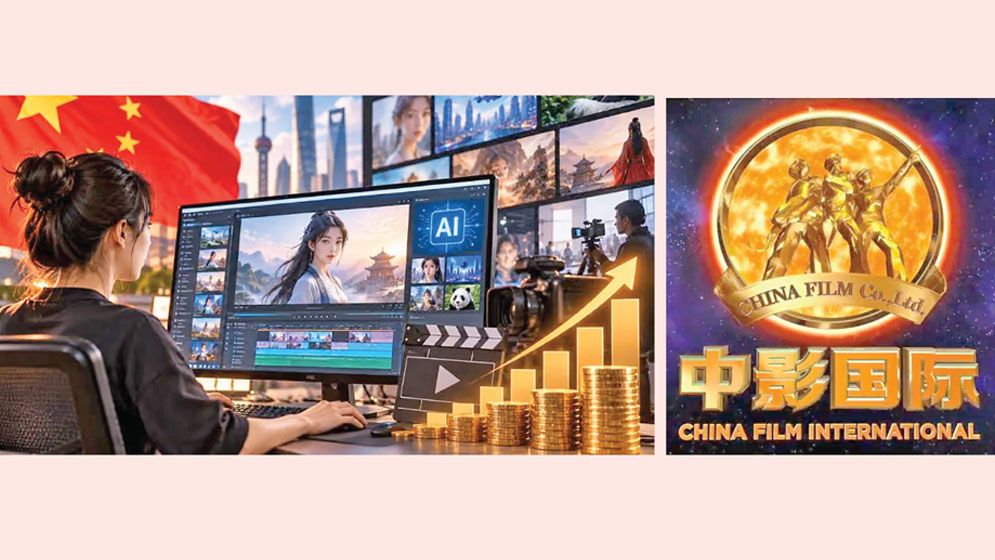
Over the past decades, China’s film industry has shown remarkable vitality and growing global influence. Its reach now extends beyond a strong domestic box office, as Chinese films draw wider international attention through compelling narratives, advanced visual effects and more ambitious global strategies.
China is one of the world’s largest film markets, producing some of the highest-grossing films and supporting a fast-expanding entertainment ecosystem. Government initiatives, long-term planning, tourism promotion, investment protection, cultural heritage and sophisticated marketing have all strengthened the industry’s position. As the sector grows, it is also attracting considerable foreign investment.
Major Chinese technology companies, including e-commerce giant Alibaba and gaming leader Tencent, have invested in Hollywood studios and film projects, among them instalments of Mission: Impossible, Star Trek Beyond and Teenage Mutant Ninja Turtles: Out of the Shadows. Alibaba has also announced a partnership with director Steven Spielberg to produce, finance and distribute films for audiences in China and worldwide. It has invested substantially in Lionsgate, the studio behind The Hunger Games franchise.
According to the China Film Administration (CFA), the country’s film industry generated economic output of 817.26 billion yuan (about $117 billion) in 2025. The figure reflects the scale of China’s fast-developing film and entertainment economy.
Policy support has been significant. The CFA and the Ministry of Commerce have jointly launched a “film plus” consumption pilot programme in 16 cities. It links cinema with tourism, food, market fairs and science popularisation, with the aim of expanding film-related consumption and building a healthier entertainment ecosystem.
Speaking to a Chinese media outlet, CFA Deputy Head Luo Yang said the industry was taking concrete steps to deepen integration with tourism, dining, technology, gaming and merchandise marketing.
The animated film “Nobody”, inspired by the classic tale “Journey to the West”, illustrates the commercial potential of this approach. More than 800 licensed products based on the film have reportedly been released, generating around 2.5 billion yuan in retail sales, and intellectual property licensing and co-branding agreements have been signed with more than 30 companies. A collaboration with a coffee chain was particularly successful, with more than five million film-themed beverages reportedly sold within three days of launch.
China’s vast box-office market has also affected Hollywood. The Chinese audience has become a significant consideration for international studios seeking to expand their commercial reach, and Hollywood productions have increasingly explored stories, characters and commercial strategies designed to appeal to viewers in China and other major markets.

At the same time, Chinese cinema is becoming more international. Chinese-language and China-produced films are receiving greater attention at major overseas festivals and testing wider theatrical markets. The 2026 Toronto International Film Festival featured more such films than the previous year: mainland Chinese and Hong Kong productions accounted for six titles, up from three, with several screenings reportedly selling out.
Chinese director Xu Zao told Reuters the increase may reflect filmmakers’ stronger desire to reach audiences beyond their home market. His debut animated feature, “Light Pillar”, had its North American premiere at the festival.
Artificial intelligence is another major development. While China’s AI ambitions are often discussed in relation to defence, large language models and semiconductors, the technology is also rapidly transforming entertainment and filmmaking.
One of the most visible examples is the rise of micro dramas: short-form productions, often lasting a minute or two, watched by millions of people on smartphones during commutes, meal breaks and leisure time. According to the China Netcasting Services Association, 128,000 Chinese-made micro dramas were produced in the first three months of this year, with more than 95 per cent reportedly made using AI. The expansion shows AI moving beyond experimentation into mainstream content production.
Regulators have introduced policies encouraging cinemas to explore AI-powered experiences, while content creators use AI to speed up ideation, development and production. These developments indicate that AI is becoming an increasingly important component of China’s emerging cultural economy.
A milestone is also approaching with the nationwide release, on 23 October, of “Sanxingdui: Future Past”, China’s first feature-length theatrical film created using AI. The 100-minute science-fiction animation draws on archaeological discoveries linked to the more than 3,000-year-old Sanxingdui civilisation. It is reportedly the first AI-created theatrical production in China to receive a public screening permit from the National Film Administration. Produced by Bona’s AI-generated film and television division using standard industry workflows, it features entirely original digital characters.
Together, these developments point to a film industry evolving from a powerful domestic market into a broader cultural and commercial ecosystem. With international expansion, cross-sector partnerships, government support and rapid AI adoption, Chinese cinema is entering a new phase in which filmmaking, technology, tourism, commerce and cultural exchange are increasingly interconnected.