


 For all latest news, follow the Daily Sun's Google News channel.


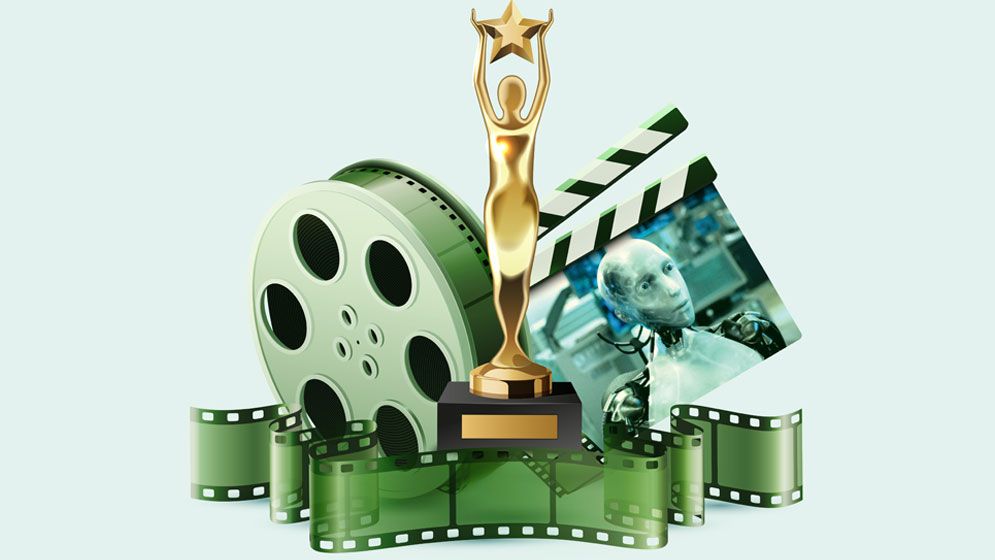
French actress Marion Cotillard offered a rather amusing description of the future of cinema. She said she would be frightened by the day an actor created by artificial intelligence (AI) could genuinely move her emotionally.
“For now, I find that they act like potatoes, and that reassures me,” the 50-year-old Oscar winner told reporters at the San Sebastian Film Festival in Spain on Thursday.
It is a funny line. But behind the joke lies one of the most serious questions facing cinema today: What happens when artificial intelligence becomes good enough to make us forget that what we are watching is not human?
Cotillard knows something about the power of human performance. She won the Best Actress Oscar in 2008 for portraying French singer Edith Piaf in La Vie en Rose. Her performance was built not simply on appearance or dialogue, but on interpretation, emotion and an understanding of another human being.
Her concern is therefore worth considering.
What if, one day, an AI-generated actor can make audiences laugh, cry, feel frightened or fall in love without a human being actually performing the role?
Now imagine that day has arrived.
It is 2035. The Academy Awards are being held in Hollywood. The red carpet is packed, the cameras are broadcasting worldwide and the world’s biggest stars are waiting for the envelopes to be opened.
Except there is a problem.
There are no stars. The nominees are AI systems.
Welcome to the 2035 Oscars: AI Edition.
Best Picture goes to a Runway-generated film for its powerful storytelling and groundbreaking visuals.
Best Director: Seedance, for its distinctive cinematic vision and masterful direction.
Best Actor: An OpenArt-generated AI actor, for a compelling performance that brought a fictional character convincingly to life.
Best Actress: A Google Flow-generated AI actress, for playing 11 characters in the same film.
Best Original Screenplay: Claude, for writing a script overnight after studying thousands of successful films.
Best Cinematography: Midjourney, for its remarkable control of composition, lighting and visual style.
Best Film Editing: DaVinci Resolve, for seamless editing, precise colour grading and exceptional post-production craftsmanship.
Best Visual Effects: Kling AI, for creating highly realistic visuals and seamless digital effects in a film.
Best Original Song: Suno, whose singer, composer, producer and musicians are all AI-generated.
Best Sound: ElevenLabs, for outstanding sound design and precise audio mixing.
The acceptance speeches could be particularly interesting.
“Thank you to the Academy,” the winning AI might say. “I would also like to thank my training data, my computing infrastructure and the 14 million prompts that made this possible.”
The audience applauds.
Or perhaps the audience is AI-generated too.
The scenario sounds ridiculous today. But some elements of it are already moving closer to reality.
AI can generate images, music, voices, scripts and increasingly sophisticated video. It can digitally alter performances, recreate voices and faces, and help filmmakers produce visual effects that once required enormous budgets and teams of specialists.
Cinema has always embraced new technology. Sound transformed the silent era. Colour changed the visual language of film. Digital cameras revolutionised production.
Computer-generated imagery allowed filmmakers to create creatures, landscapes and entire worlds that could not exist physically.
AI, however, is entering territory that feels different.
It is moving beyond helping artists make things and towards helping machines create things.
That distinction matters.
If an AI system generates an actor’s face, voice, expressions and movements, who is actually performing? If a machine writes the screenplay after analysing millions of stories, who is the writer? If AI creates the music, designs the sets and edits the film, where exactly does the human creator begin and end?
And perhaps the biggest question is this: If audiences cannot tell the difference, will they care?
Cotillard’s fear is essentially about that moment.
Today, an AI performance may still appear artificial or emotionally hollow. Tomorrow, it may become convincing enough to fool even experienced viewers. The technological challenge may eventually be solved. The philosophical one will remain.
There is also an economic question.
A studio can hire one actor. An AI-generated performer can potentially appear in thousands of films simultaneously. A human actor needs time to rehearse, travel and perform. An AI character can be altered with a prompt.
A human cinematographer has physical and creative limitations. AI can generate hundreds of visual possibilities in minutes.
For studios, that could mean lower costs and greater control. For creative professionals, it could mean fewer jobs, changing contracts and difficult questions about ownership and consent.
But cinema is not merely an exercise in producing images as efficiently as possible.
People do not go to the cinema simply to see technically perfect faces moving across a screen. They go to experience a story and to connect with the people telling it.
That may explain why the human element could remain valuable even as AI becomes increasingly capable.
Tom Cruise made precisely this point while discussing AI and the future of filmmaking at a recent BAFTA “Life in Pictures” event in London.
“There is nothing like human,” Cruise said.
He acknowledged that AI would affect the film industry and that the technology was coming. But he also argued that audiences would continue to value real experiences and real things on screen.
“I always believe in humanity,” he said, urging filmmakers to keep creating.
That may ultimately be the most interesting twist in our imaginary 2035 Oscars.
Perhaps AI will become capable of winning every technical award. Perhaps it will write the scripts, generate the sets, compose the music and even create convincing performances.
But the audience may still want to know that somewhere behind the screen there was a person who felt something, imagined something and decided to tell a story.
Cotillard worries about the day an AI actor might finally move her.
Cruise, meanwhile, believes audiences will still want reality.
The future of cinema may depend on what happens between those two ideas.
And if the Academy ever does hand an Oscar to an AI actor, perhaps the machine’s acceptance speech should end with the only line that matters:
“Thank you. I couldn’t have done it without humanity.”
___________________________________________
The author is a Sub-Editor at Daily Sun. He can be reached at [email protected]