


 For all latest news, follow the Daily Sun's Google News channel.


Mushroom market set to reach $115m by 2030
Rising demand, commercial farming drive growth as sector explores export opportunities

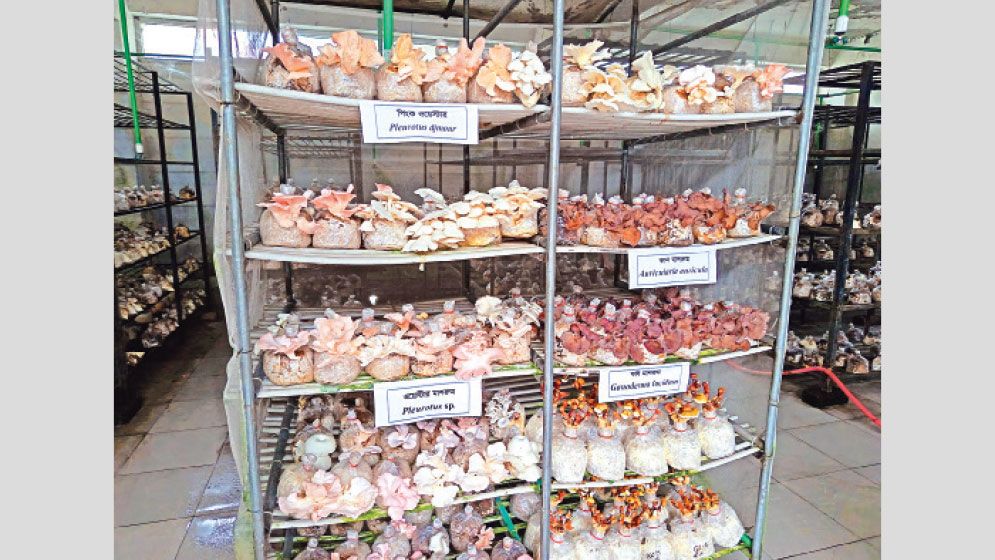
Bangladesh’s mushroom market is emerging as a promising agribusiness, with its value projected to reach nearly US$115 million by 2030.
The market is currently estimated at around $65.8 million, driven by rising consumer demand, growing awareness of the nutritional benefits of mushrooms and increasing interest in commercial cultivation.
Mushroom farming has also emerged as a new source of rural income, requiring relatively little investment and space while offering attractive returns. Rising domestic production has helped reduce the country’s dependence on mushroom imports.
Mushroom imports stood at 69.93 tonnes in the fiscal 2018-19, falling sharply to 17.42 tonnes in FY20 and just 4.97 tonnes in FY22.
Dr Akhter Jahan Kakon, project director of the Improvement of Nutrition and Reduction of Poverty through Mushroom Cultivation Project, told the Daily Sun that annual mushroom production currently stands at around 40,000 to 42,000 tonnes, with a market value of about $65.8 million. The market is projected to reach $115 million by 2030.
She said the market is expanding as consumers become more familiar with different varieties and more entrepreneurs enter commercial cultivation and processing.
“We are commercially cultivating several varieties, including oyster, milky, black mushroom and Ganoderma, or reishi. At the research level, we are working with around 30 to 35 varieties,” Dr Kakon said.
Oyster mushroom was previously the dominant commercially cultivated variety in Bangladesh, but entrepreneurs are increasingly producing other varieties, including Ganoderma, milky mushroom and black fungus, she said.
Black mushroom, traditionally found in forests and hilly areas, is also becoming commercially cultivated in the hill regions, where indigenous communities have long consumed it.

“People in the hill areas have traditionally eaten black mushroom, but they did not cultivate it commercially. Since the project began, they have started growing it themselves,” she said.
Despite rising production, mushroom consumption in Bangladesh remains relatively low, making consumer awareness and demand creation major challenges for the sector.
Dr Kakon said the project is therefore focusing on building consumer awareness alongside training entrepreneurs.
“We are training entrepreneurs and sub-assistant agriculture officers so they can promote mushroom cultivation and consumption in their areas,” she said.
The project is also using a daily consumption target to illustrate the potential size of the domestic market.
If each of Bangladesh’s roughly 170 million people consumed just 25 grammes of mushrooms a day, annual demand would reach around 1.55 million tonnes, she said.
Even if only 10% of the population consumed mushrooms regularly, daily demand would reach around 450 tonnes, according to the project’s calculations.
“The project began in 2023, and we are now seeing growing consumer interest, particularly among health-conscious people.
Those who understand the nutritional benefits are increasingly interested in eating mushrooms regularly,” Dr Kakon said.
Nutrition consultant Samia Tasnim said mushrooms can be a nutritious addition to a balanced diet because they are low in calories and fat while providing protein and other nutrients.
“Mushrooms are nutritious and a good source of protein. They contain a lot of water, so they are relatively low in calories and fat, which can make them a healthy addition to the diet,” she said. Tasnim said mushrooms also contain bioactive compounds such as ergothioneine, glutathione and phenolic compounds.
“These compounds have antioxidant properties that may help reduce oxidative stress and support immune function,” she said.
She said some mushrooms also contain ergosterol, which can be converted into vitamin D2 when exposed to ultraviolet light.
“UV-exposed mushrooms can be a useful dietary source of vitamin D. Mushrooms are also low in calories and fat while providing protein, fibre, B vitamins and minerals such as potassium, phosphorus, copper and selenium. This makes them a good option for people trying to manage their weight,” she said.
Tasnim said growing health awareness is also helping increase interest in mushrooms.
“People are becoming more aware of the health benefits of mushrooms and other nutritious foods. With increasingly sedentary lifestyles, there is growing interest in foods that can support overall health and help reduce the risk of chronic diseases,” she said.
Demand growing in several regions
The project is also developing market linkages between producers and areas where demand is comparatively high.
Dr Kakon identified Jessore, Magura, Rangpur, Bogura, Sylhet and the Chattogram Hill Tracts as areas with considerable potential for mushroom cultivation and consumption.
She said mushrooms are no longer confined to high-income consumers. Fresh mushrooms are increasingly available in supermarkets and modern retail outlets as well as conventional kitchen markets in Dhaka.
Mushroom-based fried snacks are also being sold at roadside food shops in different parts of the country, helping introduce the product to a wider range of consumers.
The growing sector is also creating income opportunities for women through mushroom cultivation, processing and value-added products.
According to Dr Kakon, women entrepreneurs are using cultivated mushrooms to make a range of homemade and commercial products, including cakes, pitha, crispy snacks, soup, chips, jam, jelly and chutney.
The project has developed training on dozens of mushroom-based recipes and is encouraging entrepreneurs to move beyond selling fresh mushrooms into value-added processing.
Some entrepreneurs have already started commercially producing mushroom soup and chips, while women entrepreneurs are making mushroom-based cakes and other food products.
“Some entrepreneurs have already moved into commercial processing, producing mushroom-based soup, chips, cakes, jam, jelly and chutney,” Dr Kakon said.
She said entrepreneurs involved in mushroom processing are operating in areas including Uttara in Dhaka, Khulna and Rangpur.
The project is providing technical assistance to commercial entrepreneurs, although it does not offer direct financial support, she added.
For some entrepreneurs, mushroom cultivation has already become a source of additional income.
“Mushroom farming has created a good income opportunity for me because it requires relatively little time and space,” said Laboni Akhter, a mushroom farmer from Keraniganj who holds a master’s degree.
“I mainly produce and sell mushroom spawn, selling around 2,000 units a month. I also sell fresh mushrooms and provide training and advice to people interested in cultivation,” she said.
Each spawn sells for Tk30 against a production cost of around Tk15, leaving a profit of about Tk15 per unit, she said.
“I earn around Tk1.5 lakh to Tk2.5 lakh a year from mushroom farming and spawn sales,” Akhter said.
She believes mushroom cultivation could be particularly suitable for women seeking an additional source of income.
“It can be managed alongside a regular job and does not require much space, making it a good income-generating opportunity for women,” she said.
Export potential emerging
The mushroom sector also has the potential to develop into an export-oriented agribusiness, according to project officials.
Dr Kakon said samples of several mushroom varieties have already been sent to overseas markets to explore export opportunities.
Samples of Ganoderma were recently sent from Sylhet to Hong Kong and received a positive response. Samples of black fungus, oyster mushroom and reishi were also sent from Chattogram, with prospective buyers expressing interest, she said.
“Commercial exports have not started yet, but we have received positive responses from potential buyers interested in the products,” Dr Kakon said.
Developing export markets could create another source of revenue for entrepreneurs if Bangladesh can ensure consistent quality, production and supply.
The project has so far trained around 660 entrepreneurs and is expanding its activities to 48 districts.
It is also providing technical support and helping establish links between producers, markets and consumers.
The expansion of commercially cultivated varieties, entrepreneur training, market development, value-added processing and potential exports could gradually transform mushroom cultivation from a small-scale activity into a more structured agribusiness.
The growing range of commercial varieties also shows that the sector is moving beyond its traditional dependence on oyster mushrooms.