



 For all latest news, follow the Daily Sun's Google News channel.


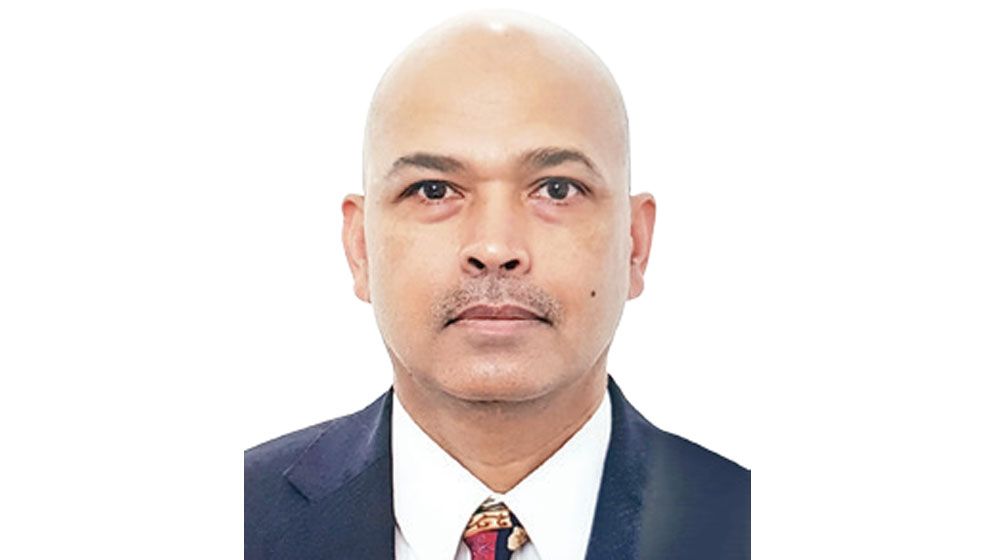
Prime Minister Tarique Rahman is in New York on a short five-day visit to attend the 81st session of the United Nations General Assembly (UNGA). The General Assembly’s general debate begins on the third Tuesday of September every year, when top leaders of member countries speak. This session is the only annual event where the largest number of heads of state and government participate. This year’s UN session is historic for Bangladesh because the country’s foreign minister is presiding over it. Again, the session is a matter of pride for Prime Minister Tarique Rahman’s family because his father spoke as the head of state and his mother as the head of government using the same podium.
Although it is a personal pride and a part of history, the diplomatic circle concerned is interested in seeing what Bangladesh achieves from it. Many critics label the UN as ‘a talk shop’ or ‘a toothless tiger’. The UN has not been able to play an effective role in ending the ongoing wars in different countries or the aggression of the stronger countries against the weaker. The allegations are not baseless. That is why many people demand reform of the United Nations. We do not want to understand that the UN is not a sovereign entity. The more member states empower the United Nations, the more effective it becomes. Therefore, one of the themes of this session is the ‘United Nations for All’.
What role can Bangladesh play during the discussion on the ‘United Nations for All’? On the eve of the prime minister’s visit to New York, the foreign secretary told a news briefing that the Bangladesh prime minister will highlight the country’s democratic transformation, the rule of law and accountability, global peace and security, climate change, sustainable development and economic cooperation, empowerment of youth and women, education and health, the Rohingya crisis, equitable use of modern technology and reform of the multilateral system. He will attend a meeting on tackling the global inequality crisis, jointly organised by Brazil, South Africa, Norway and Spain; and another meeting on climate action and the just transition. Additionally, the prime minister himself is convening a side event on the crisis caused by the forcibly displaced people of Myanmar who took shelter in Bangladesh. The prime minister may have bilateral meetings with his counterparts from Kuwait, Pakistan, Thailand, Bhutan, Croatia and Haiti.
Most of the issues the prime minister will raise in his speech are related to domestic politics. Only two issues address global politics. Respect for international law and the sovereignty of member states, ways to prevent one country from imposing war on another, the energy crisis, security of sea routes, the ill effects of imposing unilateral trade tariffs, and above all, reform of the international world order are expected to be the focus of discussion at this session. Therefore, it is not certain how much impact the prime minister’s speech will have. What he says about world peace and security and the reform of the international world order may only turn the world leaders. The government said that this year’s UN session will be Bangladesh’s new journey in global diplomacy. Although it may sound impressive, no such sign is visible yet. Bangladesh has not specified any distinct perspective on worldviews. Bangladesh has not initiated any form of advocacy on any issue worldwide. Bangladesh has not formed an alliance with one or more member states on any global goals or put in an effort to form a widely noticeable opinion.
We are not aware of any particular preparation by Bangladesh for the few sideline meetings it is expected to attend. If Bangladesh had been active, it could have co-sponsored the Global Inequality Crisis meeting. Again, the meeting organised to repatriate the forcibly displaced people of Myanmar who have taken refuge in Bangladesh also has no co-sponsor. No heads of state or government have yet expressed solidarity with the session. Among the proposed bilateral meetings, those between the counterparts from Kuwait, Bhutan, Pakistan, and Thailand seem useful, but the meetings with Croatia or Haiti do not seem to have any utility. As a result, there is a fear that the government’s new diplomatic campaign may remain just a political gimmick.
Success of a country in any multilateral meeting like the UNGA depends on its clear position on the issues discussed, and its subsequent manoeuvring capacity. It is reflected when a country gets co-sponsors.
It is heard that the prime minister has shortened his visit due to visa complications. As a result, he curtailed all programmes outside the UN. He is not participating in the proposed IT Forum in San Francisco. He is avoiding a civic reception in New York. Here I see the ineffectiveness of the circles associated with the prime minister. Since February, it is more or less known that he will attend the UN session. In April, Bangladesh signed a deal to purchase American Boeing. In June, when the Bangladeshi foreign minister was elected president of the UNGA, it was expected that Bangladesh would play a major role in the assembly. In July, the White House’s South Asian Affairs Advisor Sergio Gore visited Bangladesh. He confirmed the purchase of more Boeings. Couldn’t the circles associated with the PM have resolved the visa complications during these engagements? If one ambassador can impose a visa ban, the other can definitely revoke it. In April, Brent Christensen paid a courtesy call on the PM. At that time, was it just a courtesy to present a picture of Jimmy Carter shaking hands with Ziaur Rahman or a picture of George W Bush smiling with Khaleda Zia? Couldn’t this courtesy have been transformed into an effective relationship?
Many people think that a least developed or developing country like Bangladesh cannot make its mark in an international forum. Everything happens there at the will of the superpowers. This is a completely incorrect idea. The country that wins in an international forum is the one that can form an issue-based alliance with other countries for its own interests. In the UNGA, all decisions are made by majority votes. That is why the voice of the allied small island states can be heard there. So is the voice of the Group-77. If Bangladesh wants the respect of the world, it has to be active in diplomacy, take a meaningful position on global issues, project a global attitude, conduct regular discussions with other countries, and strive to shape world opinion. Building such a Bangladesh in the future can be an enviable success for any government. Then a short tour or a small delegation will not bar its gains.
__________________________________________
The writer is a former Bangladeshi Ambassador