




 For all latest news, follow the Daily Sun's Google News channel.


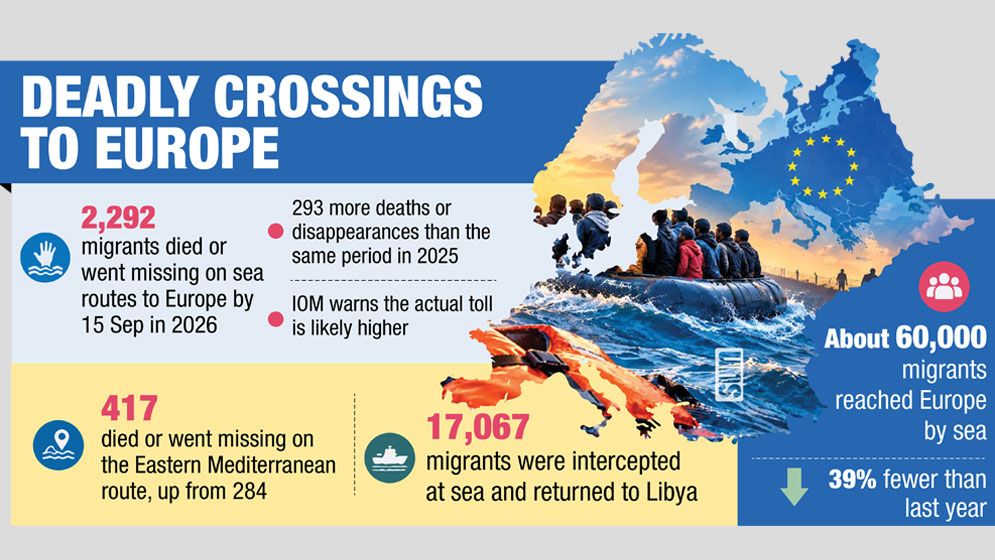
At least 2,292 migrants have died or gone missing while attempting to reach Europe by sea through the Mediterranean and Atlantic routes up to 15 September this year, according to the International Organization for Migration (IOM).
The Mediterranean and Atlantic are among the world's deadliest migration routes, with thousands undertaking perilous journeys each year in search of safety and a better life.
Although sea arrivals have fallen this year, the number of deaths and missing migrants has increased.
IOM Director General Amy Pope said people were “still dying and going missing at an alarming rate” while trying to reach safety.
She said the figures indicated that migrants were increasingly taking more dangerous routes.
During the same period in 2025, 1,999 migrants died or went missing on the Mediterranean and Atlantic routes.
The Eastern Mediterranean route saw the sharpest increase, with deaths and disappearances rising from 284 last year to 417 this year.
IOM said the figures cover verified incidents and recorded arrivals up to 15 September. However, the actual toll is likely to be higher because many shipwrecks and disappearances go unrecorded.
More than 17,000 returned to Libya
The central Mediterranean crossing from Libya remains a major route to Europe. According to Libyan Coast Guard data, 17,067 migrants were intercepted at sea and returned to Libya between January and mid-September.
Many migrants attempt to travel from Libya to Italy, Greece and other European countries in unsafe boats operated by human traffickers, often resulting in shipwrecks and deaths.
Meanwhile, sea arrivals in Europe have fallen significantly. Around 60,000 migrants and refugees have reached Europe by sea so far this year, compared with 98,040 during the same period last year – a 39% decline.
Despite the fall in arrivals, the rising death toll highlights the dangers faced by people attempting these journeys. IOM has called for greater efforts to save lives at sea, combat human trafficking and expand safe, regular and legal migration pathways.
Read More