


 For all latest news, follow the Daily Sun's Google News channel.


When Global Ambition Meets Global Accountability
Saima Wazed’s resignation and the credibility test for South Asia

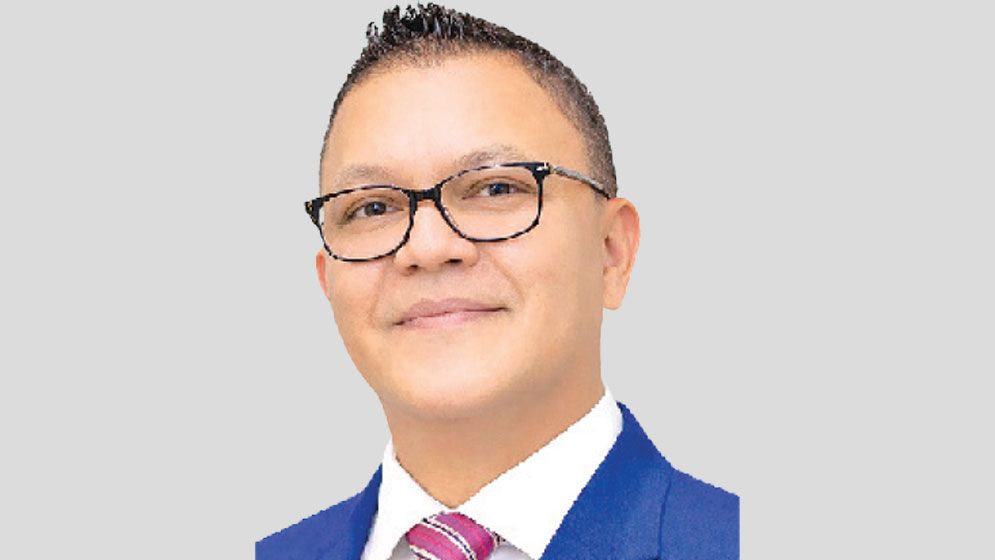
The resignation of Saima Wazed as Regional Director of the World Health Organisation’s South East Asia Region is not simply the end of one international career. It is a warning about how political ambition, international representation and institutional credibility intersect in an increasingly unforgiving global environment. Saima resigned amid investigations by WHO and Bangladeshi authorities into allegations involving financial irregularities, academic credentials and governance concerns, though she has denied the allegations. Her resignation followed a period of administrative leave and reports that member states were considering action against her appointment. The investigations and their conclusions must be allowed to run their course. But the political and institutional questions raised by the episode cannot be ignored.
The central issue is not simply who gets an international position, but how that person gets there and what standards are applied before, during and after the appointment. For South Asia, that question has particular significance. The region has legitimate grounds for demanding greater representation in global institutions. Its enormous population, economic potential and development challenges give it a compelling case for a stronger voice in the United Nations, WHO, World Bank and other multilateral bodies. For countries like Bangladesh, securing senior international positions has consequently become an important element of diplomacy and national prestige. But representation comes with responsibility.
A senior official in a global institution is rarely viewed entirely as a private individual. Their conduct can influence perceptions of their country and, sometimes, their entire region. This makes the selection process far more consequential than a conventional professional appointment. Political endorsement can open a door, but it cannot guarantee credibility once that door is open. That is perhaps the most important lesson of the Saima Wazed episode.

Governments seeking international positions for their nationals must understand that diplomatic lobbying cannot replace institutional due diligence. Academic qualifications, professional history, financial interests, conflicts of interest and ethical records require rigorous scrutiny before a candidate is placed in a position where global confidence is at stake.
The responsibility also belongs to international organisations. WHO must demonstrate that its procedures are independent, transparent and based on evidence. Since the COVID-19 pandemic, public health institutions have faced intense questions about preparedness, governance and accountability. Their greatest asset is public trust, and that asset cannot be taken for granted. If allegations emerge against a senior official, institutions must avoid two equally dangerous extremes: political protection and premature condemnation. Evidence, due process and institutional rules must determine the outcome.
For Bangladesh, however, there is an additional dimension. The country has achieved genuine progress in public health, development, disaster management, vaccination, and maternal and child health. Those achievements have contributed substantially to Bangladesh’s international reputation. They should not be confused with the conduct of any individual.
Yet reputation is precisely why international appointments matter. When a Bangladeshi national occupies a senior global position, the country gains visibility. In contrast, if that position becomes surrounded by controversy, the country inevitably receives some of the attention as well. This may not always be fair. But international politics is rarely governed by fairness alone. It is governed by perception, credibility and trust.
The digital age has made that reality even more powerful. Professional records, financial decisions, academic claims and public statements can now be examined by journalists, civil society organisations, governments and ordinary citizens across borders within hours. The old model of international influence, where political connections and diplomatic patronage could carry an individual a considerable distance, is becoming increasingly difficult to sustain. Today, global leadership requires both influence and resilience under scrutiny.
The geopolitical stakes are also growing. South Asia is now central to the strategic calculations of the United States, China, the European Union, Japan and the Gulf states. Its markets, workforce, technology sector, pharmaceutical capabilities and geographic importance make it increasingly influential. Health itself has become a geopolitical instrument. Vaccines, pharmaceutical production, pandemic preparedness, biotechnology, health financing and climate-related health security are no longer purely technical matters. They are increasingly part of international diplomacy and strategic competition. Leadership in institutions such as WHO therefore carries influence far beyond an individual office.
South Asia should consequently seek more than appointments. It should seek credible leadership. The real measure of the region’s international rise will not be how many senior posts its citizens occupy. It will be whether those leaders strengthen institutions, uphold standards and inspire confidence.
The resignation of Saima Wazed should not be treated as a verdict on Bangladesh, nor should it be used to prejudge the investigations against her. It should instead become an opportunity for serious reflection. For governments, the lesson is to make due diligence stronger than political expediency. For international organisations, the lesson is to make accountability transparent and consistent. And for South Asia, a region seeking a larger role in shaping the global order, the lesson is perhaps the most important of all: global ambition without global accountability and trust is ultimately unsustainable.
__________________________________________
The writer is a political analyst, private banking financial crime compliance specialist, columnist and poet based in Geneva, Switzerland
Read More