


 For all latest news, follow the Daily Sun's Google News channel.


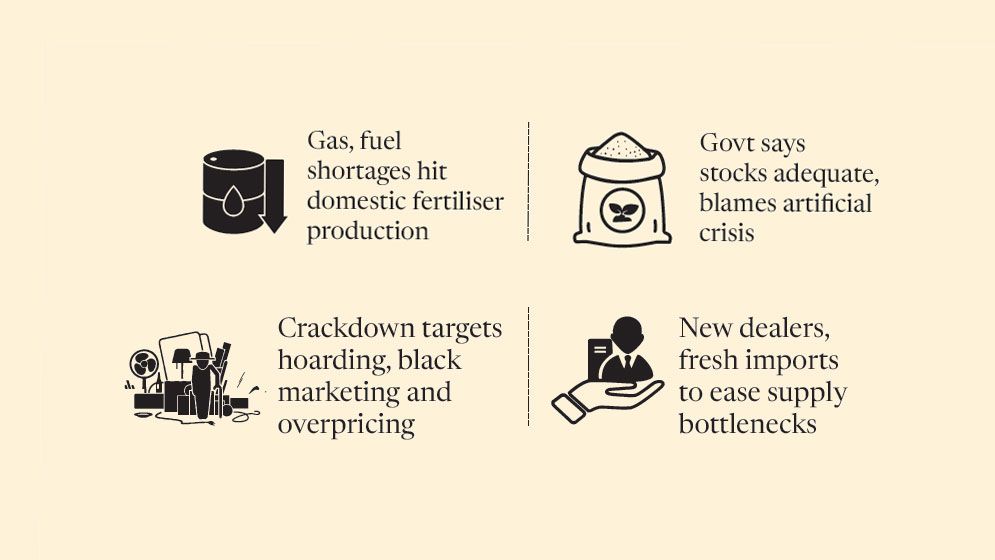
Fertiliser supply in the country remains vulnerable as fuel and gas shortages disrupt domestic production and farmers in several areas struggle to obtain subsidised fertiliser, even as the government insists that the country has adequate stocks and blames an organised group for creating an artificial crisis.
The government has intensified a nationwide crackdown on hoarding, black marketing, illegal diversion and overpricing while taking steps to strengthen distribution and replenish stocks during the peak Aman season.
Over the past week, law enforcement agencies and local administrations have raided fertiliser dealers and traders, seized illegally stockpiled supplies and imposed fines. The government has also moved to expand the distribution network and increase imports.
Economist and researcher Dr Jahangir Alam Khan told the Daily Sun that shortages of gas and fuel are hampering domestic production.
“We need to increase our domestic fertiliser production. We have seven fertiliser factories, but only one is currently operational, while the others remain shutting due to gas shortages,” he said.
On Friday, police and the upazila administration in Kurigram’s Bhurungamari seized 2,150kg of illegally stockpiled fertiliser, including 1,500kg of urea and 650kg of DAP, during an overnight raid. A mobile court fined two people Tk1 lakh.
Authorities said the fertiliser had been concealed in cattle sheds, haylofts and paddy storage facilities, allegedly to create an artificial shortage and make illegal profits.
The operation came amid heightened surveillance in northern districts, where farmers have repeatedly complained of shortages and inflated prices.
Earlier, farmers in Bhurungamari had broken into a dealer’s warehouse after failing to obtain fertiliser. An investigation subsequently found irregularities in distribution and sales records.
In Gaibandha, authorities on September 1 seized 209 sacks of fertiliser from a trader’s warehouse in Sundarganj, including 102 sacks of urea and 107 sacks of MOP. A mobile court fined the trader Tk30,000, while the seized fertiliser was handed over to the upazila agriculture office for sale to farmers at government-fixed prices.
In Lalmonirhat’s Aditmari, another operation on Thursday resulted in a Tk33,000 fine against a dealer and an illegal trader over irregularities in the storage, sale and transportation of fertiliser. Five sacks of DAP were also seized.
The crackdown has extended to suspected cross-border smuggling. On September 3, the Bangladesh Coast Guard foiled an attempt to smuggle 11 tonnes of fertiliser to Myanmar from Chattogram’s Halishahar area. Three suspected smugglers were arrested and the truck used in the attempt was seized.
The government is also seeking to address distribution bottlenecks through structural reforms.
The agriculture ministry on 30 August issued an implementation notice for the Comprehensive Policy on Fertiliser Dealer Appointment and Distribution 2026.
Under the new policy, an additional fertiliser dealer will be appointed in every union alongside the existing two, with the government saying the move will make distribution more accessible and efficient.
Retailers have also been allowed to continue purchasing fertiliser from authorised main dealers and selling it to farmers at government-fixed prices until further notice, ensuring the distribution network remains operational while the new dealer system is introduced.
Meanwhile, Agriculture Minister Mohammed Aminur Rashid told parliament on Wednesday last that Bangladesh had around 1.3 million tonnes of fertiliser in stock, compared with about 1.2 million tonnes during the same period last year.
He said an organised group was attempting to create an artificial crisis and that surveillance over supply and distribution had been intensified.
The government had earlier reported total stocks of around 1.365 million tonnes as of August 24, comprising 482,200 tonnes of urea, 369,000 tonnes of TSP, 368,000 tonnes of DAP and 146,000 tonnes of MOP. Another 865,000 tonnes was reportedly at the import stage.
Fresh imports are being used to further strengthen supplies. On September 2, the Cabinet Committee on Government Purchase approved the import of 70,000 tonnes of phosphate-based fertiliser from Morocco, including 40,000 tonnes of DAP, with the DAP consignment alone costing an estimated Tk440.92 crore.
This followed the government’s August 24 decision to procure 365,000 tonnes of fertiliser – 80,000 tonnes of urea, 115,000 tonnes of MOP, 80,000 tonnes of DAP and 60,000 tonnes of TSP – from Saudi Arabia, Russia, Morocco, Canada and KAFCO at a combined cost of around Tk2,562 crore.