


 For all latest news, follow the Daily Sun's Google News channel.


From sea to market, hilsa leaves the poor behind
A kilogram of hilsa costs farmers 2.5 maunds of paddy
Daily Sun Report, Barguna
Published: 04 Sep 2026, 12:00 AM
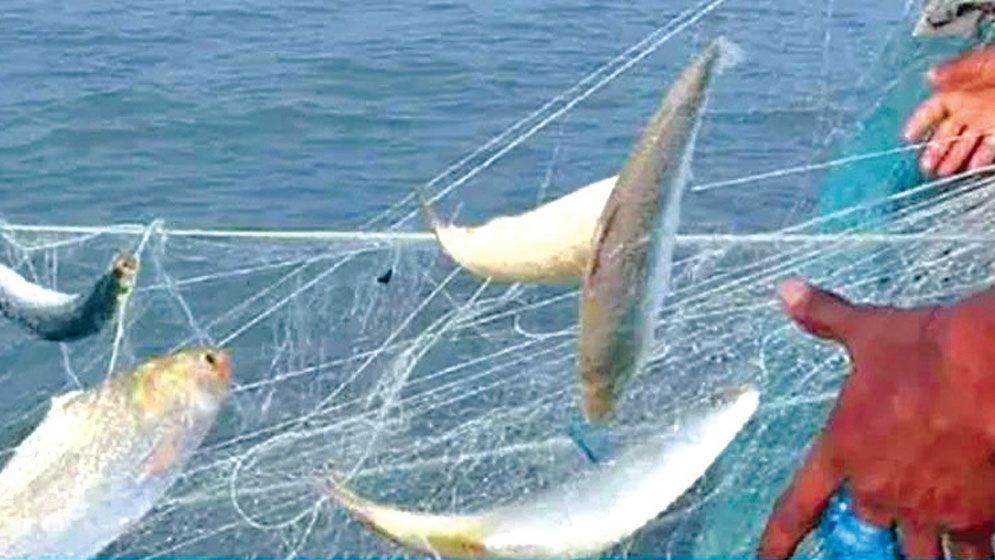
“I go to the sea and catch hundreds, housands of hilsa. But when I think about dadan, instalments and loans, I can no longer afford to eat fish. We catch the fish, but we cannot eat them,” said Kalam Sardar, a fisherman from Jintala village in Barguna’s Patharghata explaining the bitter irony of his life at sea.
The struggle is much the same for most fishermen and working people in the area. Even in Patharghata, a major hilsa landing hub, many locals can no longer afford to put the prized fish on their dinner tables.
Afez Uddin, a small farmer from Madhyaghutabacha village, said the soaring price of hilsa has put it beyond the reach of ordinary families. “Even though we live in Patharghata, we cannot afford to buy and eat hilsa. A maund of rice costs around Tk1,200. So, we would have to sell two and a half maunds of rice just to buy one kilogramme of hilsa. That is simply beyond our means,” he lamented.
In Patharghata, Barguna, the country’s second-largest fish market, 1-kg hilsa now sells for around Tk3,000, with prices sometimes climbing even higher. Yet the fishermen who bring the prized fish ashore often struggle to make ends meet.
Fishermen brave the sea day and night, risking their lives with every voyage. Battling storms and towering waves while living under the constant threat of pirates, they return to the shore with hundreds, sometimes thousands, of hilsa in their boats.
Despite hauling hilsa from the sea, many fishermen are forced to sell their catch to cover household expenses, rent and loan instalments, leaving little room for their own consumption.
Recently, a fishing trawler capsized in the Bay of Bengal after being battered by rough waves. Of the 13 fishermen aboard, eight were rescued with the help of another trawler, while five lost their lives.
For coastal fishermen, such tragedies are all too familiar.
Yet even after risking their lives at sea, many say they struggle to receive a fair price for their catch, leaving them unable to secure even adequate food for their own families.
The fish they catch must first pay the debts that keep their lives afloat, shopkeepers and moneylenders, loan instalments, trawler expenses and daily household costs. By the time these obligations are met, little is left for the fishermen themselves.
Thus, even when hilsa season arrives, the homes of many low-income fishing families remain without the taste of the prized fish. Like Kalam Sardar, many fishermen in Patharghata lament the bitter irony of their lives: they risk their lives to bring hilsa ashore, yet cannot afford to put the fish they catch on their own family’s table.
For these fishermen, hilsa is more than just a fish, it is the source of their livelihood and the fruit of their labour at sea.
Yet, at the same time, it serves as a stark reminder of the harsh reality of poverty, debt and deprivation that shapes their lives.