



 For all latest news, follow the Daily Sun's Google News channel.


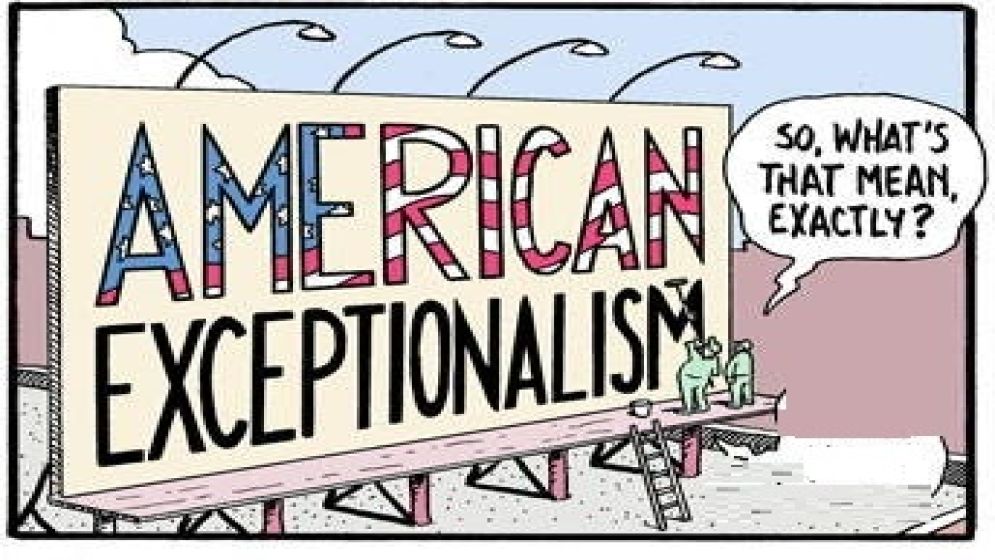
Illustration: Tim Eagan of Cagle
If Gaza exposes the contradiction of selective accountability, the Iran war raises an equally uncomfortable question: Who determines America’s wars? On 28 February 2026, the United States and Israel launched a major military operation against Iran. The conflict has continued for months, producing thousands of deaths, severe disruption to energy markets and repeated attempts at ceasefire and diplomacy.
It would be irresponsible to claim that Israel literally controlled America’s decision to go to war. The United States is a sovereign country. President Trump and his administration ultimately made the decision to use American military power. But that does not answer the more difficult question: How much did Israel’s strategic agenda influence the decision to enter a war that America itself would have to fight, finance and ultimately try to end?
Israel has regarded Iran as an existential strategic threat for years. The February operation represented a convergence of Israeli and American objectives. The controversy over who led whom became pronounced enough that former Israeli Ambassador to Washington Michael Herzog was publicly asked whether Israel had dragged America into the conflict. He responded that the United States chose to strike Iran to advance its own interests.
The denial does not settle the larger question. Why was the question being asked? Because a perception exists – not merely among Israel’s critics – that Washington may have allowed the strategic priorities of an ally to become inseparable from American policy.
Supporting an ally is not inherently wrong. America has alliances precisely because it believes its security and that of its partners can be mutually reinforcing. But an alliance is supposed to serve American interests. The Iran war makes the consequences especially significant. American personnel and bases are exposed. American taxpayers bear the cost. Global energy markets are affected. The Strait of Hormuz becomes a geopolitical pressure point. Washington’s economic threats against countries supporting Iran further broaden the conflict’s consequences.
At some point, Americans are entitled to ask: Where is the line between an alliance and an obligation to fight someone else’s war? More importantly, when does strategic partnership cease to reinforce American judgment and begin to substitute for it? Yet the deeper failure is not Israel’s. Israel, like every sovereign country, will pursue what it considers its national interest. Responsibility for American decisions belongs to Americans.
If Washington enters a war, Washington owns that decision. If Washington provides weapons, Washington owns that decision. If Washington vetoes international action, Washington owns that decision. If Washington sanctions international investigators, Washington owns that decision. No ally can force America to do any of these things.
That distinction matters because blaming an ally can become a convenient way of avoiding American responsibility. Its leaders therefore bear responsibility for determining when that power serves American interests, when it serves a genuinely shared strategic interest and when an alliance begins to substitute another government’s priorities for independent American judgement.
The consequences extend beyond the battlefield. A great power that appears unable or unwilling to distinguish its own strategic interests from those of an ally risk weakening the credibility of its diplomacy. Other governments may question whether American pressure reflects universal principles, independent judgement or the priorities of favoured partners. That uncertainty makes persuasion more difficult and encourages countries to hedge between competing powers. There is, however, a form of American exceptionalism worth defending: the belief that America is exceptional because it is willing to hold itself to a higher standard.
That would mean accepting scrutiny even when uncomfortable. Allies would not be above accountability, and enemies would not be stripped of rights merely because they are enemies. International institutions could be criticised without being destroyed. American sovereignty could be defended without pretending sovereignty means immunity.
American military power would then be exercised only after demanding questions had been answered: Is this necessary? Is it lawful? Is it proportionate? Who benefits? Who bears the cost? Would we accept the same conduct from another nation?
America does not need to be perfect to defend its ideals. It helped defeat Nazi Germany, helped construct institutions facilitating international cooperation, and produced scientific, economic and cultural achievements that transformed the world. Millions sought to come to America because they believed its ideals offered something better.
None of that requires pretending that the United States has always lived up to those ideals. Indeed, the ability to acknowledge error may be one of the strongest demonstrations of political confidence. An ideal does not lose meaning merely because a country sometimes violates it. It loses meaning when the violation is rationalised as an entitlement.
The problem is therefore not that America has sometimes failed. The problem arises when American power is presumed to transform failure into righteousness. Perhaps, then, the most important question is not whether America is exceptional. It is: Exceptional at what?
If America is exceptional because it can impose its will on weaker nations, that is not moral exceptionalism. It is raw power. If America is exceptional because its allies are protected from accountability, that is not justice, it is privilege. If America can wage war while demanding that others obey rules it reserves the right to interpret for itself, that is not leadership, it is hegemony.
But if America is exceptional because it possesses the courage to restrain its own power holding friends accountable, subjecting enemies to the same rules, accepting scrutiny and choosing principle even when principle is costly, then American exceptionalism becomes something worth defending. That is the exceptionalism the world could respect. And it is the exceptionalism America has yet to prove. Until it does, American exceptionalism is not a moral achievement. It is an assertion of privilege. And privilege disguised as principle is indefensible.
The writer is a former physicist and nuclear engineer at the BAEC and Professor Emeritus of Economics at Eastern Michigan University, USA. He can be reached at [email protected]