


 For all latest news, follow the Daily Sun's Google News channel.


Two private bills quashed in JS as historic trend persists
Only nine private members’ bills enacted in country’s parliamentary history

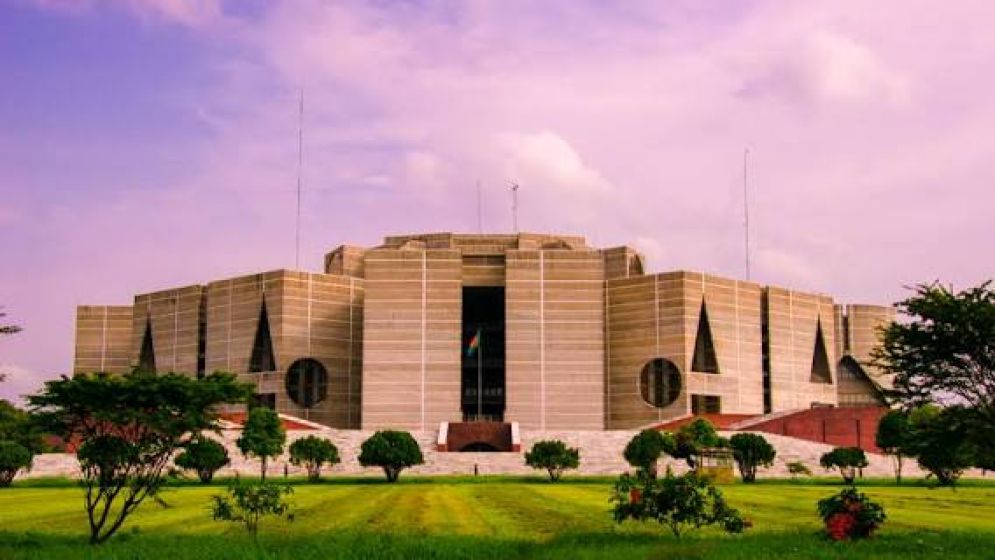
Parliament rejected two private members’ bills on Thursday after opposition lawmaker Barrister Muhammad Nazibur Rahman Momen refused to withdraw the proposals, leaving them defeated in a House vote.
The Pabna-1 MP sought to table the “Government Finance and Budget Management (Amendment) Bill, 2026”, aimed at tightening fiscal oversight and public spending, alongside the “Bangladesh Legal Practitioners and Bar Council (Amendment) Bill, 2026”.
Following an appeal by the finance minister to drop the motions, Nazibur pressed for a division, where both measures failed to secure the necessary parliamentary support.
The defeat underscores the longstanding institutional hurdle facing non-government legislation in Bangladesh. Out of 286 private members' bill proposals submitted across 12 parliaments, only 73 have been tabled, with a mere nine ultimately becoming law. MPs other than ministers are classified as private members, and unlike government bills, their proposals lack executive and administrative backing.
The rejected motions coincided with the introduction of major government legislation.
Finance Minister Amir Khosru Mahmud Chowdhury placed the “Bank Regulation (Amendment) Bill, 2026”, to address distressed financial institutions just months after the original legislation’s enactment. It was immediately referred to the relevant parliamentary standing committee for scrutiny.
Home Minister Salahuddin Ahmed also introduced two legislative measures regarding public security: the “Armed Police Battalions (APBn) Bill, 2026”, which repeals a 1979 ordinance to update the force’s legal framework, and the “Special Response Battalion (SRB) Bill, 2026”.
The SRB legislation formally dissolves the Rapid Action Battalion (RAB), establishing a specialised replacement operating strictly within police command and oversight.
Parliamentary history reveals that private legislative efforts have rarely succeeded, with the first, sixth, and 12th parliaments recording no such bills. The second parliament saw 47 proposals, resulting in two enactments, including the landmark Dowry Prohibition Act, 1980.
The third parliament passed the “Bangla Language Introduction Act, 1987”, while the fifth parliament enacted legislation amending MPs' allowances out of 74 submitted proposals.
The ninth parliament proved the most productive for non-government legislation, passing three of the 14 introduced bills. Notable successes included the “Leprosy (Repeal) Act, 2011” – which struck down a colonial-era segregation law – the “Torture and Custodial Death (Prevention) Act, 2013”, and the “Parents’ Care Act, 2013”. By contrast, the fourth, 10th, and 11th parliaments failed to pass a single private member's bill.