


 For all latest news, follow the Daily Sun's Google News channel.


Sammilito Islami Bank files 10,000 cases to recover default loans
Daily Sun Report, Dhaka
Published: 28 Aug 2026, 12:00 AM
Sammilito Islami Bank PLC has filed around 10,000 cases against loan defaulters as it steps up efforts to recover billions of taka in stuck funds and restore the financial health of the newly formed lender.
The development came to light on Thursday following a meeting between Bangladesh Bank governor and officials of the central bank’s Bank Resolution Department (BRD) to review the progress of the bank’s loan recovery, restructuring and overall operations.
Bangladesh Bank said more cases were being processed as the bank intensified legal action against defaulters. Alongside litigation, it has adopted alternative recovery measures, including an exit policy and Alternative Dispute Resolution (ADR), to settle outstanding loans through negotiated arrangements.
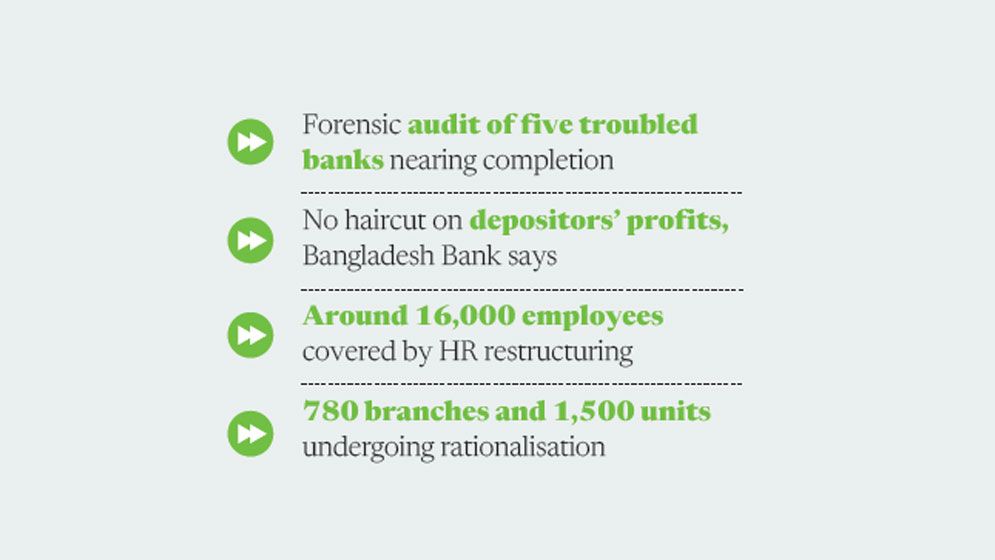
A comprehensive forensic audit into alleged irregularities, corruption, loan fraud and asset misappropriation during the previous ownership and management of the five troubled banks is also nearing completion, the central bank said.
The audit is expected to identify those responsible for the financial irregularities that contributed to the deterioration of the five banks before their merger.
The meeting also reviewed progress in the reconstruction and merger process, restructuring of the board and management, human resource coordination, branch rationalisation, and IT and operational integration.
Bangladesh Bank said ensuring transparency, accountability and good governance in managing Sammilito Islami Bank’s assets and deposits remained a key priority.
The latest disclosure comes two days after the central bank announced that individual depositors of Sammilito Islami Bank would be able to withdraw the principal amounts of their deposits, as needed, from certain deposit accounts from September 1.
The central bank also said there would be “no haircut on depositors’ profits”, addressing concerns among customers of the five financially troubled banks brought under the new institution.
Sammilito Islami Bank was formed through the merger of First Security Islami Bank, EXIM Bank, Social Islami Bank, Global Islami Bank and Union Bank under the Bank Resolution Ordinance, 2025.
The merger was part of Bangladesh Bank’s broader effort to resolve deeply distressed banks burdened with massive default loans, liquidity shortages and allegations of large-scale irregularities under their previous owners and managements.
The combined institution began operations as the country’s largest Shariah-based Islamic commercial bank, with a capital base of Tk35,000 crore, including Tk20,000 crore in state support and Tk15,000 crore associated with depositors’ interests.
As part of the reconstruction process, the board of directors has been restructured, with priority given to independent directors. The bank appointed its chief executive officer on 16 July 2026.
Bangladesh Bank said coordination of the ranks, responsibilities and organisational structure of around 16,000 officers and employees had been completed as part of the human resource restructuring.
Work is also under way to integrate the five banks’ technology platforms, including their Core Banking Systems, SWIFT and Relationship Management Application (RMA), under a single operational framework.
The central bank said a common interface had recently been introduced, allowing customers to access their accounts and withdraw deposits from branches across the five former banks.
Meanwhile, the rationalisation, merger and operational integration of 780 branches and around 1,500 business units are continuing, taking into account branch locations, business potential, customer service requirements and operating costs.
Bangladesh Bank’s BRD will continue to monitor the bank’s restructuring, loan recovery, litigation settlement, human resource management, branch and business-unit rationalisation, and technological integration.
The central bank expects the combined measures to strengthen governance, improve operational efficiency and financial capacity, accelerate recovery of defaulted loans and reduce operating costs.
It also hopes the recovery of stuck funds will eventually help channel money back into productive sectors of the economy, enabling the newly formed lender to gradually restore its financial strength and safeguard the interests of millions of depositors.