



 For all latest news, follow the Daily Sun's Google News channel.


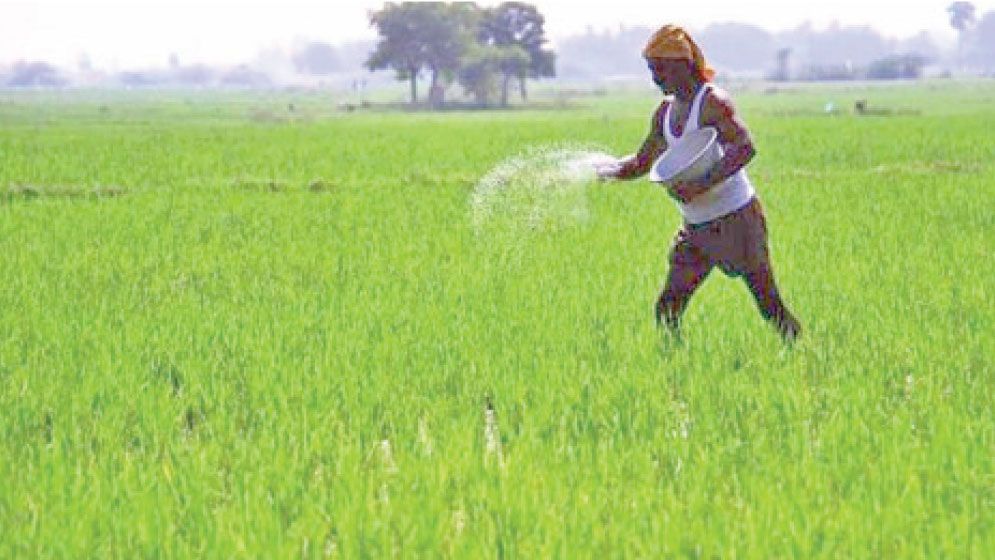
Official records showed that September’s urea requirements have been fully allocated to 10 southwestern districts, but farmers continue to report shortages, limited supplies and prices above government-fixed rates during the crucial Aman season.
According to allocation data from the Fertiliser Management and Monitoring Committee of the Ministry of Agriculture, the September urea demand and allocation were matched in Kushtia, Meherpur, Chuadanga, Rajbari, Jhenaidah, Khulna, Satkhira, Narail, Jashore and Magura.
The allocations were 687 tonnes in Kushtia, 1,274 tonnes in Meherpur, 1,155 tonnes in Chuadanga, 146 tonnes in Rajbari, 1,065 tonnes in Jhenaidah, 280 tonnes in Khulna, 401 tonnes in Satkhira, 247 tonnes in Narail, 1,382 tonnes in Jashore and 500 tonnes in Magura.
However, farmers in several districts said the fertiliser is not reaching them in sufficient quantities or at the government-fixed prices.
Kushtia
The discrepancy is particularly evident in Kushtia, where Aman cultivation has expanded to around 116,000 hectares this year. Farmers said they were struggling to obtain urea, TSP and MOP, with some alleging that fertiliser was being sold Tk5–9 per kilogramme above the fixed prices.
Rustam Ali Sheikh, a farmer from Banshgram in Kumarkhali, said he bought DAP at Tk25–26 per kilogramme and urea at Tk 32. Another farmer said he was repeatedly visited dealer’s shop for four or five days, but no fertiliser was available.
Dealer Shariful Islam rejected the allegation, saying dealers sell fertiliser with limited profit margins. He also claimed that some farmers buy fertiliser on credit and pay months later, leading retailers to add Tk 2–3 per kilogramme.
Wahiduzzaman, additional deputy director of the Department of Agricultural Extension (DAE) in Kushtia, said the department had not received information about fertiliser being sold at inflated prices. He said the allegations would be investigated.
Meherpur
The situation appears more acute in Meherpur, where the Aman cultivation target is 26,800 hectares. Farmers said TSP was particularly difficult to obtain. Asadul Islam of Ujulpur village said a sack of fertiliser officially priced at Tk1,350 was being sold for Tk1,800–2,000.
Hafizur Rahman Hafi, president of the Meherpur district unit of the Bangladesh Fertilizer Association, said TSP was facing the biggest shortage. He claimed dealers were receiving less than one-quarter of the allocated quantity, while denying allegations of overcharging.
Sanjib Mridha, deputy director of the DAE in Meherpur, attributed part of the shortage to intensive cultivation, saying the same land is cultivated three or four times a year, increasing fertiliser demand.
Chuadanga
In Chuadanga, farmers have raised questions about the dealer network and distribution system. Around 120 BADC and BCIC fertiliser dealers operate across the district’s four upazilas. Harunur Rashid Askari, a farmer from Jibannagar, said he could not obtain enough fertiliser to apply to his fields.
Masudur Rahman Sarker, deputy director of the Chuadanga Department of Agricultural Extension, said dealers must refrain from dishonest practices and that problems could be reduced if dealer appointments were made without political considerations.
Other districts
Farmers in Rajbari and Jhenaidah have also reported difficulties obtaining fertiliser despite allocations matching September demand. Ruhul Quddus Saleh, a farmer cultivating two bighas in Rajbari, said fertiliser shortages were making it difficult for him to continue farming.
Similar concerns have been raised in Khulna, Satkhira, Narail, Jashore and Magura, where official figures also show allocations matching September requirements.
However, allocation figures alone do not establish whether fertiliser has actually reached farmers in adequate quantities or at government-fixed prices.
Naowapara market
The country’s largest fertiliser trading hub, Naowapara in Abhaynagar upazila of Jashore, provides another indication of price differences. A recent visit found black TSP from Tunisia selling at Tk2,000–2,500 per sack, while Egyptian TSP was Tk1,700 and Moroccan TSP Tk1,750. Jordanian DAP was selling for Tk1,650, Chinese DAP Tk1,550 and MOP Tk1,050–1,100 per sack.
Mohammad Mosharraf Hossain, deputy director of the Department of Agricultural Extension in Jashore, denied that there was a fertiliser shortage in the district. He said farmers were receiving adequate supplies of all types of fertiliser during the current Aman season and that there was no scope for forcing them to buy at higher prices.