



 For all latest news, follow the Daily Sun's Google News channel.


Bangladesh Prime Minister Tarique Rahman is not taking any official trip to Delhi at this moment. At a time when it seemed that the premier was going to visit India in a hurry, the spokesperson of the Bangladesh Foreign Ministry in a media address in Dhaka said that the extradition of the former prime minister and other fugitives who were convicted in Bangladeshi courts and took shelter in India and the handing over of the alleged killers of political activist Osman Hadi would create a ‘propitious’ environment for his visit to India. In the same media address, the spokesperson said that Sheikh Hasina’s public statement in Delhi on 5 August has ‘vitiated’ relations between the two countries.
Many supporters of the government and many sympathisers of the July-August movement in Bangladesh have welcomed Tarique Rahman’s probable visit to India. After seeing the diplomatic engagements between the two countries in the last two weeks and even hearing positive remarks from the state minister for Foreign Affairs about the visit, they were convinced that Tarique Rahman was going to Delhi. Therefore, the political enthusiasts were surprised by such an unambiguous and tough position from Bangladesh. However, what the spokesperson said, the Chief Whip of the opposition party had made the same demand a day earlier. It appears that the government did not want to give the opposition parties any opportunity to gain any political advantage over the India visit. The same can be said for the government’s unprecedentedly harsh press release regarding Sheikh Hasina’s public statement in Delhi. The government’s statement and the process in which it was expressed both took into account the political context of Bangladesh. Instead of using bilateral diplomatic means, Bangladesh deliberately chose a public platform to convey its position. Such actions reveal the extent of hostility in the relations between the two countries. Usually, in times of war, when the opportunities for communication between the two countries are exhausted, such a strategy is adopted.
Have relations between Bangladesh and India reached such a low point? Couldn’t the Bangladesh Foreign Ministry’s 5 August press release have been handed over to the Indian authorities in the form of an aide-memoire instead of making it public? Couldn’t what was said in the media briefing at the Foreign Ministry on 16 August have been conveyed to India through Bangladesh’s High Commissioner in Delhi? This would have made the diplomatic channel effective and strong. The hostility between the two countries would not have then reached a public level. Clearly, Bangladesh has prioritised its internal political needs over diplomatic norms.
Is India getting any message from such a role of Bangladesh? What is Bangladesh achieving by taking such a tough stance?
I think the message is very clear to India. The anti-India sentiment that was aroused in the Bangladeshi public during the July-August movement has further intensified after the former prime minister’s shelter in India and her speeches about Bangladesh in Delhi, as well as the border killing by BSF and the continuation of push-in activities ignoring international norms. As a result, India will have to rethink how it will prove its goodwill to the people of Bangladesh.
On the other hand, even though Bangladesh is apparently not getting anything from the bilateral relations by taking such a tough stance, it can make India understand the urgency and importance of Bangladesh’s issues. At the same time, the BNP government is not allowing any political space to the opponents under the pretext of anti-India.
Can India afford hostile relations with Bangladesh in the long run? Hostile relations with Bangladesh will hinder India’s global ambitions and image. It will force Bangladesh to lean towards China, Pakistan or other friendly countries. The United States, which was thought to have viewed Bangladesh through an Indian lens, will now look into Bangladesh independently. And if Dhaka repeatedly engages in a war of words with Delhi, the anti-centralism within India will also intensify. If Delhi engages in conflict with other South Asian countries, those countries will also be encouraged to challenge Delhi. And if India thinks that India-Bangladesh relations were conducive and friendly during the Awami regime, the benefits earned from that conducive relationship will gradually be eroded. Moreover, in the near future, if an Indian criminal takes refuge in Bangladesh, his or her extradition will become uncertain.
Bangladesh is also at risk. Bangladesh’s relations with India are multidimensional and deep. Mutual hostility will also harm Bangladesh. At the moment, water sharing and integrated management of common rivers are major issues. Apart from this, there are border tensions, immigration and management; trade and investment; transit and transshipment; medical and tourism; and smuggling and security issues. If the relationship remains hostile, all of these will come to a standstill, and thus, relations will gradually deteriorate further.
The population of the two countries is one hundred seventy crores. Mutual hostility will hold this huge population hostage. I think it is important to take initiatives now to resolve the hostility by strengthening diplomatic mechanisms on both sides. The basis of this initiative can be instilling mutual respect and taking into account Bangladesh’s concerns. In the initial stage, the two countries can agree not to make statements that may further sour relations. India can completely stop border killings and push-ins. Any opportunity for propaganda or activities against the independence and sovereignty of the two countries using the soil of one another should be stopped, and India should take necessary steps to extradite Bangladeshi criminals who have taken refuge in India.
Does that mean I endorse imposing conditions on the prime minister’s visit to Delhi? No, I do not. Under any circumstances, I will advocate and insist on engagement. Diplomacy can be pursued in many ways. I am in favour of diplomacy of the open heart. I prefer to take one step ahead. Therefore, I prefer proactive diplomacy. I am not North Korea or Myanmar. I do not want to conduct diplomacy in isolation. Rather, I want to make the ‘entire world my home’.
__________________________________
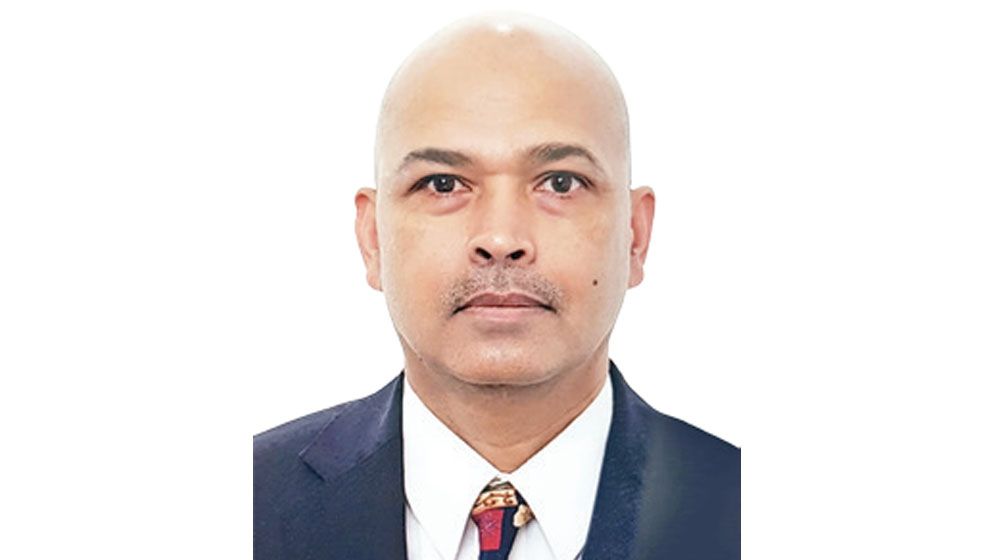
The writer is a former Bangladeshi Ambassador