


 For all latest news, follow the Daily Sun's Google News channel.


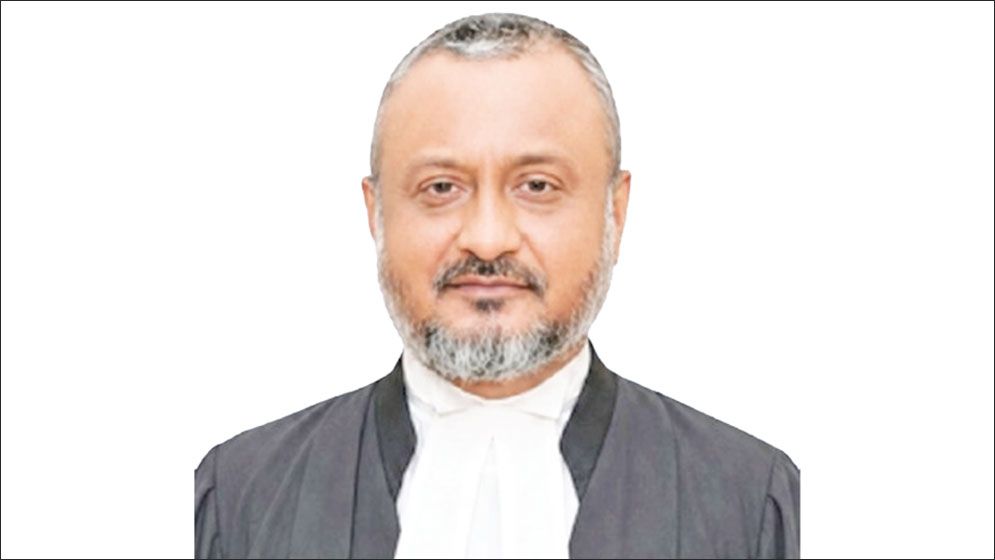
AKM Asaduzzaman
After nearly five and a half months, the Anti-Corruption Commission has finally received a new chairman and members. The commission became vacant on 3 March 2026 when then chairman Mohammad Abdul Momen, along with two commissioners Miah Muhammad Ali Akbar Azizi and Brig Gen (retd) Hafiz Ahsan Farid, resigned. With Monday’s appointment, the long vacancy has ended. A new commission was formed, headed by retired Justice AKM Asaduzzaman of the Appellate Division of the Supreme Court as chairman. In the same order, Dr Jahangir Alam Khan and Dr Md Sazzad Hossain Bhuiyan were appointed commissioners.
The new chairman, AKM Asaduzzaman, is a former justice of the Appellate Division of the Supreme Court. He took oath as a justice of the Appellate Division on 25 March last year and retired on 28 February. On 27 August 2003, Justice AKM Asaduzzaman was appointed an additional judge of the High Court Division and was confirmed as a permanent judge on 27 August 2005. He has a reputation as a prudent judge. It is our belief that, under his leadership, the Anti-Corruption Commission will function as an independent and neutral institution. The public hopes that the new commission will work towards genuinely preventing corruption rather than serving political interests.
The Anti-Corruption Bureau was abolished and the Anti-Corruption Commission established so that an independent body could work against corruption free from political influence. However, over the past 22 years, the institution has faced widespread criticism. Allegations persist that corruption cases are filed or amnesties granted according to the preferences of the government in power.
In Bangladesh, corruption manifests itself in various forms but can broadly be divided into two categories. One involves ordinary citizens seeking everyday government services and being forced to pay bribes in various ways at different agencies. The other involves political corruption in infrastructure and development projects.
Following the establishment of the Anti-Corruption Commission in 2004, efforts began to build it as an independent and neutral institution. However, during the 1/11 emergency, the government began using the commission as a political tool for the first time. During this period, the government of Moeen U Ahmed and Fakhruddin Ahmed used the Anti-Corruption Commission to suppress political opponents and conspire to destroy the private sector.
Direct interference in the commission’s work was carried out in the name of an anti-corruption task force. Without any investigation, lists of so-called top corrupt individuals were published containing the names of various politicians and leading business figures, publicly humiliating them. Using the commission as a shield, more than 100 political leaders and activists, including Begum Khaleda Zia, Tarique Rahman and Sheikh Hasina, were arrested. Baseless allegations were brought against them to file corruption cases. Institutional extortion also began through the commission. Fines were forcibly collected from various businesses and industrial institutions, an act later declared illegal by the Supreme Court of Bangladesh. The Supreme Court ordered the refund of those funds, although that judgment has yet to be executed. In this manner, the independence of the Anti-Corruption Commission was systematically dismantled during the 1/11 period.
When the Awami League came to power in 2008, it continued this trend. During this era, the Anti-Corruption Commission turned into a rehabilitation centre for bureaucrats. Under government orders, these bureaucrats began harassing opposition political leaders by bringing false allegations against them. Among the cases filed during the Fakhruddin government, cases against Awami League leaders were withdrawn, while those against opposition leaders and activists were retained. Begum Khaleda Zia, Tarique Rahman and more than 100 BNP leaders were convicted in these cases, and many leaders and activists were forced to remain in jail for years.
When the Yunus government came to power, many hoped that the Anti-Corruption Commission would regain its independence. However, the Yunus government used the commission even more aggressively to serve its own interests. The interim government led by Prof Yunus brought fabricated allegations of money laundering against 11 individuals and institutions without evidence to fulfil its motives. Without any investigation, their bank accounts were frozen, the properties of many were attached and travel bans were imposed. Harassing any individual without proper evidence directly violates the fundamental rights guaranteed by the constitution. Yet the chief adviser and law adviser Asif Nazrul forced the commission to carry out such actions.
The most draconian measure during the Yunus administration was the amendment to the Anti-Corruption Commission Act. By amending the law, opportunities were created for arbitrary actions, such as harassment under the guise of undercover investigations, freezing bank accounts before trial and attaching properties before judicial outcomes. Encouragingly, the current government abolished this draconian law upon taking office.
Legal experts noted that the current government made the right decision by rejecting the ordinance of the interim government, as the ordinance was contrary to the core spirit of the constitution by granting extreme arbitrary powers, including the seizure of assets without investigation and trial. Penalising anyone without a trial is not only illegal but an outright offence, yet the Yunus government engaged in this practice for a year and a half by issuing that ordinance.
Although Yunus’s draconian law was repealed, those who suffered harassment under it have not yet received relief. With the cancellation of the law, actions such as unlawfully freezing bank accounts, imposing travel bans and attaching properties before trial automatically became extrajudicial, yet the victims have still not received redress.
According to data from the Anti-Corruption Commission, under Yunus’s law, the bank accounts of nearly 1,500 businessmen and innocent individuals were frozen. Prior to any investigation, travel bans were imposed on nearly 1,000 industrialists, businesspeople and professionals. Assets worth Tk55,000 crore were seized. As a result, the national economy suffered the greatest damage.
Due to Yunus’s draconian law, widespread panic spread among business leaders, industrialists and entrepreneurs. Many closed down their businesses, leaving several hundred thousand people newly unemployed. On the one hand, unemployment rose, while on the other, employment opportunities shrank due to a lack of new investment. Owing to frozen bank accounts, many reputable business figures defaulted on loans, and non-performing loans further worsened the condition of commercial banks. In this way, Yunus crippled the country’s economy through the Anti-Corruption Commission, turning it into an enforcement tool for his government.
During this period, despite numerous allegations of corruption against the interim government, the commission controlled by Asif Nazrul failed to take any action. Following the departure of the Yunus government, extensive allegations of corruption against it have emerged. A snapshot of the corruption during the one-and-a-half years of the Yunus government can be found in Swiss bank reports. Within a year, deposits by Bangladeshis in Swiss banks increased by nearly 41 per cent. According to 2025 figures, the amount deposited by Bangladeshis rose to 834.1 million Swiss francs, up from approximately 590 million Swiss francs in 2024.
Where did the interim government not engage in corruption? Over the year and a half, corruption allegedly occurred everywhere, from judicial appointments to the placement of government officials. From children’s measles vaccines to police uniform scandals, allegations of corruption by the Yunus government are evident everywhere.
Allegations of corruption and money laundering exist against many advisers of the interim government. Following their departure, corruption complaints against most advisers of the Yunus government poured into the Anti-Corruption Commission. Allegations of corruption worth hundreds of crores of taka against almost all advisers – except one or two, including former advisers Asif Nazrul, Syeda Rizwana Hasan, Adilur Rahman and Asif Mahmud Shojib Bhuyain – are now an open secret.
In particular, questions over why former Law Adviser Asif Nazrul and Asif Mahmud visited Switzerland have re-entered public discussion. Many individuals involved in the 2024 movement, including NCP leader Nahid Islam, have alleged at various times that vast sums of money were laundered during the Yunus government’s tenure. Home Minister Salahuddin Ahmed has called for an investigation into allegations of corruption committed during the one-and-a-half-year rule of the interim government led by Professor Muhammad Yunus.
The anti-corruption organisation TIB has also demanded a neutral investigation into corruption committed during the interim government’s tenure. TIB Executive Director Dr Iftekharuzzaman noted that the National Household Survey 2025 highlighted an increase in the extent of corruption within service sectors.
Against this backdrop, the newly formed Anti-Corruption Commission faces immense challenges. On the one hand, this commission must fight corruption neutrally, while on the other, it must ensure that no one suffers unnecessary harassment. Broadly speaking, the new commission has five primary responsibilities.
First, various corruption complaints were filed with the commission over the past 17 years, and based on these complaints, many individuals faced harassment without prior investigation. The initial task of the new commission is to scrutinise all ongoing investigations to determine what is genuine and what is politically motivated, thereby bringing relief to those harassed without fault. Second, those accused of corruption during the interim government must immediately be brought under investigation, with impartial action taken against them. Third, the commission must be built as an independent and autonomous institution, instilling public confidence that it is not a tool for fulfilling government desires. Fourth, a realistic and effective action plan must be formulated to repatriate laundered money. Finally, effective measures must be taken to prevent corruption rather than merely focusing on post-facto suppression, enhancing the institution’s capacity so that it works continuously towards corruption prevention.
Although delayed, the Anti-Corruption Commission has been formed with qualified individuals. The people of the country want Bangladesh to be free from corruption. It is everyone’s expectation that the Anti-Corruption Commission will no longer serve as a tool for political gain.
__________________________________________
Audite Karim is a writer and playwright. Email: [email protected]