


 For all latest news, follow the Daily Sun's Google News channel.


91st birth anniversary
Remembering enduring legacy of Zahir Raihan
Zahir Raihan’s filmography includes ‘Kokhono Asheni’, ‘Sonar Kajol’ , ‘Kancher Deyal’, ‘Sangam’, ‘Bahana’, ‘Behula’, ‘Anowara’, ‘Dui Bhai’ ‘Jibon Theke Neya’, ‘Jaltey Suraj Ke Neeche’ and ‘Let There Be Light’

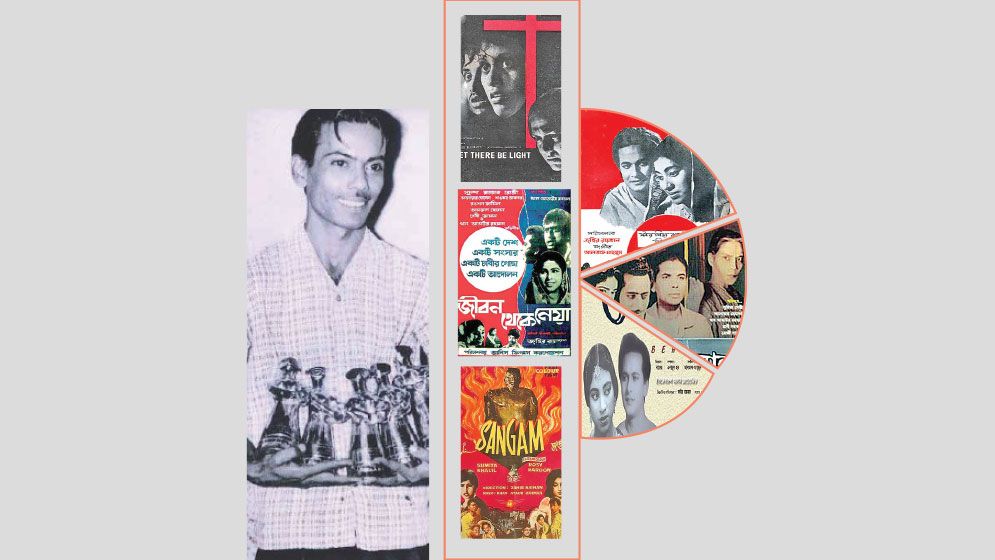
Today is the 91st birth anniversary of acclaimed filmmaker, writer and journalist Zahir Raihan, whose brief but extraordinary life left an indelible mark on Bangla cinema and literature. Born on 19 August 1935 in Feni, Zahir Raihan emerged as one of the most influential creative voices of his generation, using art and literature to portray the political realities, social struggles and aspirations of the Bengali people.
A filmmaker, novelist, journalist and freedom fighter, Zahir Raihan lived for only 37 years, yet his contributions remain unparalleled. He brought a distinctive artistic vision to cinema while simultaneously establishing himself as a powerful literary voice.
Zahir Raihan, the creative force behind many timeless classics, began his career in 1957 as an assistant director on the Urdu film “Jaga Huwa Savera”. He later assisted filmmaker Salahuddin on “Je Nadi Marupathe”. He also worked with filmmaker Ehtesham on “E Desh Tomar Amar”, for which he wrote the title song.
In 1960, Zahir Raihan made his directorial debut with “Kokhono Asheni”, released in 1961. He soon became known for his willingness to experiment and push the boundaries of filmmaking. In 1964, he directed “Sangam”, regarded as Pakistan’s first colour film. The following year, he made “Bahana”, his first CinemaScope production.
However, Raihan’s cinema was more than technical innovation. Deeply influenced by the Language Movement and the political upheavals of his time, he viewed filmmaking as a means of reflecting society. His landmark film “Jibon Theke Neya” (1969) remains one of the most powerful examples of politically conscious cinema in the region. Drawing parallels between family life and political oppression, the film captured the mood of a nation moving towards a historic transformation.
Zahir Raihan also actively participated in the 1969 Mass Uprising in East Pakistan. During the Liberation War in 1971, he travelled to Kolkata, where “Jibon Theke Neya” was screened to wide acclaim. Distinguished Indian filmmakers, including Satyajit Ray, Ritwik Ghatak, Mrinal Sen and Tapan Sinha, appreciated the film’s artistic and political significance.
His filmography includes “Sonar Kajol” (1962), “Kancher Deyal” (1963), “Behula” (1966), “Anowara” (1966), “Dui Bhai” (1968) and “Let There Be Light”, alongside his other landmark works. “Kancher Deyal” won 11 awards at the Pakistan Film Festival, further cementing his reputation as a pioneering filmmaker.
Raihan’s literary achievements were equally significant. His first short-story collection, “Suryagrahan”, was published in 1955. His notable works include “Shesh Bikeler Meye”, “Hajar Bochhor Dhore”, “Arek Falgun”, “Borof Gola Nodi”, “Ar Kata Din”, “Koyekti Mrittu” and “Trishna”. His writing, like his films, reflected the uncertainty, injustice and aspirations of his era.
Zahir Raihan is most notable for his documentary “Stop Genocide” (1971), made during the Bangladesh Liberation War. He was posthumously awarded Ekushey Padak in 1977 and Independence Day Award in 1992 by the government of Bangladesh.
On 30 January 1972, the legendary filmmaker disappeared while searching for his elder brother, noted writer and journalist Shahidullah Kaiser, who had gone missing in December 1971. His disappearance remains one of the enduring tragedies of Bangladesh’s cultural history.
More than five decades after his disappearance, Zahir Raihan’s films and writings continue to resonate. His work transcends its era, preserving the struggles, dreams and cultural identity of the Bengali people. His unfinished journey has only deepened the significance of the legacy he left behind.