



 For all latest news, follow the Daily Sun's Google News channel.


Cabinet clears SRB Act to replace RAB, shifts FY to April-March
Daily Sun Report, Dhaka
Published: 18 Aug 2026, 12:00 AM
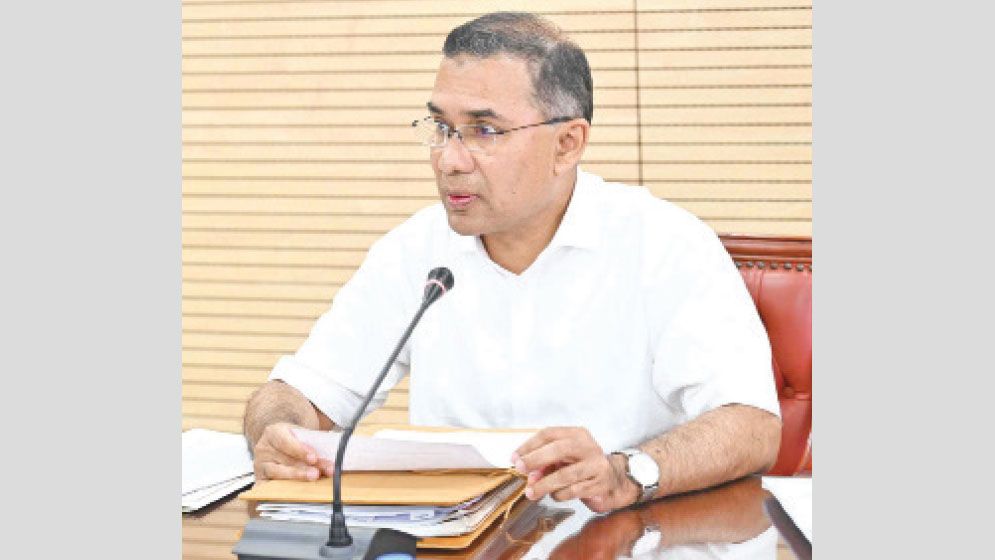
The Cabinet on Monday approved the draft Special Response Battalion (SRB) Act, 2026, clearing the way for the Rapid Action Battalion (RAB) to be dissolved and folded into a new unit under the police, alongside decisions to cut import duties on green chilli and tomatoes, shift country’s fiscal year from July-June to April-March, and endorse a decade-long strategy to curb lead exposure.
The decisions were taken at the 17th cabinet meeting at the Bangladesh Secretariat chaired by Prime Minister Tarique Rahman, according to a Cabinet Division press release.
Under the draft law, all RAB personnel, powers and assets will transfer to the new force, according to a press release from the Ministry of Home Affairs.
A multi-party grievance redressal committee will be constituted to handle citizen complaints and internal grievances of unit members, the release said, adding that existing departmental proceedings rules for RAB will remain in force, with necessary adaptations, until new regulations are framed.
The draft act now awaits vetting by the Legislative and Parliamentary Affairs Division.
On chilli and tomatoes, the cabinet approved reducing the combined tax burden on imports from 61% to 20.5% for the first month after a government notification is issued, rising to 31% the following month, in an effort to steady prices of the two staples, whose supply is frequently disrupted by seasonal production shortfalls, adverse weather and natural disasters. The cabinet also decided to shift the fiscal year from the current July-June cycle to April-March, citing delays and quality concerns in infrastructure projects that run into the monsoon months of July and August.
The 2027-28 fiscal year will serve as a nine-month transitional period, from July to March, with the new April-March cycle taking effect from 2028-29.
A committee drawing on the Cabinet Division, Bangladesh Bank, National Board of Revenue, Legislative and Parliamentary Affairs Division and Finance Division will chart the implementation, which will require amendments to the Constitution and the General Clauses Act, 1897, along with changes to government financial management systems.
The cabinet further approved the National Strategy and Multi-Year Action Plan for a Lead-Free Bangladesh (2026-2035), aimed at protecting children, pregnant women and workers from lead exposure. Citing the Bangladesh Bureau of Statistics’ Multiple Indicator Cluster Survey (MICS) 2025, the Cabinet document put blood lead levels at concerning thresholds in 38.34% of children aged 12 to 59 months and 7.54% of pregnant women, with 65.2% of children in Dhaka affected. A separate icddr,b study found elevated blood lead levels in 98% of 500 children aged two to four in Dhaka. The strategy targets a 50% reduction in child blood lead levels by 2030 and 95% by 2035, against the MICS 2025 baseline.
Separately, the cabinet congratulated the national cricket team on its nine-wicket Test victory over Australia in Darwin, calling it a reflection of the side’s growing capability and competitive mindset.
Read More