


 For all latest news, follow the Daily Sun's Google News channel.


Bangladesh stands at an important crossroads in its political history. Following the political turmoil after 2024, a period of interim administration, institutional weakness, economic pressure and deep political polarisation, an elected government assumed responsibility for governing the country in February 2026.
Nearly six months of Prime Minister Tarique Rahman’s government now provide an opportunity for a preliminary assessment. Six months is certainly not enough to determine the ultimate success or failure of any government, but it is sufficient to understand its direction, priorities, political outlook and administrative capacity.
The most significant positive achievement of the new government has been the restoration of elected political governance. After a prolonged period of uncertainty and interim rule, the functioning of an elected parliament and government is important for political stability. With BNP securing an overwhelming majority, the government has received both an extraordinary opportunity and enormous responsibility. If this mandate is used to strengthen state institutions, advance reforms and establish good governance rather than weaken political opponents, it could mark an important change in Bangladesh’s democratic history.
Another positive aspect has been the government’s early identification of the economy, law and order, and good governance as major priorities. Initiatives have been taken to address the cost of living, employment, agriculture, social protection and problems facing small businesses. Programmes such as ‘Family Cards’ and ‘Farmer Cards’ are intended to deliver benefits directly to lower- and middle-income citizens. Their ultimate success, however, will depend on transparency, proper identification of beneficiaries and implementation free from political influence.
The government’s economic performance presents a mixed picture. It inherited an economy already suffering from high inflation, weaknesses in the banking system, sluggish investment, revenue constraints, and pressure on foreign exchange. International instability, higher energy and transportation costs, and Bangladesh’s dependence on imports have further complicated the situation.
Against this background, continued engagement with the International Monetary Fund, World Bank, Asian Development Bank and other development partners is encouraging. Maintaining international confidence in Bangladesh remains important. Foreign borrowing, however, should not be regarded as an economic achievement. More important questions concern how borrowed funds are used, whether investments are productive, and whether they increase the country’s future capacity to repay its obligations. Inflation remains one of the greatest challenges confronting the government.
Ordinary citizens judge economic performance less by GDP growth, foreign-exchange reserves, or complicated macroeconomic statistics than by the cost of living. If essential commodities are expensive relative to household income, claims of economic success will have little meaning for ordinary people. The government must therefore pay greater attention to market management.
The banking sector presents another serious problem. Years of political influence, irregular lending, non-performing loans, weak supervision and preferential treatment of powerful groups have severely weakened the system. Such problems cannot be resolved within six months. Nevertheless, the government must demonstrate that banking reform will not be compromised by partisan or personal interests. Those responsible for past irregularities should face accountability, and, at the same time, anyone close to the present government committing similar offences must not get impunity. Efforts to identify and recover money allegedly transferred abroad illegally are also encouraging.
Law and order remain another major test. Citizens expected greater security, stability and normalcy following the political transition. Although conditions have improved in some areas, allegations of extortion, illegal occupation, political violence, criminal activity, mob justice and attempts to establish local political dominance continue to cause concern. Particularly important is the government’s response when individuals commit crimes using the name or influence of the ruling party.
One of the major failures of the past was placing partisan identity above the law. If the new government repeats the same culture under a different political banner, expectations for change will quickly turn into disappointment. The message to the police and administration must be unequivocal: a criminal has no political identity before the law.
The government must carefully preserve the press freedom. But press freedom does not provide immunity for deliberate disinformation or criminal conduct. So, the state should create an environment where criticism of the government is safe while existing laws are applied impartially when genuine offences occur.
In foreign policy, the government has so far demonstrated a relatively pragmatic approach. Bangladesh’s geopolitical position makes excessive dependence on any single power undesirable. Relations with India are extremely important, but they should be based on mutual respect, sovereignty, fairness and reciprocity. Long-standing issues such as water sharing, border killings, trade imbalances and mutual security concerns require practical solutions.
At the same time, Bangladesh should broaden its relations with China, the United States, the European Union, Japan, Pakistan, the Middle East and other partners. The guiding principle of foreign policy should be neither hostility towards any country nor blind alignment with another. Bangladesh’s national interest must remain the ultimate consideration.
However, the coming six months may be even more important than the first. The enthusiasm surrounding political victory will gradually diminish, and citizens will increasingly demand results rather than promises. The government should, therefore, establish measurable targets: how much inflation will decline, how many jobs will be created, how far non-performing loans will be reduced, how much investment will increase, what progress will be achieved against corruption, and what percentage of social-protection benefits will reach genuine beneficiaries.
Public progress reports every six months could strengthen accountability. Youth employment deserves the highest priority. Large-scale employment must be generated through industrialisation, information technology, agro-based industries, small and medium enterprises, skills development, technological innovation, and domestic and foreign investment.
Above all, the government must remember that the aspirations surrounding the political changes of 2024 were not limited to replacing one government with another. People expected a change in the culture of governance. Elected governance has returned, economic recovery efforts have begun, international engagement remains active and commitments to reform are visible.
However, inflation, banking-sector weaknesses, law-and-order problems, extortion, fragile institutions, and questions of democratic inclusion remain serious challenges. If the government uses its substantial political mandate to strengthen institutions, acts firmly against offenders within its own ranks, achieves visible progress in controlling prices and creating employment, and replaces political vengeance with justice and coexistence, the present moment could become a historic opportunity for Bangladesh.
__________________________________________________
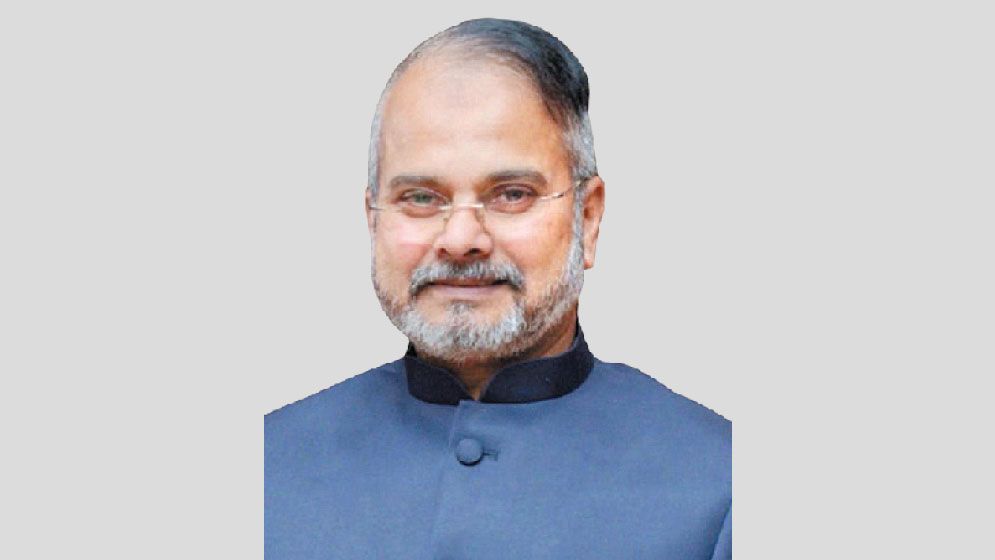
The writer is a former Major General, military diplomat, security and political analyst, researcher and author. He can be reached at [email protected]
Read More